
Catharsis: How Emotional Release Improves Mental Health and Inner Peace
Many people struggle to express what’s actually going on inside them: their pain, their fear, the things sitting quietly in their chest. Often it’s because they expect judgment the moment they say it out loud.
But if you’ve ever actually told someone how you felt, really told them, you probably noticed something afterward: a kind of ease. A loosening. That release is called catharsis, and it’s one of the oldest documented ideas in psychology.
What Is Catharsis?
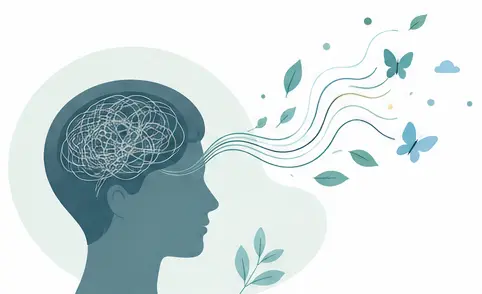
It is derived from the Greek katharsis, which means “cleansing” or “purification. It was a way for the citizen to feel pity and fear at witnessing the tragedy, and then to be purged of these feelings when they exit the theater, and not when they exit their own home, as Aristotle used it in his Poetics.
In modern psychology, catharsis refers to the act of discharging the pent up emotional energies in a manner that leaves the individual feeling relieved, clear-thinking,pent-up and rejuvenated.
It is not about putting on a performance for others. Nor is it merely about “venting” or “getting something off one’s chest.” Catharsis is essentially the process of releasing what we have held inside us for a long time. It could be grief, anger, fear, or shame; providing a safe outlet for these emotions is what constitutes catharsis.
Catharsis in Daily Life
 Catharsis in daily life has a very positive effect not only on your mental health, but also on your physical health as well. When you are tired after working at home or in the office all day, and then instead of keeping the thoughts that irritate you in your heart, you should share them with a friend or maybe your family circle, you will notice that your heart feels very light and relaxed, and the fatigue of the whole day disappears immediately. In regular talk, when you share your emotions, thoughts, and feelings and vent your heart’s feelings, you feel quite at ease.
A Brief History: From Greek Theater to the Talking Cure

There is a legitimate clinical basis for the psychological meaning of “catharsis.” During the early 1880s, Viennese physician Josef Breuer worked with a patient named “Anna O” (real name Bertha Pappenheim), who was able to work through repressed memories and emotions in his therapeutic sessions, a technique that he popularized by dubbing it the “talking cure”. Breuer’s relationship with Anna O. forms the groundwork for Freud’s psychoanalysis, and it is one of the earliest examples of the therapy that verbalizing repression of emotion was a useful means for alleviating psychological suffering.
Can Catharsis Turn Negative?
Yes. If you consistently avoid expressing your feelings or base your self-image on those things, your charade starts to become negative.
For example, when you are in your struggling phase, there are ups and downs in your life, you will find many such people who also demotivate you like you are very useless, you cannot do anything in your life, you are very careless, you will always hear such comments in your life, then when you start paying attention to their words you start understanding yourself like this, then your self-image gets blurred in your vision. Then whenever you practice catharsis, you feel that you cannot do anything, all your friends have become very successful, not only you.
Why Catharsis Matters for Mental Health
You may notice that engaging in catharsis actually relaxes your mind. Catharsis keeps your mental health balanced and positive. Releasing your emotions contributes to positive mental health. Practicing catharsis daily has a positive impact on both your mental health and your physical health.

When we express our emotions in the right way, these things begin to happen:
- The body breathes: the burden that weighed down your shoulders is lifted.
- The mind finds space: when the noise of the heart subsides, thoughts become clear.
- The sense of loneliness diminishes: the presence and attention of a trusted person instill the assurance that you are not alone in this difficulty.
- You become “yourself” again: you may not be completely healed, but you are no longer empty. Now, there is life within you.
That is why therapy often proves effective, even if circumstances remain unchanged. Sharing your burden with a trusted person helps far more than bearing and battling it alone.
Related on Savvy Psyche
Self-Sabotage: 12 Signs You’re Holding Yourself Back
Emotional Numbness: Why Am I Emotionally Numb? Causes, Signs & How to Overcome
Fear of Judgment: 10 Ways to Stop Letting Others’ Opinions Control Your Life
What This Can Look Like
Consider someone going through a breakup who keeps functioning working, smiling, telling everyone “I’m fine.” Then one night, a close friend asks a simple, direct question: “Tell me the truth how are you?”
The composure breaks, and twenty minutes of crying follows grief that had clearly been building for longer than that one conversation. The next morning, nothing about the situation has changed. But the tightness in the chest has eased. That’s catharsis. It doesn’t fix everything it clears space to keep healing.
Bottling emotions instead of expressing them tends to pull people further from themselves over time - a pattern sometimes described in psychology as self-sabotage.
Healthy Ways to Practice Catharsis
Not all forms of “release” are equal. Some genuinely lighten the emotional load; others just offer temporary distraction or backfire entirely (more on that below).
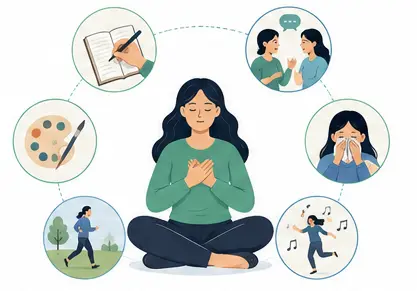
Crying: Crying isn’t weakness, and it isn’t only about sadness relief, anger, and overwhelming joy can all bring tears. Letting yourself cry over something that genuinely warrants it tends to leave the heart lighter, not heavier.
Journaling: The reason why journaling is effective is quite clear. Giving words to a feeling, even if they are unstructured and unorganized, compels the mind to bring order to a vague state that was previously merely a collection of emotions. The goal here is not elegant writing, but honest expression.
Talking to someone you trust: The goal here is not to offer advice or to say, “At least it didn’t happen that way.” It is simply about having someone who lets you finish what you have to say. This is the fundamental principle Breuer discovered in the 1880s through the case of Anna O, and it remains one of the most authentic forms of emotional release to this day.
Creative expression: This is an example of a program that has been successfully used to release emotions in a creative way. It can be painting or listening to music, dancing, or cooking and being creative, a place where emotions can be released without being directed at another person. There is a lot that we can’t say but can say through song or sketch.
Emotional release through physical movement: Exercise doesn’t mean punching a wall; it means telling your body, “Everything is fine, you can relax now.”Go for a walk, go swimming, or work up a good sweat at the gym. Remember: the goal is to heal yourself, not to rehearse your anger.
Group therapy under the guidance of an expert:
Structured approaches such as group therapy and psychodrama, in which individuals reenact difficult life events within a safe and supportive environment, combine emotional release with self-reflection and an understanding of others’ perspectives.Although these are not methods to be attempted on one’s own, it is useful to be aware of them as therapeutic options.
The Catharsis Myth: Why Punching a Pillow Doesn’t Work
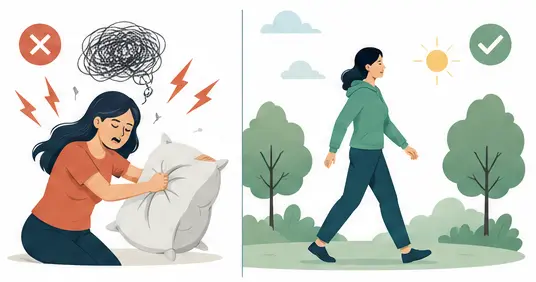
For decades, pop psychology has encouraged aggressive release for anger smash a pillow, scream loudly, break something based on the idea that physical release “gets the anger out.” Research has consistently found the opposite.
Controlled studies have shown that those who acted aggressively (struck a punching bag, or made angry gestures while reflecting on the person who made them angry) actually became angrier. So much for putting your anger to good use, even in a safe physical way: It turns out that practicing anger is the very thing that strengthens the neural networks of anger.
That’s not to say physical release isn’t good; it is all about the kind of release that you are talking about. Activities that take attention away from anger and towards a target, like running or boxing with an instructor, are generally useful. However, if the activity was aggressive towards one person, there are negative consequences to that behavior.
How to Practice Catharsis Safely
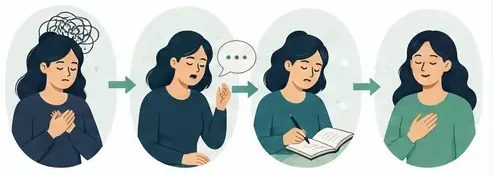
Name the emotion, then express it.
Instead of simply saying, I’m just angry, say: I am angry because I felt my words weren’t valued. When you name the emotion, the logical part of your brain wakes up. Otherwise, you are simply being swept away by the emotion.Match the release to the emotion.
Feeling sad? Don’t force yourself to go to the gym. Sit down and have a good cry. Feeling angry? Lying on the sofa won’t make it go away. Get up, walk, and get moving. Feeling restless? Talk to someone; give that feeling words. Every emotion has its own specific hunger; feed it exactly what it needs.Act with intention, not on autopilot.
Two minutes of focused journaling proves more effective than twenty minutes of writing angry comments or mindless scrolling.Don’t do it entirely alone if you can help it.
Anger and pain experienced and released alone are very different from those shared with a trusted person. If someone touches your hand, nods, and says, I am listening, then you feel these tears and these words sink much deeper into your heart.Check in with yourself afterward.
How do I feel? Breathing deeply and being lighter and having a soft heart is catharsis. If there is more anger and more confusion, then understand this: You didn’t release the anger, you practiced the anger.
When Catharsis Isn’t Enough: Seek Professional Help
Sometimes, what we carry within us cannot be resolved simply by crying or writing. In such cases, seeking professional help might be the better choice if:
- Heart is numb: no feelings of things that used to make you cry.
- Emotions are distracting: You are unable to concentrate at work, have no sleep, and there are problems in relationships.
- You feel the past is not past: the same scenes play on a loop, and you are continually trying to outrun the memories; you always feel there is something bad going to happen.
- Emotional crutches: like screaming, drugs, or any other behavior that makes you feel worse about yourself.
Seeking support doesn’t mean you’re weak; it’s about love and care.

Reminder:
Difficulties come in everyone’s life. And many of us cannot express our feelings, which can harm our mental health. Catharsis makes you feel very easy and relaxed. Try it. Express your inner thoughts and emotions, even if it’s in a state of frustration or crying, but after expressing them, you feel very relieved.
Disclaimer:
This article has been written with the aim of providing general education and is a summary of publicly accessible psychological research. Does not replace professional medical or psychological counseling. If you have a serious mental health problem, please see a licensed therapist.
Sources & Further Reading
"Catharsis." Encyclopaedia Britannica. britannica.com/art/catharsis-criticism
Martin, R. "Four Questions on the Catharsis Myth with Dr. Brad Bushman." The Anger Professor. alltheragescience.com/commentary/four-questions-on-the-catharsis-myth
"Josef Breuer." Encyclopaedia Britannica. britannica.com/biography/Josef-Breuer
Mills, K. "Expressive Writing Can Help Your Mental Health" (interview with James Pennebaker, PhD). American Psychological Association. apa.org/news/podcasts/speaking-of-psychology/expressive-writing
Bushman, B. J. "Does Venting Anger Feed or Extinguish the Flame? Catharsis, Rumination, Distraction, Anger, and Aggressive Responding." Personality and Social Psychology Bulletin, SAGE Journals. journals.sagepub.com/doi/10.1177/0146167202289002



One Comment