
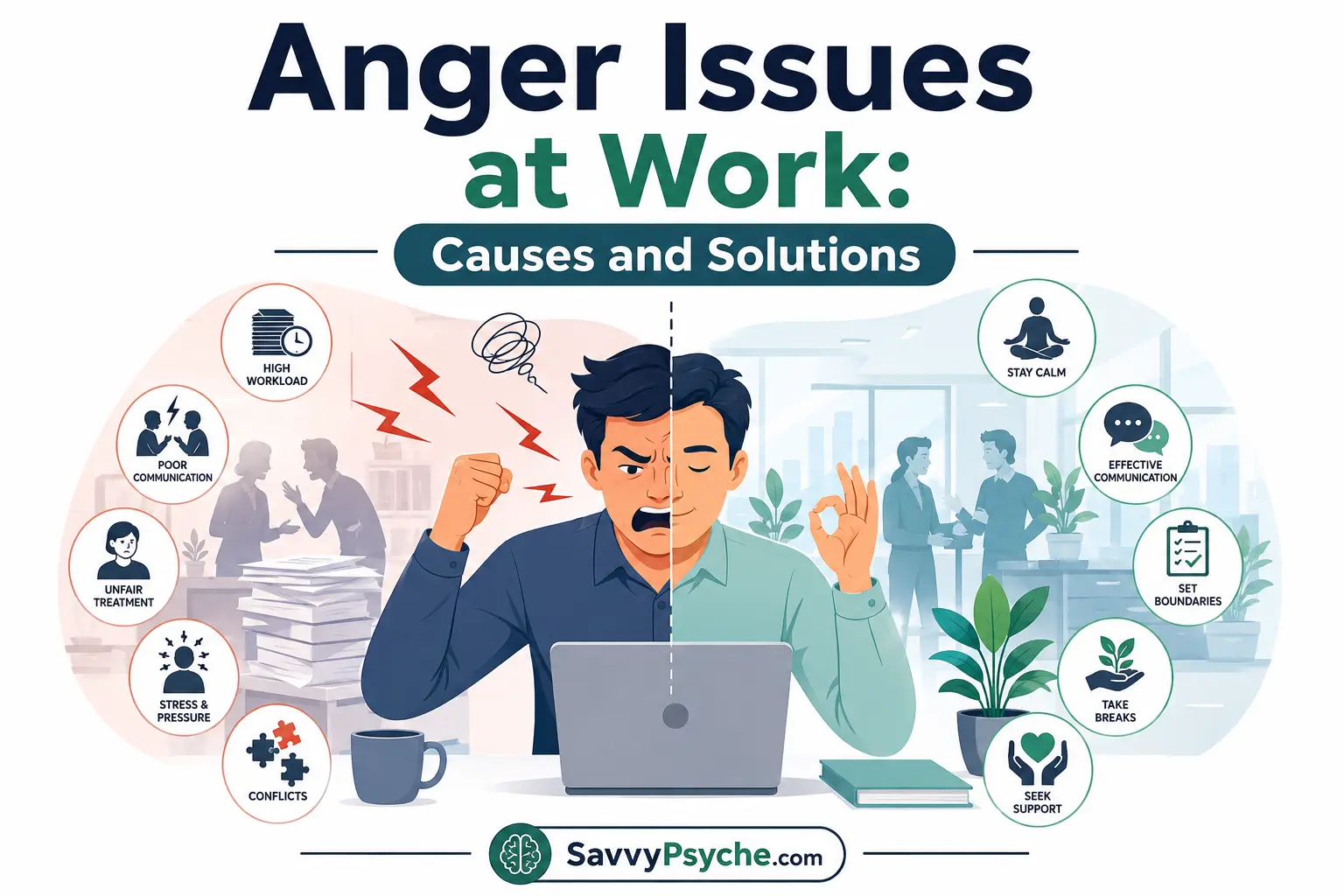
Anger Issues at Work: Causes and Solutions
Something went wrong in the middle of the meeting, and my heart immediately urged me to “stop”, yet I lashed out at a colleague over a trivial matter. This sudden realization of an anger issues at work left me shaken. Once it was all over, I couldn’t even recognize myself, angry, irritable, and out of control. It was the kind of behavior that simply shouldn’t happen in an office.
There might not be an outburst. You don’t shout. You simply let it smolder inside. You spend the entire day at work feeling miserable. Anger returns home, joins you at the table, and keeps you up at night. Scream it out loud or hold it in, the loss is yours as old memories continue to circle about. It impacts everything from relationships to jobs to health to the future. Anger is a common feeling. But it is important to hold the reins yourself. When you lose control, your job, the people around you, and your health all suffer. It all starts slipping.
Today, we will understand three things: the root cause of anger, what it is taking away from you, and the solution. Don’t worry. There won’t be any complicated formulas. Just small, simple actions that you can incorporate into your routine and that will truly make a difference.
What Do Anger Issues At Work Look Like?

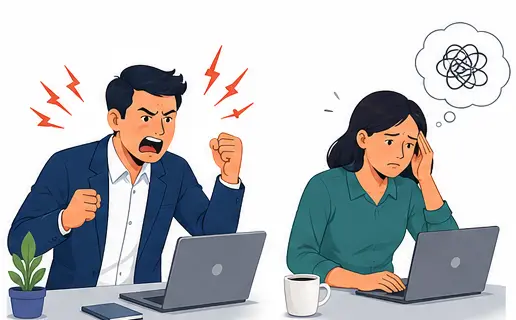
Office anger isn’t just about shouting. The matter doesn’t always reach HR. Anger manifests in various ways in the office: Sometimes it is a constant state of irritability, sometimes getting annoyed at every little thing, or sometimes working in complete silence. What are the primary causes? Impossible deadlines, A lack of communication, saying the wrong thing, and unresolved tensions between people. In reality, office anger is not all the same; it takes many forms.
| Visible to everyone | Invisible to everyone |
|---|
|
|
|
|
|
|
Anger does not remain the problem of just one person; it becomes everyone’s issue. The team, the work, and the company are all affected. If ignored, it spreads like poison, whether visible or not. Damage occurs in either case. And the cause is never just that final remark. The roots always run deep.
Common Causes of Anger Issues at Work

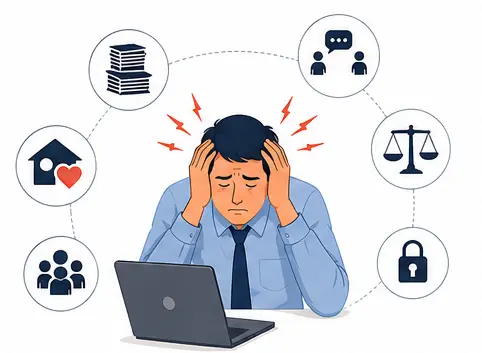
Look, until you truly understand why you are getting angry, no number of tips and tricks will help. You would merely be applying a bandage to the surface, while the wound deepens underneath.
Chronic overload
Office stress doesn’t build up overnight; it accumulates little by little each day, until one day, it erupts in anger. It is natural to feel angry when everything piles up. An alarm is meant for the short term; prolonged stress prevents it from ever turning off. And then, even a trivial matter seems huge. Because your system is already running hot.Breakdowns in communication
The problem is usually not the anger itself. The issue lies in unclear expectations, a lack of feedback, and being ignored. Feeling angry is fine. What is wrong is simply expressing it in the wrong way.Feeling unseen or unfairly treated
 When your hard work goes unnoticed, when your boss reprimands you in front of everyone, when you feel like you are being unfairly singled out, or when you are given an impossible deadline, these four things make a person lose their temper the fastest. When you work day and night, yet no one even takes notice, when your efforts are dismissed as worthless, or when the rules apply differently to different people, that kind of anger doesn’t just go away. Because you aren’t in the wrong. Simply saying “let it go” or “ignore it” won’t fix things as long as the root cause remains. That anger is a signal that there is a problem. So, the issue isn’t the emotion itself; it is the reality. And it is that reality that must be changed.
Feeling powerless
When you feel you have no control over your work, cannot make decisions yourself, or have someone hovering over you for every little thing, anger begins to build up inside. When that is taken away, a person begins to suffocate inside. Being constantly interrupted or corrected at every turn, deciding, only for someone else to come along and overturn it without offering a reason, or having rules imposed by people who have never actually performed the task themselves, situations like these make you want to just walk away from it all. It is this very sense of helplessness that manifests as anger and irritability. It feels like wanting to run, only to be held back by a rope tying you down.Complicated relationships
Clashes between colleagues are bound to happen in an office. Conflict is bound to happen in the workplace when it comes to working practices or deadlines. Improper work attitude (laziness, late coming, long breaks) make everyone else angry, and these issues are the source of anger. Discuss it, and it will be resolved. But if you let it drag on, even a trivial issue can trigger an explosive reaction. The explosion that happens on a Tuesday isn’t actually caused by Tuesday itself, but by the accumulated baggage of the past.Impact of personal life on work
 Home-related stress = Irritability and depression at the office.
When your mental state is poor, both your work and your temper suffer. Office-induced anger spills over into home life, damaging relationships, disrupting sleep, and lowering productivity. Conversely, domestic issues follow you to the workplace. Relationships, finances, worries, and sleep- these factors all lower the threshold for anger. The office provides the trigger, while home life supplies the fuel; only by understanding both can you make a real difference.Old wounds from a previous job
Past experiences shape new reactions. If there are problems in the family, even a small problem can cause anger. There’s anger, and then there’s anger, and the problem is not the first one. This is a point that is not often understood, and you will only find it more bitter if you don’t know the reason. Problems with a former boss, a bully, or past injustice do not simply disappear simply because you move onto a new position. Your old wounds taint your judgment of all things in the new world. That is why anger is often directed not at the new situation itself, but at the old wounds.

 Home-related stress = Irritability and depression at the office.
For some people, that build-up shows up as anxiety before meetings.
What Unmanaged Anger Actually Costs You
We all tend to think, “It’s just anger, what harm could it possibly do?” But the truth is, the person experiencing the rage is the least likely to gauge the true cost of that uncontrolled anger.
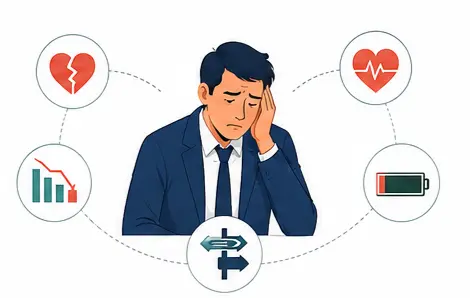
Your professional reputation. People speak hesitantly. Trust is lost. Work becomes merely a formality. No one promotes an angry person; they are neither included in strategic discussions nor entrusted with responsibilities, not even despite their competence.
Your health. The heart begins to race, blood pressure rises, and the body’s ability to fight off illness weakens. And what is the result? Headaches, tension, depression, heart problems, diabetes, the list goes on. And what about sleep? Many people find that unresolved anger follows them into the night and keeps them from sleeping.
The people around you. Feelings get hurt, situations deteriorate, everyone’s focus shifts away from the work, and tension prevails. The result? Work slows down, time is wasted, and motivation is lost. Eventually, people get fed up and quit their jobs or start taking leave using various excuses.
Your own peace of mind. Carrying anger within oneself is a heavy burden. It keeps generating internal tension and drains the very energy needed for work, clear thinking, and connecting wholeheartedly with loved ones.
Related on Savvy Psyche
People Pleasing at Work: Why It Backfires and How to Finally StopWorkplace Gaslighting: 9 Signs It’s Happening to You & How to Stop It
A Real Pattern: Marcus


Let’s call him Marcus. He was a team lead at a logistics company. He had extensive work experience and was an expert in technical matters; everyone spoke highly of him.
The team’s performance was outstanding, and projects were delivered on time. To an outside observer, everything seemed perfect. The problem had been escalating for a year and a half. A manager would overturn Marcus’s decisions in front of the team, change them without consultation, and laugh off the matter. Marcus raised the issue once, but to no avail. He was told to “forget about it,” yet he couldn’t.
He began getting into heated exchanges with the team over matters he would have previously over looked. In fits of anger, he would fire off emails, only to regret them later and sit there in dismay. On two occasions within three months, things reached a point where people complained to HR, saying, “His tone is inappropriate.” Each time, Marcus’s response was, “This is completely unfair.” Instead of reflecting, he would immediately go on the defensive. He says, “I used to tell myself that I was simply being straight forward that others were the ones overthinking things. For a long time, I believed that was the truth.”
The turning point came when an old friend said:
“You’ve been angry for a long time. This isn’t a company issue.” Marcus acknowledged it. The anger in the office was real, but the reason was old: the pain of being overlooked for years. His wife forced him to go for therapy three times. And then he understood. The reason a small office matter was met with such fury was that it was hitting a sore spot. The rage was a response to his entire past rather than just the particular incident.
Marcus took on two tasks at once: he addressed his internal habits through treatment and used HR and direct contact to fix the office issue; neither was achievable without the other. Therapy alone = patience in the wrong place. Complaining alone = carrying around a year and a half’s worth of anger. Today, for him, anger is not the “weather” but a “tool.” It arises; he acknowledges it, understands it, and makes his own decision.
10 Ways to Actually Manage Anger at Work


Know your triggers in advance
First, understand where the anger comes from; this will prevent future outbursts. Note down who triggered the anger and what caused it. This is just a two-week exercise.Whenever you experience intense frustration at the office, write it down immediately: What happened? Who was involved? What was said? And what physical sensations did you feel? Did your heart pound? Did your jaw clench? Did your chest feel hot? After two weeks, a pattern will emerge. Things that aren’t clear in the moment become obvious when you look at them all together. Once you identify the trigger, you’ll be prepared for it next time; it won’t catch you by surprise.Pause between the provoking remark and your response.
Pause before you speak; the first sentence uttered in anger is often the most dangerous. Stop. Breathe. Think. If the situation escalates, walk away. Drink some water. Write down your thoughts. Just five minutes. Anger comes quickly, but reason arrives late. Take three breaths or go for a short walk. You will respond better after that.Say “I felt,” not “you did”
Don’t blame, state your own perspective. Incorrect: “You always leave the report unfinished. Correct: “I was worried because the report was not finished, and I needed it. Also, tell us what happened inside you – did you feel ignored? Disrespected? Frustrating? Remember the formula: “When you [do X], I feel [Y].” What’s the good? Firstly, you are telling the truth. Second, the other person does not immediately go defensive or combative. The conversation turns solution-oriented, rather than argumentativeDon’t focus on the problem; find the solution.
When a problem arises at the office, set aside the thought of “how angry I am.” Focus instead on “what I can do now.” There are two paths: If it is within your control, implement a solution and act; if it is beyond your control, accept the situation and gradually adjust your attitude this makes all the difference.Wasting energy on things you cannot change will only fuel your anger.Working on what you can change allows you to move forward and moving forward is the surest way to reduce anger.Fix recurring problems with a system, not raw feeling
Set up a quick weekly meeting. Are you overburdened with work? Make a plan, specify the steps, and ask your employer for priorities. This shows your professionalism and keeps the same problem from happening again. Additionally, if a certain person or a certain kind of work consistently makes you angry. Then interpret it as a divine sign. It’s not enough to just tell yourself to “be patient”; you must now speak up. Raise the matter formally. Change your approach. Address it directly. Repeated anger indicates that the problem isn’t one to be endured, but one to be solved.Take care of your body
When the body is fatigued, anger will quickly rise. So, do the fundamentals: good sleep, timely eating, and short breaks. Just observe when you don’t eat or when you have back-to-back meetings, how your mood is affected. This isn’t just about “self-love”; it’s simple science. Lack of sleep = quick irritability = inability to control anger. Three cups of coffee and an empty tummy, no sleep, to the office is like walking around with a fuse connected to a powder keg. Taking care of your body is the remedy for anger. Even if it doesn’t look like “anger management” to you.Don’t suffer alone; talk about it.
Don’t bottle up your anger. Talk to someone you trust; they can offer advice and help you gain perspective. Suppressed anger only grows. Putting thoughts into words gives them shape. Sometimes, the mere act of speaking brings relief. At times, the other person reveals a new perspective. What is swirling around in your mind begins to resolve once you voice it.Let go of grudges, move on.
Forgiveness = Reduced anger + A solution. In the workplace, forgiveness does not mean forgetting. It means not dragging the burden of the incident along with you every day. Harboring a grudge comes at the highest cost. It ruins everything you do. Forgiving someone is not a favor to them; it is an act of saving yourself.Use humor but keep it within limits.
A touch of humor works wonders when you are stressed; it helps you realize the problem wasn’t actually that big. Don’t be sarcastic, or it will cause hurt. The greatest of the humor is the humor that makes everybody laugh without making anybody laugh at somebody. When we are angry, we are often sarcastic and not humorous, but humor is the greatest weapon to quell anger. But sarcasm is really the weaponry of humor. It is important to remember this distinction.Bring in a neutral third party when needed
If no quick solution is found, call HR or manager into play. If this is not possible, talk to the other person in a respectful and calm manner. Some scenarios are too complicated to be solved by face-to-face communication. A neutral third party is necessary to set up a neutral environment for both. Asking for a mediator is not an admission of defeat. Be aware that some things can’t be done on their own.
When to Seek Professional Help
When your anger issues at work seems out of proportion to what is actually causing it; when it is causing harm to relationships that are important to you; and when the anger is not being reduced by self-directed measures alone, working with a licensed therapist is a helpful place to begin. If you feel you should reach out in particular, it’s because:
- The reactions seem larger than what’s really going on and you don’t understand why.
- Anger has resulted in complaints to HR, discipline discussions, or strained working relationships.
- You see the anger emanates from something else a former boss, an old wound it’s more about the past than the present.
- Your anger is impacting your sleep, health, or personal relationships (outside of work)
As Marcus’s story shows, addressing the current situation and addressing the older pattern underneath it are often both necessary neither one alone tends to be enough.
Conclusion:
Anger is not the enemy – mismanagement is.
Key lesson:
Don’t let anger at work be a part of who you are. These can be a sign that there is something deeper that needs to be addressed, and healthier ways of coping. Anger is a symptom, it’s not the disease. It reveals to us what is significant, what is improper, and what we must do. If channeled properly, it can be an invincible well.
It’s okay to feel anger; it is a normal, healthy response. It will benefit if managed at an early stage and will help to alleviate stress. It poses a challenge in bottling, expressing it in an improper way, and/or when it becomes your identity. It is then it hampers your career. Anger is justified. It’s okay to say what you want and need and okay to say no. What is wrong is to be driven by anger. It is the person who is driving the car that should be the one to incite the anger. It’s important to be able to spot signs of anger problems at work early, before they impact your professional life, your relationship and your health.
If You Are in Crisis
SavvyPsyche is an educational website, not a crisis service, and nothing here can help in an emergency. If you are in immediate danger or feel you may act on thoughts of harming yourself, please contact emergency services in your country right now (911 in the US, 999 in the UK, 112 in most of Europe).
You can also reach a trained crisis counsellor, free and at any time:
- United States: Call or text 988 — Suicide and Crisis Lifeline (988lifeline.org)
- United States: Text HOME to 741741 — Crisis Text Line
- United Kingdom & Ireland: Call Samaritans on 116 123 (free, 24/7), or visit samaritans.org
- International: Find your country’s helpline at findahelpline.org or iasp.info/crisis-centres-helplines
- If you are being bullied or harassed at work: in the UK, Acas offers free, confidential advice at acas.org.uk; in the US, the Workplace Bullying Institute has resources at workplacebullying.org.
Reaching out is not a burden on anyone. It is exactly what these services exist for.
Disclaimer:
This article is for informational purposes only. This is not advice from a doctor or therapist. If you are experiencing significant emotional distress, please speak to a licensed psychologist.
Sources & Further Reading
-
Mostofsky, E., Penner, E. A., & Mittleman, M. A. (2014). "Outbursts of Anger as a Trigger of Acute Cardiovascular Events: A Systematic Review and Meta-Analysis." European Heart Journal, 35(21), 1404–1410. Full text via PMC
-
Harvard T.H. Chan School of Public Health "Angry Outbursts Appear to Boost Heart Attack, Stroke Risk"
-
Psychology Today Bernard Golden, Ph.D. Recognizing, Understanding, and Managing Workplace Anger



3 Comments