

How to Smartly Spot and Handle Passive Aggressive Behavior at Work
You asked for a project update. The reply was: “K.” Just that, and a period somehow carrying an entire message of “don’t talk to me.”
Breathe out long and then say, “it’s all good,” but it’s not all good. A backhanded compliment: “I wish I had time to make such detailed slides,” meaning that you have no other way to spend your time. You get a sense of emptiness after talking, and when you look back on what you and the other person talked about, you can’t really tell. There was no specific mention made.
Fortunately, there is a way around and it doesn’t involve being called “overthinking” or sitting all day biding your time. How to identify passive-aggressive behavior, why it is the way it is, and what to do if you have it or if you are affected by it.
What Passive Aggressive Behavior Is

Passive aggressive behavior is a way of indirect expression of anger, resentment or frustration – through sarcasm, stalling, sudden coldness or backhanded praise – rather than direct, open communication. It was created by an Army psychiatrist during World War II when he observed soldiers who were shirking the responsibility of carrying out orders through a combination of procrastination, stubbornness and inefficiency, but not insubordination, which would have been much more dangerous. This is what you see in the offices today: resistance without the risk of open confrontation.
How to Spot Passive Aggressive Behavior in the Office
Understand the situation first, then speak. Reason: They do this deliberately. If you call them out on it, they’ll immediately say, and then comes that phrase: When did I say that? That’s it. End of story. Now, you can keep trying to prove your point while they play the innocent.

Praise with a sting underneath. That’s quite a bold idea. The tone of voice reveals that it wasn’t praise. It was a dig.
Sudden, unexplained coldness. Ignoring messages. No answer to questions. Everything is normal one day, then suddenly cold the next. And an explanation? Zero.
Deliberate stalling. You won’t get the work on time, nor will there be a direct refusal. Either they’ll forget, or they’ll send it so late that your entire plan gets ruined.
A cutting remark dressed as a joke. “Oh, come on, I was just kidding”, yet the words hit so precisely that the sting lingers even after the laughter.
Saying yes while acting like no. Yeah, yeah, okay sounds good, and then he’ll either do only half the job, or drag his feet, or handle it in a way that makes it obvious he wasn’t truly on board.
The design isn’t one major blow it’s “death by a thousand cuts,” small enough individually that the person on the receiving end often can’t even clearly identify who’s doing what.
Common Passive-Aggressive Phrases: What’s Said vs. What’s Meant
Words look fine on paper. Where is the problem? In the gap between what was said and what was meant. Solution: A quick translation guide.
|
|
|---|---|
|
|
|
|
|
|
|
|
|
|
|
|
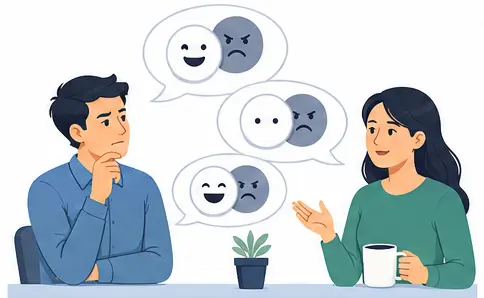
You don’t have to interact with each of them. What’s important is that you don’t waste any more of your energy thinking, “Maybe I’m missing something here? No, you got it right.
What’s the Root Cause of Passive Aggressive Behavior?
This part is essential because understanding the cause changes your response. It is not meant for making excuses.It is to protect yourself from being personally hurt.

Fear of direct communication. Passive-aggression isn’t always a matter of trickery. Many times, it occurs because one is unable to say on their own, “I am upset. That frustration is thus expressed in other ways.
Power imbalance. Indirect resistance occurs when a person feels that it is not safe for them to disagree with their boss, or with a more senior person. It’s a way to retreat without having to risk an open confrontation.
Patterns learned in childhood. People scolded for expressing anger openly growing up often carry that same avoidance into adulthood, frequently without realizing where it started.
Disruptive change at work. A new process, boss, or restructuring that leaves someone feeling a loss of control especially without being consulted can trigger this pattern.
None of this justifies the behavior. It just means a colleague going cold isn’t necessarily plotting against you they may simply be handling their own discomfort in the only way they know how.
Another reason why this is so: it is effective. You are reinforcing the pattern, even if it’s sarcasm or coldness that makes you get a rise out of people or if you fear a reaction, your behavior is being shaped by the fear of that reaction, and the goal is typically to get people to react in an emotional way.
How to Cope With a Passive Aggressive Coworker
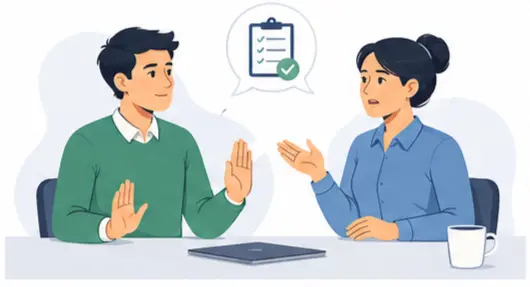
Don’t take the bait immediately.
When a sarcastic comment is thrown, don’t immediately respond sarcastically or give an explanation. Simply say “Okay, noted. Or simply pause for two seconds. That pause is more effective than an immediate reaction and helps defuse the situation.
Describe behavior, don’t assign blame.
Passive-aggressive comments tend to engender defensiveness or denial. Instead, use a neutral and general one: I’ve heard that the deadline has been shifted a couple of times. Have any concerns with this project? This way, the other person isn’t being put on the defensive, and it will help to initiate an honest discussion.
Ask directly instead of guessing.
Passive-aggressive comments are those that are unclear. So, get rid of that ambiguity: You said this; did it have a meaning I should know about? Most will explain the truth or will approach with a different tone one that’s not sarcastic when the time has come to make it impossible to take the jibe as a jest.
Set a clear boundary and follow up in writing.
If the behavior is directly impacting work, for example by missing deadlines or by not responding to requests, specify your expectations and timeframe and follow up on this in writing. The report is due back on Thursday by 12 pm for me to finish my part. This is a statement that doesn’t leave as much space for that vague procrastination that is common in requests.
Model direct communication yourself.
The best long-term approach is to model non-aggressive, direct communication. Many people have never witnessed such behavior before. If someone says something brief such as “K.”, a response could be “Thanks for letting me know. If this task is not suitable for you, I can help you with the distribution of work. This permeates the whole atmosphere slowly.
Document the pattern, not just one incident.
If it continues and affects the completion of work, keep a simple record of dates, incidents, and the consequences with regard to deadlines or deliverables. This record is not intended to be used as a tool to bring about accusations, but to provide a record of protection should a matter progress beyond the informal level.
Coworker vs. Manager: Different Approaches
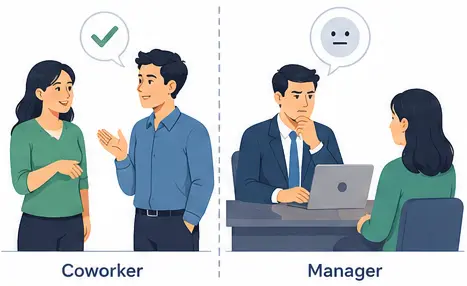
With a coworker
The balance of power here is relatively equal. Pointing out behavior, asking clarifying questions, and initiating open dialogue, these are all low-risk actions because there is no major impact on one’s career should the conversation go wrong.
With a manager
The level of risk varies here, and it is not wise to ignore this fact. Direct confrontation could harm your reputation, projects, or future performance reviews. Therefore, making certain adjustments is necessary:
- Lead with a question, not a comment on tone. Could you clarify this feedback? This is safer and more effective than pointing out tone.
- Document important agreements. Send a recap email after the conversation. This protects you without implying blame.
- Choose battles by impact, not irritation. Reserve direct pushback for situations that genuinely affect the work.
- Build a trusted ally before conflict arises. A mentor, senior manager, or HR. It is very difficult to establish this relationship during a conflict. Your job isn’t to fix their communication. Your job is to safeguard your work and keep your reputation clean until this phase passes.
Don’t try to correct the communication style of another person. To prevent damage to your reputation and your work until the crisis has ended.
A Real Pattern: Noor’s Story
My friend Noor told me this over coffee quite some time ago. I still vividly recall it, as it’s a very common problem. She was working with a colleague on a project for months, and things were mellow, with no problems. At the team meeting, the manager picked out just Noor to give the presentation. The colleague wasn’t even mentioned, even though the work had been a joint effort. Noor immediately tried to set the record straight. She openly gave credit to her colleague. It made no difference; something had shifted.
After that, the colleague’s messages became terse and interactions in meetings chilly. If she asked a question in the group chat, she would get a response, sometimes 1 word, sometimes hours later, or sometimes none. Nor pined for two weeks for some reason that she had done something wrong. She replayed the meeting in her mind, “What else should I have said?
The resolution didn’t require a major conversation. Over lunch, Noor simply asked: “I feel like things have been different between us since the team meeting. Did I say what I said, did it upset you?” Her colleague eyed her and said after a while, “Well, yes, I have received some damage, but I don’t know how else to ask about it without being petty. Two weeks of speculation was finally put to an end with one question. Learning the coldness was not Noor’s fault, but rather it was a whole other thing. Passive-aggression is not a problem with them; it’s a problem with the person who is the passive-aggressor.
Related on Savvy Psyche
Workplace Bullying: Signs, Causes & How to Fight Back
Anger Issues at Work: Causes and Solutions
Workplace Gaslighting: 9 Signs It’s Happening to You & How to Stop It
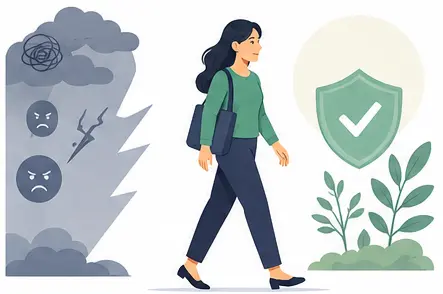
Protecting Your Mental Energy
Process it outside the office. Talk to a partner, friend, or someone who won’t see your colleague at the coffee machine office gossip tends to make things worse, not better.
Leave it at the door when you go home. Work and home clearly separate. Don’t bring someone else’s unhealed pain to bed with you at night.
Take the impact seriously. This is not something to shrug off as “just normal office stuff” if one of your coworkers is impacting your sleep or energy level that you normally would put into things you enjoy.
Give yourself permission to disengage. You don’t owe a response to every passive-aggressive comment. Sometimes the strongest move is simply not engaging at all.
Common Mistakes People Make
Matching sarcasm with sarcasm. The sarcasm is matched. For roughly four seconds, it feels good, and it nearly always makes things worse.
Over-apologizing to smooth things over. Excessively apologizing to make amends. This may unintentionally reassure the other person that the tension is effective and encourage more of it.
Venting to coworkers instead of addressing it directly. Venting to colleagues rather than confronting the issue head-on. Although it seems relieving, it frequently makes the tension in the office worse rather than better.
Assuming it’s specifically about you. It’s frequently about fear, power dynamics, or old patterns that have little to do with you personally.
Waiting too long to name the pattern. Passive aggressive behavior tends to become more commonplace and more difficult to stop the longer it is ignored.
When It Crosses the Line Into Bullying
We all have days when it's tough. In some instances, a sarcastic remark may slip out in times of anger, and that is normal. The problem starts when this trend begins to occur, when you begin to feel like you are being shut out of meetings, when you notice your work is always being taken apart, when you're embarrassed in front of other people, or when you lie awake all night long thinking, “Is he right? Am I in the wrong?” There is no turning back now. It’s no longer passive-aggressive. It’s a drive to destroy you. This is bullying. This is gaslighting! Don’t keep quiet anymore; talk to HR or your manager. You’ve done your part; you’ve calmly explained the issue a couple of times, documented everything, and nothing has changed. Then remember, shouting is not a sign of weakness. It is about protecting your work and your dignity. Documentation is for precisely these situations.
Think about Consulting a boss or HR.
When to stop having direct conversations: When work is being impacted (not just your comfort, but the job itself); when you’ve already talked twice, and nothing has changed; or when boundaries have been exceeded in terms of harassment, sabotage, or exclusion. Going to HR when your actual work is being affected is not an overreaction if you have proof, a documented trend, and it keeps happening. Documentation is for precisely these situations.
Conclusion:
One can’t make anyone say what they have to say with candor; some people say what they have to say in an indirect way. But it’s up to you; you can go into hurt silence, or you can get yourself together and respond in a way that changes the conversation. Truthfully, it’s not really about you most of the time; it’s just that it feels that way. This is not to say that you have to simply put up with it! It means you shouldn’t lose your peace of mind. Respond with a generous heart and a sense of composure. Believe me, often this one thing is enough to break the entire pattern.

Disclaimer:
All the information provided in Savvy Psyche’s articles is based on personal experience, exposure, and the study of mental health; if you are facing a serious mental health issue, please consult a licensed therapist.
Sources & Further Reading
Menninger, W. C. (1945). Wartime psychiatric bulletin describing passive-aggressive reactions among soldiers; see also Menninger, W. W. (2004). "Contributions of Dr. William C. Menninger to Military Psychiatry." Bulletin of the Menninger Clinic, 68(4), 277–296. Overview via Wikipedia
Johnson, N. J., & Klee, T. (2007). Passive-Aggressive Behavior and Leadership Styles in Organizations. Journal of Leadership & Organizational Studies, 14(2), 130–142.

https://doi.org/10.1177/1071791907308044
American Psychological Association. (n.d.). Healthy Workplace.

https://www.apa.org/topics/healthy-workplaces





One Comment