
11 Signs of a One-Sided Friendship (And What to Do About It)
You’re the one who messages first. You’re the one who makes plans to meet. You remember everything: Their birthday, their dog’s vet appointment. The name of that coworker they are mad at. But when something happens to you, good or bad. You stop for a moment.
Shall I tell them? the heart asks. Because it knows inside. They won’t ask, “What happened next?” They won’t ask for details. That pause. That thought. Should I tell or not?
This itself is a sign. Your heart is already known. But your mind is still refusing. One-sided friendships are not broken by deceit. Small everyday wounds break them. Wounds so small that you apply the ointment yourself. By saying “I will be busy,” By saying “I think too much,” By saying “Time is bad.” Yes, sometimes it really is busy. But when “sometimes” becomes every day. Then understand. This is a pattern. And don’t ignore the pattern.
The point is not to doubt, but to understand. This is not making you suspicious of friends. It is just explaining the difference. What is the difference? A friend who is going through a difficult time. A friendship that was never meant for two people. In one, he is tired, but the relationship is true. In the other, the relationship itself is incomplete from the beginning. Both seem the same. But the heart knows the difference from within.
What Does “One-Sided Friendship” Mean?

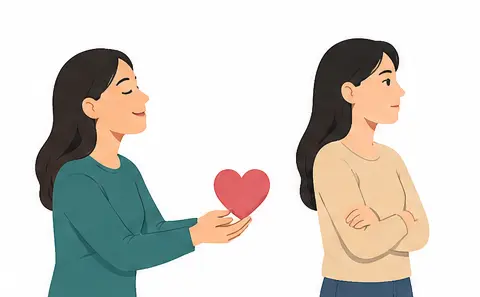
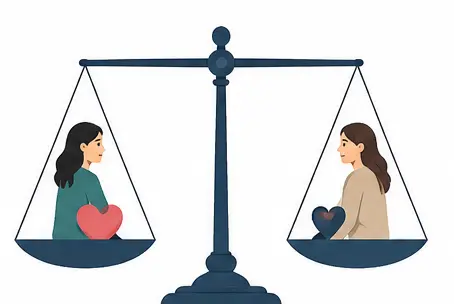
A one-sided friendship is where all the hard work flows in one direction. The emotional labor is yours. The initiative is yours. The investment is yours. One person keeps giving: Time, attention, support, energy. The other person keeps taking. Doesn’t give anything special in return. It’s not friendship, it’s an incomplete transaction.
This is not about keeping track of the last text. True friendships have ups and downs. Sometimes you need support. Sometimes they need you. This is normal. This is what friendship is. One-sided friendships are not built in 1 week. They are built over a pattern of months and years. The difference is never fixed. And you are the only one who feels this difference. They don’t even notice. Don’t calculate, look at the balance.
11 Signs of a One-Sided Friendship
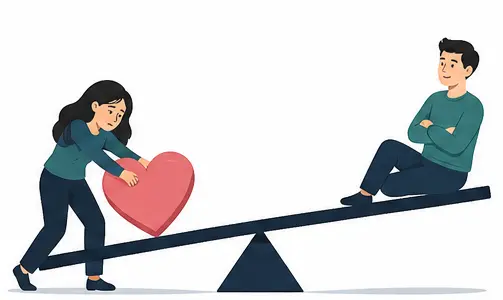
You’re always the one who reaches out first
 Every time you say “hello”, stop and think. It’s not about the perfect turn. It’s about investment. People give their time to those who matter to them. If they never take the initiative, then maybe you’re not as important to them as you think. It hurts, but it’s the truth.
You talk, they listen but only in one direction
Look at the direction of the conversation. It’s easy to ask, “How are you?” It’s hard to hear the answer. They ask, but without hearing the answer. They take the conversation to their own side, don’t they? You cry and tell your pain They will immediately say, “Leave it, listen to me with me too.” It seems that they understand your pain. But in reality, they are taking away your pain. Your story remains incomplete. Their story begins. In friendship, both take turns. In one way, only their turn.
You’re a “convenience friend”
 This sign stings the most. Weeks, months will pass. No message. No “How are you?” Then suddenly a message: Hello, how are you? No Dude, I needed some help. They need a favor, advice, a lift, a shoulder. You do the work, they disappear again. Silence returns. Until the next need. Ask yourself the real question: Are you a friend or a useful resource?
Your big news gets a flat reaction
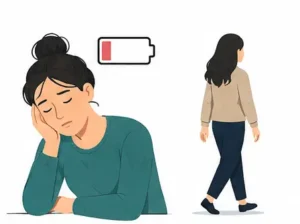
You got the promotion. After 1 year of hard work, the project was completed. The engagement happened. What a heartfelt message. The answer came: “OMG congratulations!” That’s it. Will not hug, will not ask “How did you do?” Will take the opposite direction. Yes, I remembered too. Friends are happy with your happiness. Enemies become silent with your happiness. One-sided friends, they just say “Congratulations” and get rid of their lives. If there is a flat in your happiness. Then understand, they are not included in your victory.
You’re always the one who adjusts
If you want to meet, go to the cafe near their office. If you want to talk, go at 11 pm when they are free. If you want to hang out, go to the same park where they go. When did you say to come to my house? When did you say, I am tired today, cancel it? In true friendship, sometimes you bend, sometimes they do. In one-sided bending, it is always your part. If they never bend for you. Then it is not friendship, it is a deal. And your loss.
They disappear during hard times
Everyone becomes friends at a party. The day you cried and slept. The day you only wanted a “I am here.” What were they doing that day? Message late reply? My friend, are you not in the mood today? Or did they change the subject?

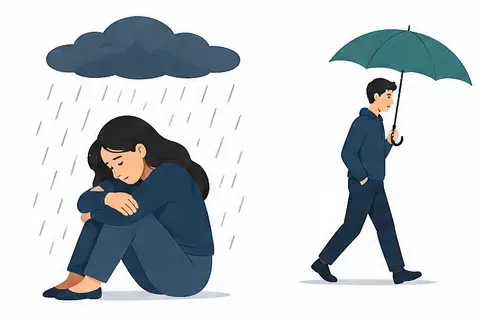
Remember: You will find many friends in fun times. But the one who stops in bad times. That is the real relationship.
You feel drained, not lighter, after seeing them
 Real friendship tends to leave you feeling lighter, even when the conversation was heavy. A one-sided friendship often leaves an unexplained heaviness a restlessness your nervous system notices before your conscious mind catches up. Don’t dismiss that feeling just because you can’t fully explain it yet.
They consistently forget things that matter to you
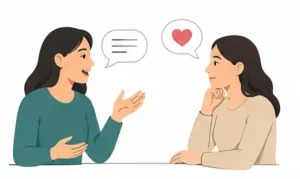
It’s human nature to forget once. Not remembering your important dates, not remembering your brother’s name, the interview you were afraid of, time and time again that’s not a memory issue! There’s a saying that people tend to forget what they don’t care about. It’s not memory that is forgotten, it’s information about priority.
You feel like you have to earn their attention
It takes time to write the perfect text. I keep thinking “Don’t get too involved anywhere”. And when they reply, then heart feels a little relieved. In true friendship, you don’t have to act. You are enough as you are. But one-sided? Everything has to be managed so that their interest remains. This is not friendship; this is an audition. And for basic attention, you shouldn’t give an audition.
When you speak from the heart, they belittle it.
If you talk, they get defensive. Sometimes they must have dared to say, “Dude, I think I’m the one who always messages,” but they didn’t listen. They got defensive. “You keep complaining.” “You think too much.” “The problem is with you.” A friend who is truly a friend softens after hearing what you say. They feel ashamed and try to fix it. But someone who minimizes your pain or blames you is telling them that your feelings don’t matter to them.
Your heart already knows
You knew from the beginning that if your heart was saying something, “Yes, this happens to me” Then understand. You weren’t confused. You were just afraid to say it out loud. Don’t feel guilty. Trusting your heart is the first step.
Why It’s Hard to Leave a One-Sided Friendship
Staying in a one-sided friendship doesn’t mean you’re foolish. The reasons people stay are deeply human, and there’s no shame in any of them.
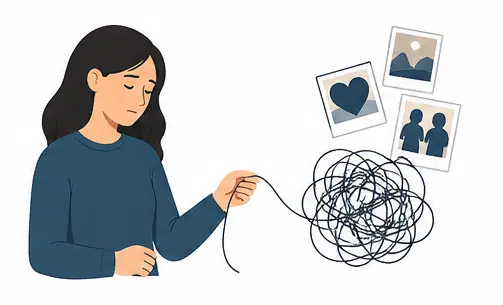
History feels like proof of value. “We have been together for 10 years.” The heart feels at ease, doesn’t it? It must be true if it’s that old. But what is it today? Today, you are the one running away. Today, you are the one getting hurt. 10 years ago, there was no proof that 1 year today is also okay.
Hope that everything will be “back to normal” If the friendship was balanced before, if there was ever a time when there was effort from both sides, when you felt valued, then the heart waits for that version. “The same old him will come back,” and years pass in this wait. Because letting go means accepting that that version will not come again.
Fear of judgment for “giving up. 10 years of friendship, just because they used to ignore me? Is that what people will say? You keep yourself quiet because of this fear. Let’s leave it, it’s no big deal. But what hits you in the heart every day is not a small matter. And you don’t need to explain it.
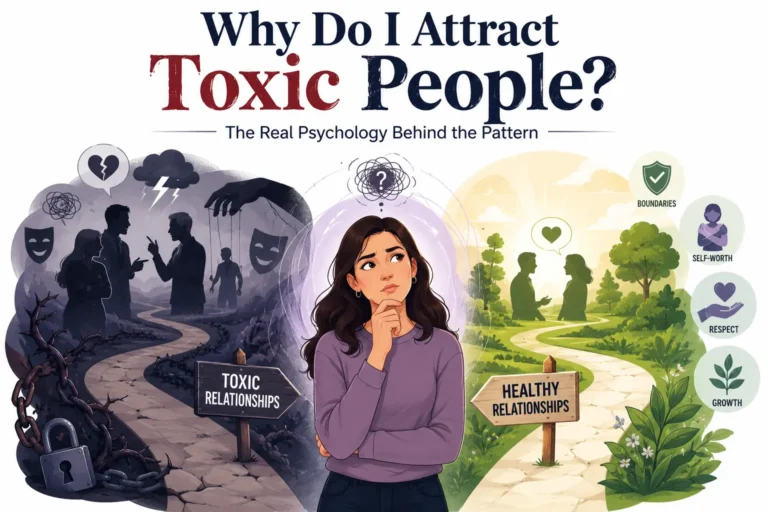
An old, familiar wound. If you were taught in childhood that love doesn’t have to be asked for, it has to be earned, then now, when someone ignores you, and you double your effort, your mind says, “Yes, this is right.” This is not comfortable. This is familiar. And a familiar wound is very dangerous. It is equally important to understand why you are stuck. It is not enough to just recognize the “red flags”. Why am I stuck here? Ask this question too. Because if you don’t understand the reason, then even if you leave this friendship, the same story will start again. Same pattern, new person.
Related on Savvy Psyche
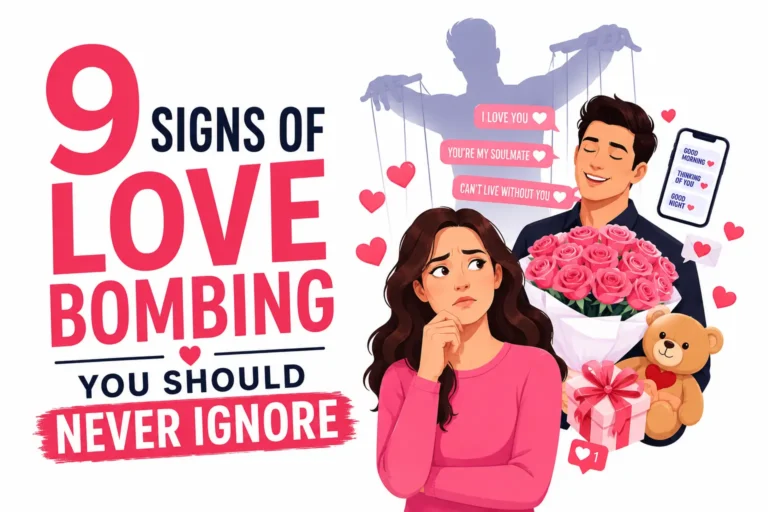
9 Signs of Love Bombing You Should Never Ignore
Why Do I Get Attached So Easily? Causes, Signs & How to Stop Emotional Attachment
11 Signs of an Emotionally Unavailable Partner (And What Actually Helps)
What to Do Before You Walk Away

Talk to your heart once.
They may not know. Some people are unaware. They are not bad. So, speak honestly, not angrily: “I feel that I am the one reaching out every time, “And I am starting to wonder Do you want this friendship so much?” “Instead of assuming I wanted to ask you, “Look, this is not an attack. It is about opening a door. Now it is up to them whether they come in or not.
Look at what they do, not just what they say.
“Sorry” doesn’t save a friendship. Anyone can “change” for 2 minutes. But the real issue is the next 2 weeks. Do they message now? Aren’t you waiting alone? Or is it the same old story again? If the behavior doesn’t change. Then the apology was just to shut you up. Friendship isn’t meant to grow. That’s your answer.
Step back and match their effort.
Don’t make every friendship a war, nor a big fight. Nor a last call. Just match. Give as much as they give. As long as they reply, take as long as they want. Friendship itself will tell its size. It may not be as big as before. But what remains will be true. And a small truth is better than a big lie.
What studies say about One-sided friendship?
The facts of the Research.
It appears that most people are actually quite poor at assessing mutuality for their friendship. One popular study presented 84 college students with a questionnaire asking them to rate how close they were to their fellow students and how they thought they would get rated by their peers. Of the 1,353 friendship nominations, 94% of individuals thought the friendship was being reciprocated, but actually about 53% were, according to the other person’s self ratings.
Friendships don’t simply disappear, either how friendships end is important. While neither type of friendship is necessarily the “right” one, an understanding that both are normal and to be expected, and that the emotional impact can vary widely depending on the trajectory of a friendship, may help ease the pain of the “passive” route (the one where you gradually see less of each other until it stops) into a sense of “done wrong.
But, as well as the emotional price, there’s a health case for real friendship too. The benefits of real, mutual connection to health are not only emotional, but also equivalent to smoking cessation, according to a large meta-analysis of 148 studies involving over 300,000 people. It’s a quantifiable component of a longer, healthier life.
A Real Pattern: Zoya and Norah
Zoya told me her story; my friend was Norah. In college. We were together for 8 years. With someone else at every turn. I got divorced, and she stayed up all night with me. Her job changed, and I prayed for her. Our conversations never ended. But in the sixth year, something cracked. Very slightly. The one that no one noticed. I would tell her, I got a job She would say, Yes, good. Well, listen to this, the landlord, I would laugh. She would say, Let’s leave it, she is worried these days. Then my trial came. Father got sick. Very sick. I told Norah. She said, ‘God will do good’.
But after that? Months passed. Hospital, doctor, decisions. Norah never asked ‘What happened?’ I would call. I would tell. I would cry, take care of her. And even make friends. I was sitting outside the hospital. I took out my phone. Opened chat. 4 months passed. There was not a single message from her ‘How are you?’ Then my heart understood. But I didn’t fight. I just talked. With love, clearly.
I said: Norah, I feel alone. Especially now that I’m breaking down. No accusations. Just tell the truth. I knew from Norah’s answer. I spoke from the heart. She said: I am also very busy. And the conversation ended there. I did not leave Norah. No fighting, no blocking. I just pulled my hands away tiredly. I stopped starting. If she did, she would have replied.
I just did not chase. And look, in a few months, Norah’s messages stopped on their own. Zoya said, ‘I started crying. Truly, I started crying. The friendship was not over. But I still grieved. But I also found peace. Stop running after the phone. Stop waiting for ‘Will you reply?’ Stop proving yourself to her.
A year later, son, I made new friends. Hiking group. I joined by chance. And look at the difference. She used to ask, ‘How are you?’ She used to remember what I said. She used to come. She really came. I told Zoya: ‘I didn’t know how much I had made emptiness normal, there was no noise in my story. No betrayal, no quarrel, no last message. Just the heart said softly, ‘Enough’. And I chose myself. This is what happens. One-sided friendship doesn’t die with fireworks. It ends when you say, I deserve half the effort.
When It’s Time to Let Go

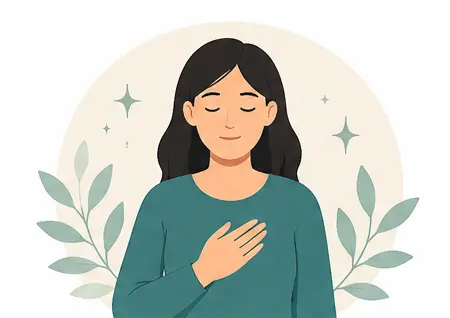
Not every relationship is meant to break up. Some friendships just need to be talked about. Say “This is an imbalance.” And they listen, they improve. But some people don’t improve. And then being stubborn is breaking yourself. If leaving is with respect. Then that is not a weakness. That is self-respect. Choosing yourself is the greatest loyalty. Look for these signs:
- Everything is the same even after talking
- You become insecure after meeting them
- You are saving the friendship, not living it
- They do not yearn for your needs; they mock them
- You are diminishing yourself so that they can be happy
Crying is a 10-year-old friendship, and all the signs are saying “Go.” Still, the steps are heavy. Because grief does not come only when love breaks. It also comes when the idea of that friend dies, whom you kept in your heart. The one you are missing may never have existed.
Common Mistakes People Make in One-Sided Friendships
Waiting for something “bad enough” to justify speaking up.
When there is a big problem, we think, when they do something really bad, then I will speak. But friendship does not break in a day. It breaks over small things. Once you told them, they did not listen. The second time you called, they hung up. The third time, you kept waiting. You do not need a big incident. These small things are enough reason to speak.
Treating longevity as proof of health.
This is the biggest deception. We think we have spent so much time together. So, it must be good. No. Time only tells history. How long have we been together? It does not tell health. How are we now? Some old friendships are like gold. And some are just old. Never looked inside. Just kept counting: ‘8 years, 10 years’. But never asked: Are we okay?
Assuming imbalance always means the other person is “bad.
Sometimes they’re genuinely busy, or express care differently than you do. You can name a pattern that isn’t working for you without needing to villainize anyone.
Disappearing without saying anything.
Silent withdrawal can leave both people confused and guessing. If it feels safe to do so, saying “this doesn’t feel right to me” directly is often more respectful to both of you than quietly vanishing.
Conclusion:
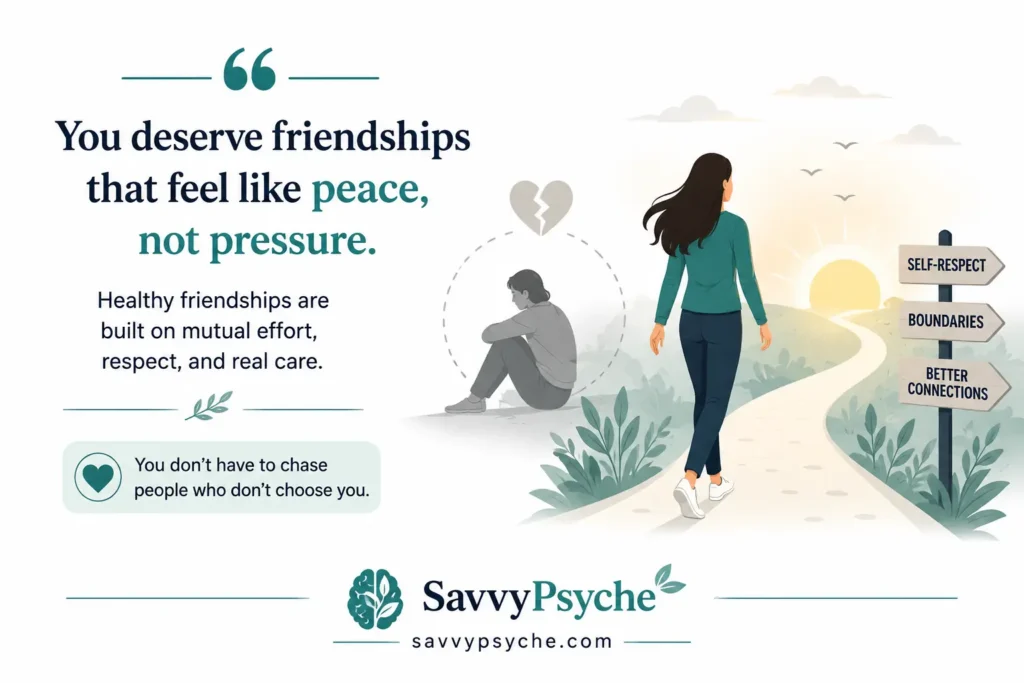
You are also worthy of being chosen. Put this in your heart. If you feel that friendship is one-sided, then it does not mean that you are asking too much. Neither are you needy. Or are you making drama? Or are you ungrateful? You just know this: Both should come in friendship. You have the right, Someone who asks you. And stops and listens. Someone who remembers you. Who comes in bad times? Who never runs after you, but walks to you. This is not much. This is just the beginning.
Reminder:
If you see yourself in these signs, then this is not the end of the story. This is the beginning. To give yourself permission: I can expect more. And a quiet confidence: Now I will go to those who are already ready to meet. Who will not have to be told. Who will come on their own. Who will choose on their own. You are not tired. You are awake.
Disclaimer:
This article is for informational purposes only. This is not advice from a doctor or therapist. If you are experiencing significant emotional distress, please speak to a licensed psychologist.
Sources & Further Reading
Almaatouq, A., Radaelli, L., Pentland, A., & Shmueli, E. (2016). "Are You Your Friends' Friend? Poor Perception of Friendship Ties Limits the Ability to Promote Behavioral Change." PLOS ONE, 11(3). Full text.
Vieth, G., Rothman, A. J., & Simpson, J. A. (2022). "Friendship Loss and Dissolution in Adulthood: A Conceptual Model." Current Opinion in Psychology, 43, 171–175. PubMed.
Holt-Lunstad, J., Smith, T. B., & Layton, J. B. (2010). "Social Relationships and Mortality Risk: A Meta-analytic Review." PLOS Medicine, 7(7). Full text.


One Comment