
Revenge Bedtime Procrastination: Causes, Signs & How to Stop It
It’s 11 p.m. You have to be up early tomorrow. You’re in bed. Then your phone lights up with a notification; you pick it up “just to check,” and somehow it’s 3 a.m. You knew this would happen. You did it anyway.
If you sound like you do, you’re not alone, and it’s not a lack of willpower. It’s called revenge bedtime procrastination. You can read in this guide what it is, why it happens in your brain, how it’s costing you, and specific things you can change to stop it.
What Is Revenge Bedtime Procrastination?
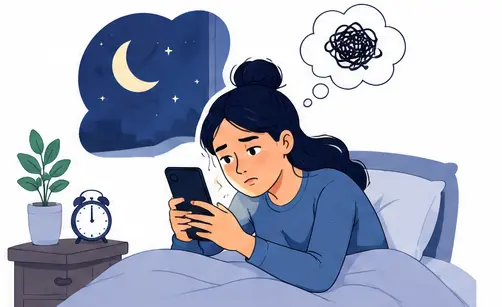
Three conditions have to be true for staying up late to count as revenge bedtime procrastination, rather than just a rough night:
- You are cutting into your own sleep on purpose: no one is forcing this.
- There’s no external excuse: no exam, no work shift, no sick child, no true emergency.
- You’re fully aware of the consequence: you know tomorrow will be harder, and you do it anyway.
It won’t count as “revenge bedtime procrastination” if the sleep delay is related to completing a task, taking care of a sick child, or a true emergency. It is simply the result of circumstances, rather than a self-imposed behavior.
Revenge bedtime procrastination is when you delay your sleep to gain personal time and pleasure instead of having a long and hectic day or going to sleep early at night. Here, revenge does not mean in a negative way, but when a person wants to do something for his own personal freedom, then that thing is a loss to him; he does it for his own pleasure.
In both cases, bedtime is delayed; however, general bedtime procrastination is often unintentional. In contrast, “revenge bedtime procrastination” involves an element of deliberate defiance.
Where the Term Came From
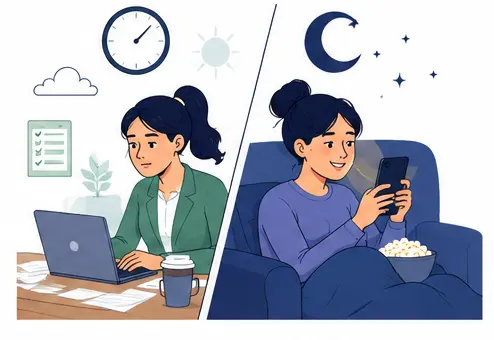
The concept traces back to a Chinese phrase, bàofùxìng áoyè – “revenge-style staying up late” which spread globally after journalist Daphne K. Lee referenced it in a viral 2020 post. It resonated because it described something millions of people were already living: work from 9 to 9, then nothing left for yourself so you steal it back after midnight, one scroll at a time.
Why it went viral:

Researchers who studied the pattern found it wasn't laziness it was a symptom of schedules with no built-in personal time. People weren't avoiding sleep; they were trying to reclaim a self that the day had swallowed whole.
What psychology says about bedtime procrastination?
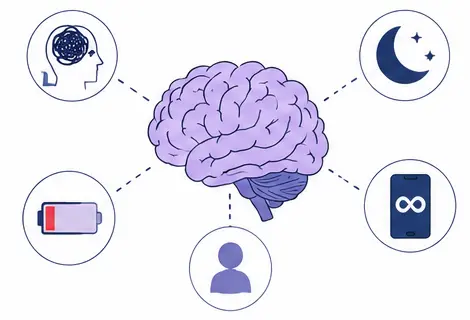
Multiple threads of research point to the same underlying mechanism: depleted self-regulation combined with a need to reclaim a sense of control.
Decision fatigue exhausts your self-control
People know there is a sacrifice to sleep, but by the end of the day, their self-control is exhausted, and the need for immediate gratification outweighs their need for sleep. A very limited ability to self-regulate acts as the basis for making decisions all day long: setting priorities, reacting, conversing, and determining the next step. By evening, most people’s ability to make difficult yet optimal choices is genuinely compromised. The reason for this is not a lack of willpower, but rather the fact that willpower is a resource that gets depleted with use.It’s a way of avoiding tomorrow
There is a reason for staying up late at night that no one talks about: the fear of tomorrow. If I keep my eyes open, today won’t end. If I close them, tomorrow begins. And what does tomorrow mean? Alarms, work, that same grueling routine that didn’t let me breathe today. That is why we stay awake. Not just to claim time for ourselves. But also, to push tomorrow as far away as possible. For those who suffer from intense anxiety regarding work or life responsibilities, the later you go to sleep, the more you delay the start of “tomorrow.” The exhausted rational mind knows this is illogical. But for the emotional and anxious mind, this delay is genuinely comforting.You’re reclaiming control over your day
When the day belongs to someone else, one has to steal the night. People do this because they feel that, during the day, the “self” gets lost somewhere. Yes, they know it means less sleep and will take a toll on their health. But how could they let it go? This is the one hour that doesn’t belong to a boss, a child, or a deadline. All day long, you were living for others. Only after midnight can you, for the first time, live for yourself. No messages, no demands, just you and whatever brings you joy. That is why it is so hard to walk away from this canvas. This is not an irrational attitude. It is a perfectly understandable human reaction to a life that leaves very little room for oneself. The issue is not the desire for personal time. The issue is the method by which it is being sought.Screens are engineered to make this worse
Autoplay, infinite scroll, and algorithmic feeds are built to remove natural stopping points. What starts as “five more minutes” becomes two hours, not because of a lack of discipline, but because the product is designed to defeat it.
Related on Savvy Psyche
Self-Sabotage: 12 Signs You’re Holding Yourself Back
Mental Tiredness: Why You Always Feel Mentally Tired (And How to Finally Stop It)
How to Become Mentally Strong: 11 Psychology-Backed Habits That Actually Work
Signs of Revenge bedtime procrastination:
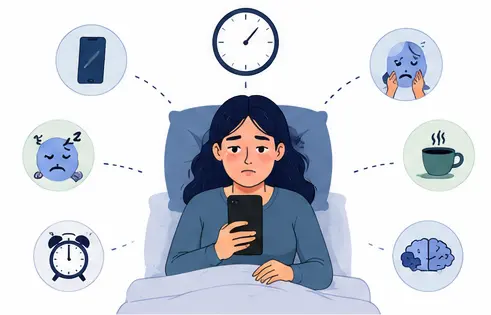
- It is natural to feel frustrated by the lack of free time during the day. Scrolling at night is actually an emotional reaction to a packed schedule.
- You often stay up late, engrossed in unnecessary activities whether it is constantly reading negative news or watching “just one more episode.” You are sacrificing your sleep for activities that could easily have been postponed.
- You put off sleep despite being tired. Even though you feel physically exhausted, you avoid going to bed simply because you want more time for yourself.
- One of your favorite sayings is, “This is my only time to rest. The best indicator of that is if you feel like you’re making up for lost time during the day and thus feel driven to delay sleep.
- You wake up in the morning feeling bad about yourself, guilty and remorseful, and vowing to never do it again, and then the next night you do it again. You feel bad in the morning, guilty and sorry, you say, “I don’t want to do that anymore,” and then you go back to a different routine the following night.
- During this time, you experience a vague sense of guilt, yet you are unable to stop it. Being aware of the behavior even while engaging in it is a fundamental characteristic of this pattern.
- The more difficult the day, the later you go to sleep, with the result that on the very days you need quality sleep the most, you get the least of it.
- You may have tried setting an early alarm or resolving to go to bed early, only to find that it didn’t work. That is because this behavior is not a matter of forgetting to sleep. It is a matter of refusing to sleep.
Revenge Bedtime Procrastination Impacts:
Bedtime procrastination has a very bad impact on your mental and physical health as well.
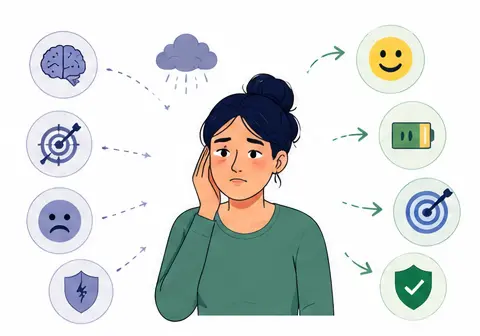
Poor sleep management: Revenge bedtime procrastination severely disturbs your sleep. Poor sleep cycle can lead to mental and physical health issues.
Mental issues: This habit can make you feel lazy and tired throughout the day. You can’t focus on your work properly, and then you face mental issues.
Mood swings: After bedtime procrastination, you will start having mood swings. You get angry or upset for no reason.
Guilty feel: After bedtime procrastination, you start blaming yourself and feel guilty.
Physical health: Your mental health can be severely compromised along with your physical health. Sleep is an important part of our lives and our health. But compromising on it can negatively impact your physical health.
Poor focus: Your mind may not be able to properly process something even after hearing it repeatedly because your focus is completely lost due to sleep disturbance.
Low self-control: You lose self-control and start to indulge your every desire. You crave unhealthy foods, like junk foods, which negatively impact your self-control and health.
A separate study published in Frontiers in Psychology, surveying 203 participants on sleep habits, procrastination, and self-regulation, confirmed that sleep procrastination is a common and independent contributor to insufficient sleep.
How to Actually Stop It
You won’t break this overnight, and that’s fine. These changes work because they target the root cause a day with no room for you not just the visible symptom of staying up late.

Fix the root problem, not the symptom
If you start here, all the other tips will work. Staying up late isn’t an illness; it’s a cry for help. A cry that means that there is no “me-time” in the day. Taking a break during the day doesn’t mean that watching less TV at night will make any difference. This is what you need to do: Make room for yourself during the day – but not at night. A time requiring no specific outcome, with no audience and no demands. Finding this small window of time in your day is the most important “upstream” change you can make.Schedule leisure like it’s a meeting
Fill your day with activities that you enjoy, and that physically tire you out and then stick to them. Do you know what the biggest problem is? We wonder, “How do I schedule leisure time?” But the truth is: if it isn’t on the calendar, it simply won’t happen. Tasks for others tend to find their way to us on their own. You have to actively claim time for yourself. Block it out. Give it a name. Write down “3:00 to 3:30 For Me” and treat it with the same importance as a meeting. Because it really is just as important.Set a “screen-off time,” not a bedtime
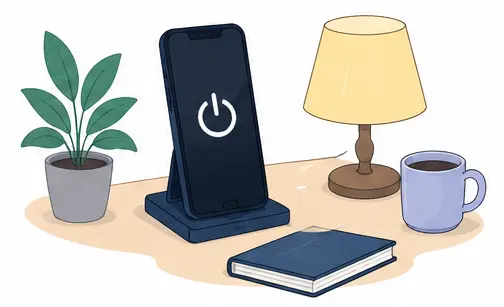
 You’ve tried saying, “I’ll go to sleep at 10,” right? It doesn’t work. We aren’t running away from sleep; we’re running away from the end of our “me time.” So, change the game. Ceasing the use of electronic devices at least thirty minutes, and preferably longer, before your intended bedtime is among the consistently recommended sleep hygiene practices. Blue light suppresses melatonin production, while the psychological stimulation from social media and streaming keeps the brain in a state of “engagement” rather than allowing it to “switch off.”
Change one habit at a time
Give up the plan to change everything overnight; it will fail. Just pick one small thing, only one, and before you do, recall your “why.” “Why do I want to go to bed early?” Pick a single word for the answer: happiness, energy, calm, or peace. Repeat that word in your heart three times before getting into bed. This is a small anchor that will pull you forward. A sudden, complete overhaul of one’s routine rarely sticks. Just a single “micro-habit”, such as moving your phone charger to the kitchen, setting a specific time to make tea and sit quietly, or playing a low-energy playlist to unwind, is far more likely to establish a lasting new pattern than attempting to transform your entire evening routine all at once.Take real breaks during the day
It is important to take breaks during the day. There is a tendency to go through the day without taking a break, but doing so leaves both the body and mind exhausted by evening. The most effective preemptive measure against the tendency to engage in retaliatory behavior in the evening is a midday recovery break. Even a mere ten-minute break during the workday, provided it involves a genuine disconnection from work, rather than simply switching from one screen to another, clearly restores the capacity for self-regulation. This very capacity is essential for making healthy choices in the evening. Yet, the individuals who need it most. These are the ones who believe they cannot afford it, when in reality, they are the ones for whom it is most crucial.Set a fixed wake-up time first
Bedtime comes later; wake-up time comes first. Alarm set for 6:30? Alright. Now, work backward. I need 7 to 8 hours of sleep, so my eyes need to be closed by 10:30 or 11:00. When bedtime becomes a matter of calculation rather than a rigid rule, the heart accepts it. Because it is no longer a matter of whim, but a necessity. Establish a solid routine and stick to it. Science confirms this, too: If your sleep and wake times are fixed, your sleep quality naturally improves, and you break the habit of telling yourself, “Just five more minutes.”Make bed something to look forward to, not a punishment

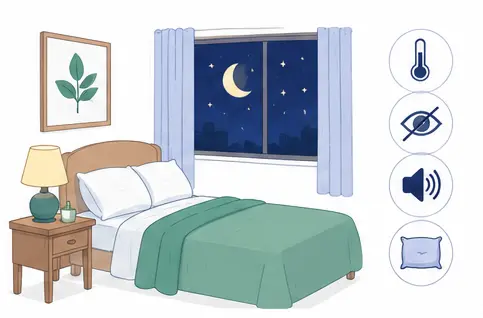
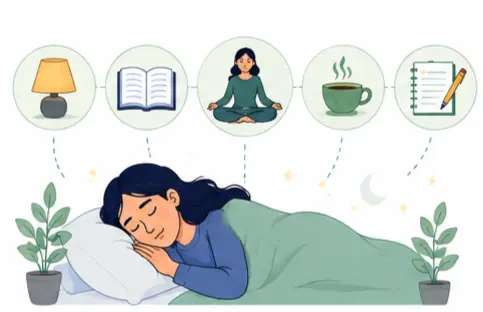
It all depends on how you view your bed. If it is merely a place to “switch off the phone and turn out the lights,” your mind will keep racing. But if it means “blanket, tea, and that novel,” you will find yourself naturally drawn to it. Make your room a sanctuary. An expensive mattress isn’t necessary; it is the atmosphere that sends the signal. You naturally want to go where you can breathe easily. Do two things: fix your routine and make your room a place of tranquillity. No heat, no light, no noise. Just cool, dark, and quiet.
When to Seek Professional Help
Talk to a doctor or sleep specialist if:
- When your nightly sleep drops below six hours.
- When your focus, mood, and work during the day are all affected.
- When a sense of heaviness or sadness begins to weigh on your mind. And when every attempt to fix it yourself fails. That’s it don’t fight this battle alone. Talk to an expert.
- A sleep specialist or therapist will assess the situation to see if this is stemming from an underlying issue be it anxiety, ADHD, depression, or a sleep disorder. And once the root cause is identified, a targeted solution can be found.
- If the root issue is the work environment or the structure of your life, leaving truly no time for personal recovery, then a therapist can help you determine what changes are possible and how to advocate for them, whether at work, in relationships, or in your relationship with yourself.
Reminder:
We all like freedom. We don’t want anyone to control us. But discipline is very important to live life. If you are also going through revenge bedtime procrastination, it doesn’t mean that you can’t reduce it, nor do you have to feel bad about yourself. Instead of spending a hectic or stressful day, every person prefers to spend the entire night without any punctuality. But adopting this habit regularly can bring a lot of negativity into your life.
Unless you take your time, develop natural and peaceful habits within yourself. Due to this, there will be positivity or calmness in your life, and your mental health will also remain good.
Disclaimer:
This article is intended for general educational purposes and reflects a synthesis of publicly available sleep research. It is not a substitute for professional medical or psychological advice. If you’re dealing with a serious sleep or mental health concern, please consult a licensed therapist or sleep specialist.
Sources & Further Reading
-
Avocado Green Mattress / Talker Research (2025). Survey on revenge bedtime procrastination among 2,000 U.S. adults. aol.com/articles/revenge-bedtime-procrastination-could-costing-180915324.html
-
Centers for Disease Control and Prevention. "About Sleep" & adult sleep duration recommendations. cdc.gov/sleep/about/index.html
-
Sleep Foundation. "Revenge Bedtime Procrastination." sleepfoundation.org/sleep-hygiene/revenge-bedtime-procrastination
-
Kroese, F. M., et al. (2014, 2018) Self-regulation and bedtime procrastination research, summarized in: "The Psychology Behind Revenge Bedtime Procrastination." Full text (PubMed Central)
-
Carlson et al. (2023)Bedtime procrastination, sleep duration, and daytime fatigue, summarized in: "Revenge Bedtime Procrastination: Causes & Solutions." somnologymd.com/2025/03/revenge-procrastination
-
The Statesman. "Revenge bedtime procrastination: Gen Z is losing 332 hours of sleep a year on purpose." thestatesman.com/lifestyle/revenge-bedtime-procrastination
-
YourTango. "The Psychology of Revenge Bedtime Procrastination," citing a 203-participant study published in Frontiers in Psychology. yourtango.com/self/psychology-revenge-bedtime-procrastination




One Comment