
Why Do I Keep Replaying Conversations in My Head? (How to Stop Overthinking Small Interactions)
You said something completely ordinary in a meeting. No conflict, nothing inappropriate just a small, slightly too brief pause afterward, no smile. And that tiny moment doesn’t leave your mind for the rest of the day.
Then it’s 11 PM, the room is dark, and your mind fixates on that one half-second of silence. Did I say something wrong? Did I offend them? Did everyone notice? Are they starting to see me differently? One small thing, and your whole mind is suddenly wide awake.
Replaying conversations is something almost everyone does occasionally. But for some people, it happens far past the point of usefulness. Here’s what’s actually going on, and how to tell the difference between reflecting and getting stuck.
What Does It Mean to Replay Conversations in Your Head?
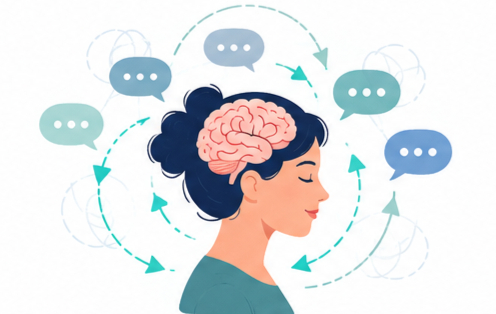
There is a word for repeatedly turning thoughts over in your mind rumination. According to the American Psychological Association’s, rumination is “repeatedly thinking about distress and its causes.” Replaying past conversations in one’s mind is common. We are connected to people; that is why it matters to us. And that is precisely why you cannot simply “let it go.” Mentally replaying events over and over is called rumination. It is the brain’s way of managing itself; the more you repeat the thoughts, the more in control you feel.
It also prepares you for the next time. Ultimately, it is all happening to reduce that tension. The key lies in the “attempt.” You keep repeating things, thinking, “Now it will become clear; now I’ll understand.” Yet, breaking this habit becomes difficult. It consumes your entire day, preventing you from living in the present moment. The reason is that your mind is seeking something that cannot be attained through mere repetition. And understanding this distinction, between expectation and reality, is crucial. That is precisely why you keep turning these thoughts over in your mind.
Healthy Reflection vs. Rumination
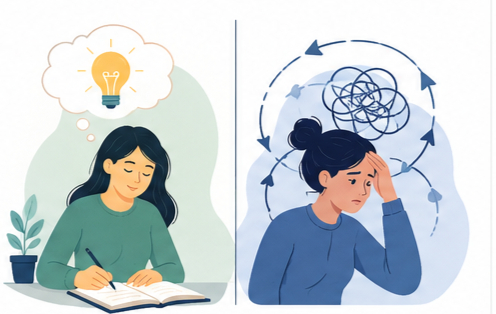
Not all reviewing of a past moment is a problem. Healthy reflection follows a clear shape: A difficult situation occurred You thought about it once You drew a lesson You let it go. The thinking process did its job and then it stopped.
Rumination means: think, think again, and keep thinking, with no end in sight. When no conclusion is reached, the mind just goes around in circles. And all the while, there is tension and self-criticism. The real issue isn’t what you are thinking. What matters is what happens after the thinking. If you think through something, find a solution, and then stop that’s fine. But if the same thought keeps circling back, causing only mounting anxiety, and you are left with a nagging feeling that “something has gone wrong” then that is rumination.
Why the Brain Replays Conversations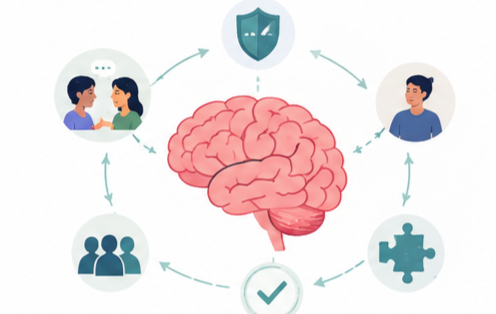
Brain replay conversations in our head to save us from social rejection. When we think about the past interaction, we analyse our behavior what we said and how we said it and how others reacted on our behavior. It helps us to understand our mistakes that are present in our behavior, which is hurting someone. By repeating conversations, we learn which helps us not repeat these mistakes in the future and helps us to build positive relationships and social connections.
Signs Replaying Has Become a Problem
- You lose sight of the whole picture and fixate on just one mistake of yours. And then, the self-reproach begins: “How stupid I am.” “What a fool I am.” “Perhaps everyone is just annoyed with me.” The full picture vanishes, leaving nothing but blame.
- No evidence, yet the verdict of guilt is already passed. You assume, all on your own, that the other person is judging you. And then, a movie starts playing in your mind: “What must they be thinking about me right now?” “They must surely be thinking something bad.
- Opening and reading the same message 10 times. “Did I write something wrong somewhere?” Keep scrolling through emails, WhatsApp, chats, all of them. To comfort yourself. But the strange thing is that comfort never lasts. 5 minutes later, doubt again.
- That same scene keeps playing on a loop in your mind. You couldn’t stop it even if you wanted to. You can’t focus on work, sleep eludes you at night, and you can’t relax during the day either. It’s as if the “pause” button in your brain has simply vanished.
- Rumination = The enemy of sleep. The mind doesn’t switch off. That is why you spend hours tossing and turning in bed. Falling asleep is difficult; sometimes, sleep doesn’t come at all.
- That one conversation. My mind replays it every single day. “If only I had said it like that.” “Why did they say that?” Days go by, yet the result is zero. Far from finding a solution, I cannot even find peace.
- You get so caught up in old patterns that you miss out on what’s happening in the moment. Someone is talking to you, yet you are busy monitoring yourself internally: “Am I saying the right thing? Do I seem weird?” In the process, you end up failing to actually listen to what the other person is saying.
- A voice from within says, “I did something wrong.” Shame, guilt, or a strange kind of fear. The problem is, nothing significant actually happened. Yet, your mind is blowing it up to ten times its actual size.
A Real Pattern: Zara’s Story
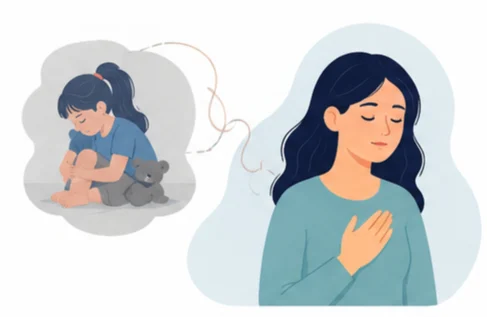
Zara, 32, leads a small design team and is well-regarded at work. But one Wednesday at 1 AM, none of that mattered. Earlier that day, she’d offered an opinion during a meeting. Her manager had simply nodded and moved to the next topic routine, forgettable to anyone else. To Zara, that two-second nod felt subtly “off,” in a way she couldn’t prove or explain.
It turned into a six-hour loop. Did I sound too harsh? Did I offend someone? Did everyone else notice too? She replayed what she’d said, drafted three different apologies, and got no sleep. The next day, she scrutinized her manager’s expression all day who, it turned out, seemed completely normal.
“The most painful part,” she said, “was that I knew right then it meant nothing. I was aware I was being irrational. But I couldn’t stop.” Eight months later, in therapy, she traced it back: the meeting was only the trigger. The real root was a childhood home where a wrong tone risked real consequences, where every word had to be weighed before being spoken. That old hypervigilance scanning every interaction for danger had never fully switched off, even now that the actual stakes were low.
Therapy didn’t erase the instinct overnight. But over time, she learned to notice the pattern activating in real time, choose curiosity and presence instead, and let the old “danger” signal pass without obeying it. “That night,” she said, “my worry didn’t disappear completely but I slept peacefully anyway.”
Related on Savvy Psyche
Mental Tiredness: Why You Always Feel Mentally Tired (And How to Finally Stop It)
Fear of Judgment: 14 Ways to Stop Letting Others’ Opinions Control Your Life
What Drives This Pattern
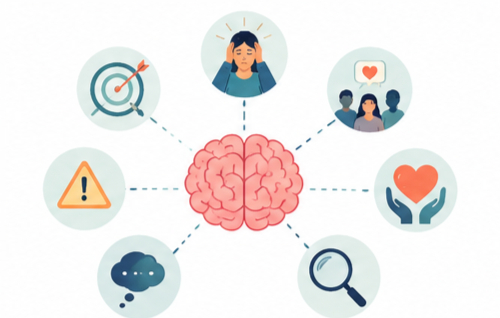
Overthinking as a habit
Some people overthink every conversation they do. This is one of factor that they do repeat conversations again and again. Overthinking and replaying conversations in my head can sometimes lead to anxiety or stress.Fear of embarrassment
If a person feels Embarrassed being judged they do repeat the conversations in their head to analyze what mistake they do during conversationSocial anxiety
People who worry about how others perceive them. They remember the conversations and replay in their head to analyze that if they say anything wrong or embarrassing.A strong need for approval
Some persons want strongly acceptance from others. This is the reason they replay conversations to analyze that the conversation is good or not, other people will accept their conversations or not.Genuine desire to improve
Replaying conversations is a learning process, so people replay conversation to analyze the what they said to improve the future conversations.Emotional significance
Some conversations are emotionally important so our mind repeats the conversation to understand the situation.
Why do I overthink small interaction for days?
It’s common to overthink small interaction. This can happen for a variety of reasons, including fear of judgment, low self-confidence, perfectionism, past embarrassing experiences, and sensitivity to rejection. Many people experience replaying conversations in my head during these moments, analyzing what they said and how others reacted.
Fear of Judgment is one of reason of overthink small interaction. Some people have fear of being judge negatively that’s why they overthink small interaction and analyze what they say. They are worried about if they say something wrong or if someone misunderstand their interaction. Our brain repeat conversation to notice mistakes.
Low self-confidence is another reason for overthinks small interaction. People who have low confidence they replay their conversation to analyze their behavior. They also question themselves that they handle the interaction properly or not. They have doubt themselves which reinforces replaying conversations in my head.
Perfectionism Refers to be perfect. Some people wanted every interaction perfectly. This people thinking about the conversation is best or not. If their conversation was not said best, they thinking about the conversation and imagine possible perfect conversation. The perfection they wanted to lead the repeated every small interaction in their mind.
Past embarrassing experiences, People who experience embarrassment in the past conversation overthink small interaction to protect them self from embarrassment. Our brain repeated the small interaction to protect from embarrassment again.
Sensitivity to rejection Refer to possibilities of being rejected. People who are sensitive to rejection overthink and overanalyze the small conversation to avoid the rejection or dislikes from others. This leads to overthinking small interactions.
Is Replaying Conversations In my Head is a Sign of Anxiety?
Replaying conversation is a sign of anxiety sometime but not every time. Replaying conversation in mind sometime for betterment for future conversation. When replaying conversation is going to be extreme or frequent it will cause anxiety. For better understanding, we look at the difference between normal/healthy reflection or anxiety loop.
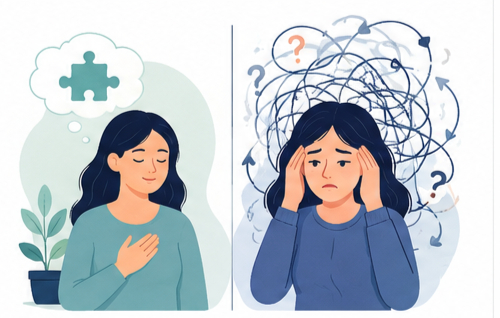
Normal reflection vs anxiety loop
|
|
|
|
|
|
|
|
|
|
|
|
|
|
|
|
|
|
|
|
|
|
|
|
|
|
|
When Replaying Conversations Becomes Unhealthy
Replaying conversations in our heads become unhealthy when its starts affect mental well-being. These signs are:
- The thought continues for hours or days at a stretch
- It’s genuinely hard to control or redirect your thinking
- It causes real stress or anxiety, not just mild annoyance
- It affects your sleep or overall mood
- The focus stays on the negative or on possible rejection
- You start avoiding social situations to prevent future replay loops
How to Stop Replaying Conversations in my Head?
If repeated conversation becomes extreme, we need to stop this. The following strategies can help to stop replaying conversation.

Label the thought pattern
When you recognize that your mind is repeat conversation and it causes stress and anxiety. Start labeling it that it is your thoughts not reality. For easy doing firstly, pause and take a breath then say to yourself it is only a mind replaying my thoughts and remind your self it is just a thought not a reality
Challenge “mind reading”
Mind reading happen when you think you know what other people think about you. To control your replaying conversation, challenge your mind reading skills. Ask your self do what I thought is actually a thought of other people or I am guessing the wrong. When you challenge your mind reading it will help you to control unnecessary worry.
Set a firm time limit for reflection
Thinking about a problem isn’t bad; what’s bad is remaining consumed by it twenty-four hours a day. So, tell yourself: “I will think about this for just 15 minutes.” Set an alarm. Once the time is over, don’t keep living in the past and move on. This helps calm your mind that, “Yes, I didn’t ignore it. And it frees you from getting stuck on the same issue all day long.
Shift into physical movement
When you are overwhelmed by too many thoughts, get up instead of fighting them. Take a five-minute walk, tidy up the room, or pour yourself a glass of water and drink it. Physical movement shifts your brain’s focus. The thoughts don’t stop completely, but they stop screaming quite so loudly and that is enough to get started. It will help to reduce your stress and brain give you break from repetitive thoughts.
Practice self-compassion
When you are feeling bad, state “Today I am not having a bad day”. When you make a mistake say, “I am not a failure, I am trying.” Place your hand on your heart and say, “I am here with you. The longest war we have is war with ourselves. The only way to end this war is to befriend yourself. When repeated thoughts cause stress, treat yourself kindly, become your own friend, and ask yourself, ” It’s ok to make mistakes. I am learning. Self-compassion helps to reduce fear of judgment, embarrassment, or rejection.
When to Seek Professional Help
Occasional rumination is normal and workable with the strategies above. It’s worth talking to a licensed therapist if the loops are frequent, last for hours or days at a time, are affecting your sleep or daily functioning, or if you notice the pattern tracing back to an old, deeper fear the way it did for Zara. A therapist can help address both the immediate habit and, where relevant, the older root underneath it.
Reminder.
Dwelling on the past doesn’t mean you are being dramatic. It means your heart takes relationships seriously. It means you have learned to read the danger hidden in silence, a glance, or a tone of voice, while others simply move on. You are sensitive. And being sensitive is not a fault.
Don’t try to reclaim the moment that has already passed. The conversation happening right now requires your presence. As for the one that took place three hours ago… it is over. Reliving it won’t change it, nor will it bring you peace. Replaying the past doesn’t resolve uncertainty. But the next few hours? They are yours right now. You can choose to truly live them, or spend them chasing something that has already become the past.
Disclaimer:
This article is for informational purposes only. This is not advice from a doctor or therapist. If you are experiencing significant emotional distress, please speak to a licensed psychologist.
Sources & Further Reading
Nolen-Hoeksema, S. (1991). "Responses to Depression and Their Effects on the Duration of Depressive Episodes." Journal of Abnormal Psychology foundational Response Styles Theory of rumination, as reflected in the American Psychological Association's Dictionary of Psychology. Summary via American Psychiatric Association
Wikipedia "Rumination (psychology)" (overview of Response Styles Theory and related research)





3 Comments