
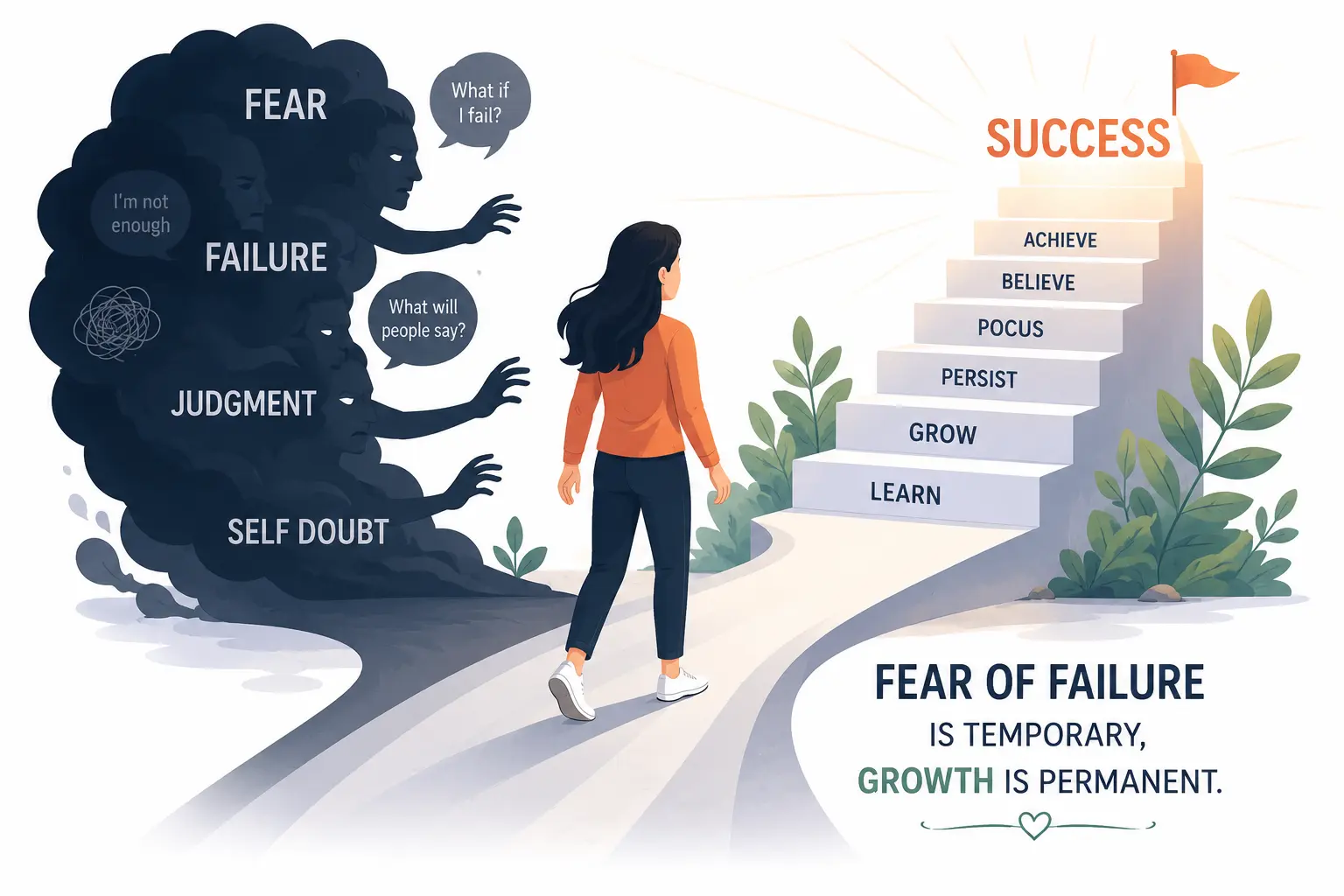
Fear of Failure: Causes, Signs & 12 Proven Ways to Overcome It
Sometimes in life, you get many opportunities, but the fear that you will fail somewhere ruins those precious opportunities. That opportunity doesn’t necessarily have to be your success. Sometimes, failure also teaches you many life lessons. You gain experience and lessons for the future. But your fear of failure never allows you to live in the present nor to live in the future.
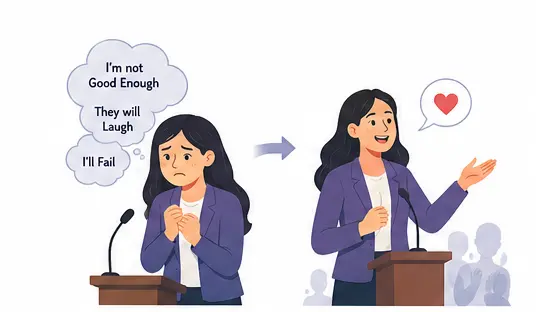
I used to be very scared of public speaking. I always used to think that whenever I spoke, people would laugh at me and make fun of me. When I was in university, I always took leave during presentations because of this fear. But one day my professor told me that there was no benefit in keeping this fear inside, either I should let it out or live my whole life in this fear.
That day, I got courage from his words and participated in the university’s speech competition and prepared a lot. Then, finally, the day of the competition arrived, and I was nervous in the beginning, but I gained confidence in myself and started giving speeches. I didn’t even realise when I finished my speech with such confidence, and the audience also boosted my confidence by clapping. From that day onwards, this fear of mine became my confidence and strength.
Related on Savvy Psyche
What Is Fear of Failure?
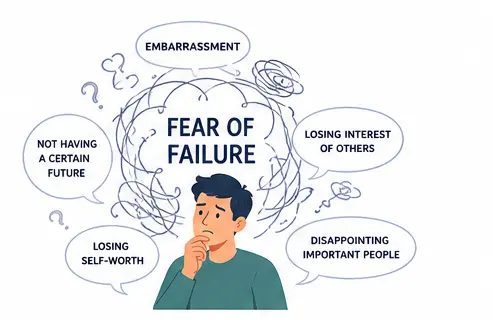
Fear of failure is a persistent fear that you will fail. This fear can happen to you in your studies, career, or any personal phase. Fear of failure, also called Atychiphobia, is a persistent fear that you will fail. This fear is very different from normal fear. It involves a constant fear of failure.
Conroy’s 5-dimensional Model, 2001
According to Psychologist David Conroy, the fear of failure is a fear of five things:
Fear of embarrassment
Fear of losing others' interest in you
Fear of displeasing important people in your life
Fear of not having a certain future
Fear of losing your self-worth in front of others
Harvard Business Review Study: Says that 60 percent of professionals are afraid to take on a new project, fearing that it will fail. And this fear costs companies billions of dollars in losses.
Where Does This Fear Come From?
Failing depends on your experience and past habits.
Childhood and family:
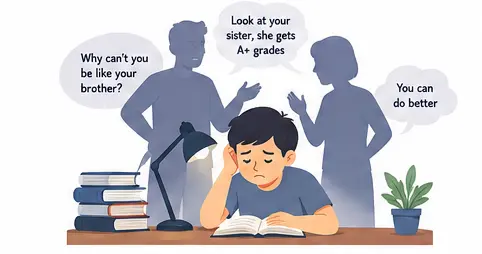
People who have experienced strict parenting in their childhood can easily develop a fear of failure. If their mistakes are reminded of them from childhood, their mistakes are punished, they are constantly threatened with failure, they are threatened and punished for their mistakes instead of being taught a lesson, then this fear of failure develops within them for the rest of their lives. When parents always tell their children that their brother can get A grades, your sister can get so many marks, you can’t, then because of this comparison, he gets scared and develops this fear.
The Education system: Education system plays a very important role in the fear of failure. Mostly, our education system students who are very bright receive a lot of praise and importance, while those who are slightly weaker are subjected to extreme strictness in their studies.
Past trauma and rejection: If a person has had a bad experience in his past due to any kind of rejection or failure, then this trauma gets converted into fear until it is healed.
Environmental learning: If you watch someone around your environment fail, you feel as if you, too, will fail. But each person’s efforts and way of learning are not the same; it is not right to lose your courage after seeing another person fail. A toxic environment also increases this fear. For example, if you work in a workplace where you are insulted instead of learning lessons from mistakes, then the person gets scared of making mistakes and avoids availing opportunities in the future.
No backup plans: You feel that if you take a step, you don’t have any backup, and you are financially in trouble, which is sometimes true. A person should have savings or backup plans. But if you are getting a good opportunity and you feel that it will benefit you, then do not overthink and avail it.
Financial crisis: A boy who supports the entire family financially has no chance of failing. He always wants success and financial stability. However, if he fails in any particular area, it can put him in financial trouble. Then this failure becomes a fear for him.
Toxic workplace: When your workplace is toxic that are criticized for every small thing, then you are afraid to try new ideas.
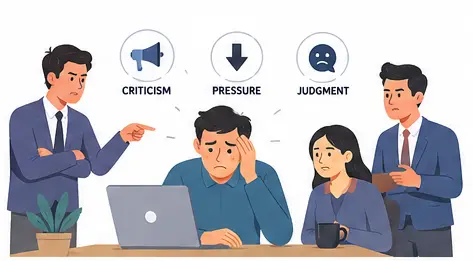
Fear of judgment: You fear failing because people will call you irresponsible, careless, or worthless. Therefore, you always fear failing because of people’s judgment.
Perfectionism: Perfectionists in all they do are really scared of failing. To them, even a tiny mistake can feel huge and cause a lot of mental stress.
My Personal experience, starting a business
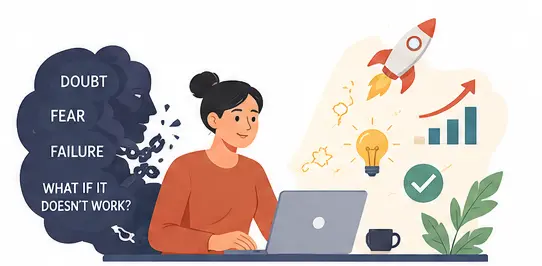
I was very fond of doing business from the very beginning. Everyone used to tell me that it is very tough to run a business for a girl. And you don't have any experience at all. Some of my relatives started an online business. After some time, they were losing money and had to shut it down. This made me feel very sad. Because of this, my family told me that you too should not fall into the trap of online business. They said focus on your studies, complete the degree, and get a good job. But I did not want to do a job. Then one day, I had an idea: why not create my own website and start online counselling? I created my own website, I post articles related to mental health there daily, and I also deal very well with people who take therapy and counselling. Initially, there were some ups and downs, and sometimes my confidence also went very low, but I did not lose courage and am working hard till today, and I am sure that one day I will achieve success. Never let the fear of failing and seeing others fail spoil your dreams. As long as you work consistently, you will definitely achieve success one day.

Reminder: Consistency is a key to success.

My life after this fear:

To be very honest, I was really afraid to start with. I even messed up a time because I was not sure what I wanted to achieve. But I didn't get discouraged by those mistakes. Now I am not afraid of failing because I know that if I fail at something, I get some experience from it for my next planning.

Moral of the story:

After reading this story, we will reach that point, you and I, learned that we should never lose courage at any stage of life. With this thought in mind, even if we lose, we now have the experience and lessons of our past that can lead us to success and avoid our mistakes.
How Fear of Failure Affects Your Mental Health
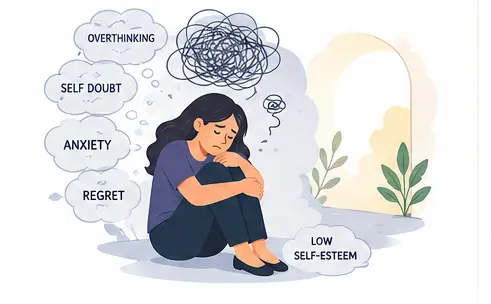
When someone keeps constantly comparing themselves to others and thinks they are a failure, they start feeling useless. Thinking about old mistakes and believing himself as a very negative impact on your mental state. Every time you start any work, you start feeling anxious or worried that you might make a mistake. If you make a mistake by chance, you start feeling negative about your self-image, like you are careless, and you can’t do anything right. Fear of failure makes you avoid meeting people or attending group meetings, which reduces your socializing and makes you feel lonely or sad. The fear of failure practically slows you down in life. This makes you feel uneasy and unsure about your life.
What Psychology Says About Fear of Failure
According to psychology, failing is not a weakness. In an environment where a person is born and learns to fail negatively, the very title of failure means being in danger. For example, a child is taught from childhood that if she secures first position and A grades, only then will she be given gifts. Otherwise, she will be punished. Similarly, whenever that child makes a mistake, she feels herself in a danger zone.
The university students are reminded that if they do not get good marks, they will not get a scholarship or a job as well. This thought gives mental stress to all the students, and they are always afraid of learning with mistakes.You can also eliminate this fear. Rewiring your brain with positive affirmations or some small practical habits, which you’ll explore in more detail later in this article, will greatly help you eliminate this fear.
12 Proven Ways to Overcome Fear of Failure
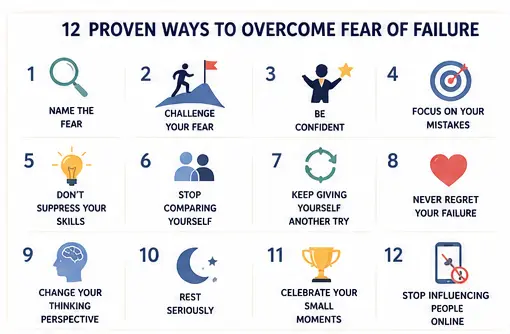
Name the fear precisely
The most dangerous part of fear of failure is that your fear is nameless, and when you don’t name it, it becomes more dominant. According to research from the University of California, when you name your fear or label it, your risk decreases by 50%. Name your fear and say its name 5 times a day to yourself. You can eliminate it yourself.Challenge your fear:
The biggest cause of fear of failure is based on fabricated evidence. It reminds you of the thought of failure before every action, causing you to become overwhelmed by fear even before you act. However, if you challenge and question your fear, it will diminish. According to psychology, CBT techniques involve changing your thinking based on facts and challenging negative thinking. So, challenge your fear and eliminate it based on facts. If you are afraid of failing, challenge your fear and win by eliminating fear.
Be confident:
Fear of failure and low confidence are similar. When your confidence reaches zero, you automatically develop a fear of failure. Albert Bandura, in his self-efficacy theory, says that self-confidence doesn’t mean you can do anything. Rather, it means you can learn, practice, and lose, but you can get back up and learn and face the challenge. Remember, when your confidence is at its peak, your fear of failure will not diminish. Be confident in yourself and believe in your skills so that you can do everything.
Focus on your mistakes:
The most dangerous trap of fear of failure is that it confuses you with your self-identity. It forces you to think that you have done something wrong, that you are incompetent, that you cannot do anything right. According to a NASA study, astronauts who learn from their past mistakes and prepare well for future improvements have a 40% higher chance of success. Even if you fail, instead of blaming yourself, focus on your mistake and improve for the next time.Don’t suppress your skills:
Due to this fear of failure, a person is unable to utilize his talents or skills due to people’s judgments. Due to which he considers himself inferior. Never hide your abilities and skills for fear of failure. Use them positively to achieve success.Stop comparing yourself:
Always remember that you are different from others. Every person’s hard work and thinking habits are different.Seeing the good things you have. Stop making a bad image of yourself because of what other people say, and never compare yourself to anyone.Keep giving yourself another try:
Failing behind or failing once does not mean you can’t do it. You should definitely give yourself a second chance. You didn’t have experience the first time, but now you have both experience and lessons.Never regret your failure:
Failing is very painful, but regret leaves a mark on a person’s entire life. Therefore, never regret your failure.Change your thinking perspective:
Start to look at your bad thoughts in a good way. Like, if you think today’s meeting was bad because of me, change it to a positive one and think, “What mistakes did I make in today’s meeting? I will correct them and perform better tomorrow.”Rest Seriously:
Due to fear of failure, you keep yourself mentally stressed all the time, due to which your mental peace remains disturbed. Give yourself rest and get enough sleep. The more tired you become, the more restless and tense you will feel.Celebrate your small moments:
Fear of failure always remembers their past failures or not seeing the small achievements of their past, which destroys their enjoyment of life. Enjoy every small happy moment in your life and celebrate it.Stop influencing people online:
Never let yourself be influenced by the fake lives of social media. Remember, behind everything you see on social media, there’s a completely different reality.
When to Seek Professional Help
Self help strategies are a valid beginning. However, there are times when struggling with fear of failure is deeper than any single strategy can reach and that a licensed professional can help to expedite and deepen the recovery process.
- Your fear is a major factor in not being able to work, maintain relationships or engage in normal pursuits
- It is accompanied by persistent anxiety, panic attacks or depression
- You discover you are adopting avoidance behaviors that are negatively affecting other aspects of your life.
- The fear is linked to childhood trauma or to a particular event that hasn’t been dealt with.
- You’ve tried self-help strategies repeatedly, but with little success.

Conclusion:
I hope that after reading this article from Savvy Psyche, you will better understand your fear of failure, how it happens, what causes it, and how you can control it. Remember, every human being feels fear. If you have this fear, it does not mean you are different from others. But just do not let this fear take over you. Never suppress your skills and positive abilities, and always be confident in yourself. You can do anything if you have the courage.
Sources & Further Reading
Dweck, C.S. (2006). Mindset: The New Psychology of Success. Random House. View book
Frost, R.O., Marten, P., Lahart, C., & Rosenblate, R. (1990). The dimensions of perfectionism. Cognitive Therapy and Research, 14(5), 449–468.Moser, J.S., et al. (2011). Mind your errors: Evidence for a neural mechanism linking growth mind-set to adaptive posterror adjustments. Psychological Science, 22(12). View study
Psychology Today: Fear overview and research
APA: Anxiety disorders what the research shows
Disclaimer:
All information provided in SavvyPsyche.com articles is based on psychological studies and personal experience. If you are experiencing any serious mental health issues, please seek help from a licensed professional therapist.




4 Comments