
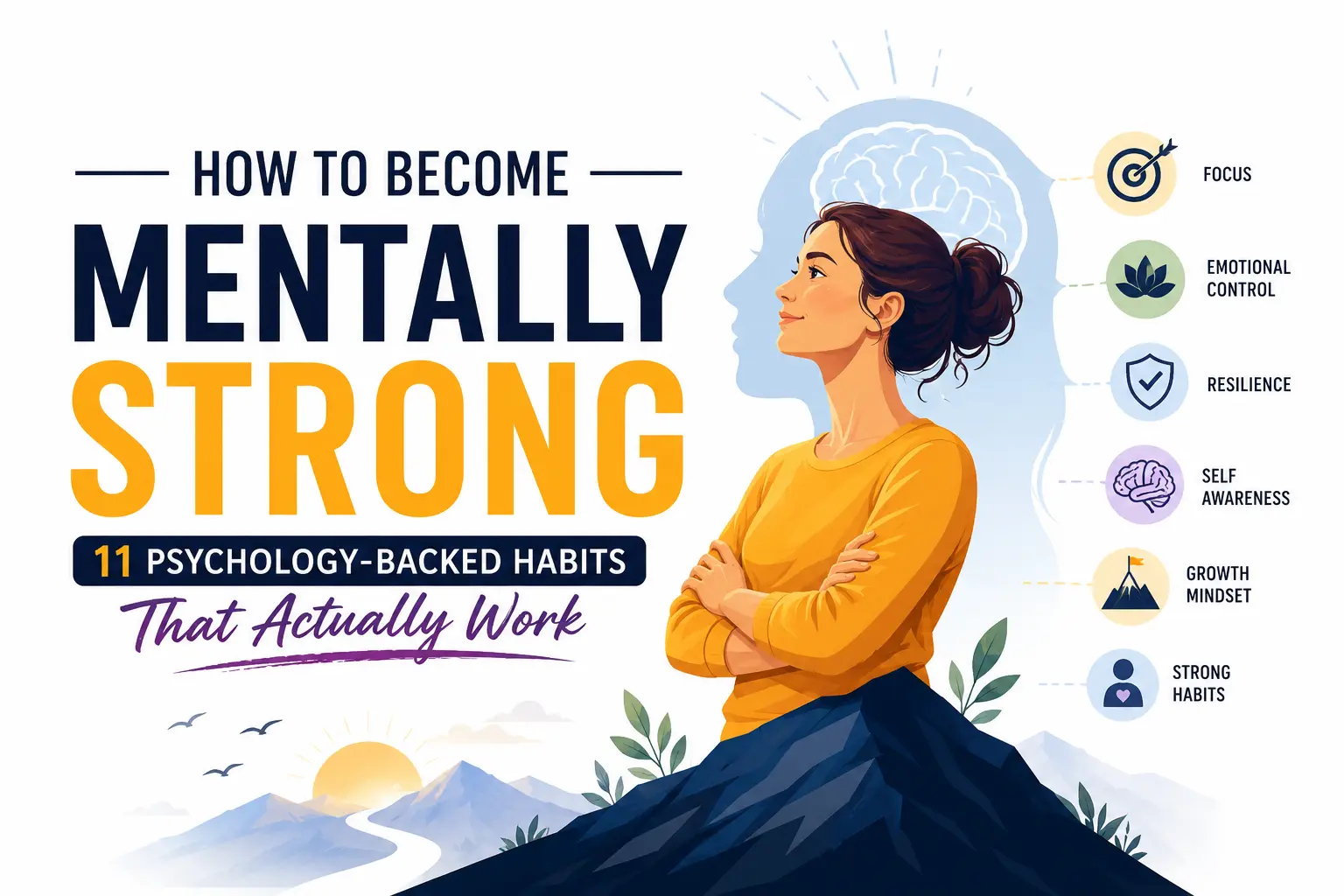
How to Become Mentally Strong: 11 Psychology-Backed Habits That Actually Work
Mental strength isn’t about never crying, or smiling through every hard day. It’s built quietly, in ordinary moments, long before the storm hits. Let’s be honest with each other for a second . Are you really mentally strong or just good at looking like it?
Because mentally strong doesn’t mean shedding tears. Nor does it mean that you swallow every pain with a smile. Nor does it mean that you wake up every day and show the world “look how strong I am”. The real mental strength is this – if you are afraid, be afraid, if you are tired, stop, if you fall, cry, then get up.
Real mental strength doesn’t make noise. It comes in handy in daily life. Strength is this – if you fall, get up. If you are in pain, sit with it, but don’t let it decide. Choose the hard way, not the easy one… even if no one sees it. If life seems to be getting tough and you really want to be strong at heart, then try these 11 habits. All of them are proven by psychology.
What Does “Mentally Strong” Actually Mean?

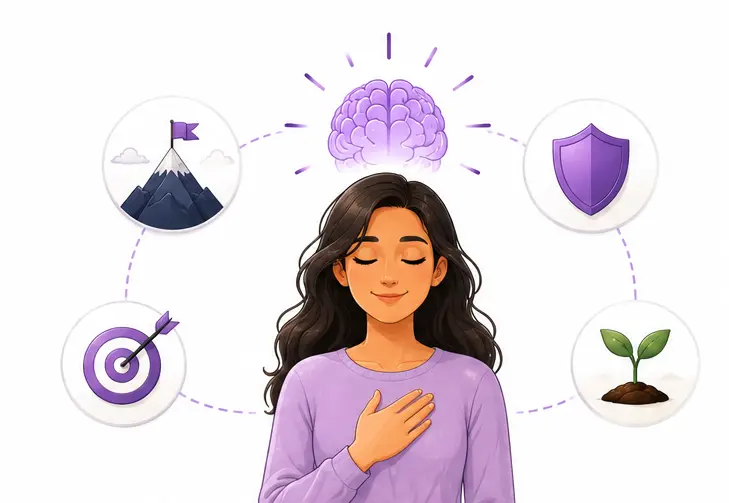
Mental strength does not mean military toughness. Psychologically, strength is about controlling your thoughts, controlling your emotions, and not taking the wrong step even under pressure. Amy Morin, a psychotherapist and author of 13 Things Mentally Strong People Don’t Do, defines it this way: mental strength is not born; it is created by habits. Strength is not built in a crisis. Strength is built every day. In the ordinary days before the storm.
11 Proven Habits To Become Mentally Strong
Don’t live in the past, nor in fear of the future – both will break you.
Let me tell you a bitter truth. Most of your suffering is happening right now. Women with strong minds live in “now” all day long. They have no tomorrows. They just know what has passed is gone, what will come is unknown. Only this moment is in hand. This does not mean that you should not think about the future. Think, definitely think. Just decide “now”. Without fear. A little trick: When your mind starts creating a scene for 2 weeks from now “What if I lose my job?”, “What if he agrees?” then ask yourself 1 question: “What can I do about it today?” If the answer is yes, then do it. If the answer is no then understand that you are not planning, you are just worrying. Breathe, and bring your mind back to “now”.Stop avoiding pain walk toward it in small doses

The biggest enemy is not outside. That is “avoidance”. When you avoid difficult things, when you put off work for tomorrow, when you turn on your mobile phone instead of feeling the pain of your heart then your brain learns one thing: “This is dangerous, stay away from it”. And then what happens? Your world gets smaller. Every little thing seems like a mountain. What do strong women do? They deliberately choose pain little by little. They talk about what they were avoiding. They go to the gym when they don’t feel like it. They say “no” even though it seems strange. They don’t do it for fun. They do it just because every time you endure a little pain, the next time it hurts less. Simple thing: By running away from difficulty, you become weak. By touching difficulty, you become stone.Falling is not the end. It’s just the first step in learning.
Just tell yourself the truth: When something goes wrong, what is your first thought? “I am incompetent” or “This attempt did not succeed”? If you consider yourself wrong for every mistake then understand that you are making a small thing a decision for your whole life. “The tea was spilled” = “I am a bad wife”. “The interview was missed” = “I am a failure”. This is the thought that breaks you the most. Strong women are not afraid of failure. They do not let failure become their identity. They just ask 3 questions: What happened? What did I do wrong? What did I learn from it? That’s it, and they move forward. Psychologists call it an “anti-fragile mind”. Meaning a mind that does not break, but gets stronger after being pushed. Remember: Clay becomes a pot of gold only when it burns in fire. Failure is that fire.Practice noticing your mind, not emptying it
Listen Don’t skip it because you’ve heard the name “mindfulness” 100 times. Most women consider mindfulness a drama. Sit with your eyes closed for 20 minutes, keep making lists the whole time – “I have to buy vegetables, I have to pay the children’s fees” – then say “This is not my business”. The point is not to empty the mind. The point is to watch the mind. When it is running away, when it is making up stories of worries, then just note it. Science also says the same: Focus on your breath for 5 minutes every day, and the mind becomes calm. Decisions start to improve. Anger starts to be controlled. You don’t have to sit for 1 hour. Just 5 minutes. Breathe If your attention wanders, bring it back. If it wanders, bring it back. Repeatedly doing it changes the habit of the mind. This is not motivation, it is true.Name the feeling precisely

Does this seem like a delicate matter? No. This is the first step to strength. Research suggests that people who can name their feelings are less likely to be overwhelmed in difficult times. Instead of saying “I’m in a bad mood,” if you say “I was ignored” or “I felt embarrassed”… then half the burden is lightened. Understand this: Until you know the name of the pain, it will continue to toss you around like a blind storm. As soon as you give it a name – “Well, this is loneliness”, “Well, this is fear” – the storm becomes smaller. Then you can see it, understand it, and decide what to do next. The next time your heart is heavy, don’t say “stressed” too quickly. Stop and ask yourself: Are you angry? Are you afraid? Are you heartbroken? Are you lonely? Are you ashamed? If the word changes, your life will change.Self-confidence is built on small promises.
The cheapest thing we lose? Self-confidence. And confidence doesn’t just break. It breaks every day… by breaking small promises. When you decide “I will walk today” and then lie down in bed… the problem is not just about missing the walk. You are giving yourself this message: “I can’t trust myself”. Do this every day… then your confidence becomes hollow from within. Slowly. You don’t even realize it. The solution is not big things. Small promises.At night, you said you would go to bed at 11 pm? Go to bed. You thought you would call your mother? Do it. Your heart said, “Let’s go for a walk on the roof for 10 minutes?” Do it. Every time you keep a promise to yourself, no matter how small. You are filling the bank of your heart. And this is the bank on which a strong woman stands.Don’t seek certainty, keep space.
Listen to the bitter truth: Most of our suffering is in the cycle of “firm belief”. We want to know will it work? Will he agree? Is my decision right? And when we don’t get the answer which we never get then we either stop, or we eat ourselves up thinking. A strong woman is one who learns to live with “not knowing”. Understand the point: If you don’t know tomorrow, it also means that tomorrow has not yet been decided against you. The door has not closed. There is still room. Just make a small language change: Instead of “it won’t happen to me”, say “it won’t happen to me right now”. Just add this “right now”… The sentence will become an open window from a closed door. A small word. If you speak every day, then the very idea of seeing the challenge will change.Move your body it’s mental medicine
 Tell me the truth? What is the oldest and cheapest medicine in psychology? Walking. But we use it the least. Just move a little every day the brain itself improves. Sleep is good. Irritability is reduced. That lump that sits on the chest becomes lighter. Science also believes this: Regular walking reduces the symptoms of depression and tension as much as medicine… without side effects. You don’t have to run a marathon. Just take a 30-minute walk 4 times a week. The truth is, the brain starts to get stronger. The obstacle is never a lack of strength. The obstacle is just “not now, later”. The habit of a strong woman is not which one she freezes. The habit of a strong woman is that she considers body movement as essential for mental peace as food and water.
Choose a few real connections over a crowd
Do you know what makes someone hollow inside the most? Loneliness. And what does “connection” mean these days? Scrolling through other people’s good pictures. His wedding, his shopping, his laughter. It has become difficult to find real intimacy, and it is easier to operate with fake connections. Psychology research also says the same thing: What is the biggest shield against depression? Real people. But the condition is: “real”. Relationships where even if you cry, you don’t have to pretend to “be strong”. It’s not about the crowd. It’s about 2-3 people. In front of whom you can sit without saying “I’m fine”. If there are no such 2-3 people in your life today. Then creating them is the most profitable work of mental strength.Practice self-compassion, not self-punishment
People misunderstand the meaning of “self-pity”. They think it’s self-pity, excuse-making, weakness. No, it’s none of those three. What does self-pity mean? The same way you treat your friend when she’s heartbroken. You don’t scold her, do you? You say, “It’s okay, it’ll happen, you’re so brave.” Just talk to yourself the same way. This doesn’t mean lowering your standards. It means not adding self-defeating pain to what’s already a lot of pain. You’ll be surprised to hear something strange: Research says that women who are gentle with themselves try harder. They take more responsibility. Why? Because those who are gentle with themselves don’t take risks for fear of making mistakes. And those who are gentle with themselves fall and get back up. Because they don’t beat themselves up when they fall.Reflect forward, not backward
Writing a diary, talking to yourself… This is the oldest medicine for peace. Science also believes it. But the way you think makes a difference. Some women don’t think, they question themselves. “Why did she say that? Why did she do that? It’s all my fault?” This cycle just keeps going on. It’s not called thinking, it’s called scratching yourself. It ties you down. The next thought becomes different. Just ask yourself 3 questions:
What did I learn today? What will I do differently next time? What can I take a small step from now? Experts suggest an easy way: Effort, Success, Progress Write 3 lines every day: What did I do today? – Even if it’s small What went well? – Even if it’s very small Where did I progress? – Just a little bit, keep doing it every day… Then you will start seeing your own growth. And believe me, seeing your own growth is the quietest but greatest power of mental strength.


Related on Savvy Psyche
Mental Tiredness: Why You Always Feel Mentally Tired (And How to Finally Stop It) Understanding Self Schema: Formation, Important Types & Impact on Daily Life Revenge Bedtime Procrastination: Causes, Signs & How to Stop It
What the Research Actually Shows on this?
Seligman’s Comprehensive Soldier Fitness Study:
This is a spectacularly large-scale test of the notion that resiliency can be trained, and not just a natural talent, and it was done by the U.S. Army, based on positive psychology research by Martin Seligman. Just so it’s clear: in fair terms, the evidence basis of the program has been called into question from time to time by some psychologists who have publicly doubted its effectiveness, and it’s an active area of research, not an ironclad proven statement.
Coan’s hand-holding study (2006)
Fear is not something everyone can handle. When your partner is with you, fear is halved. This is not poetry, it is the science of the brain. In 2006, University of Virginia psychologist James Coan tested 16 married women using fMRI scans. When they were given the fear of an electric shock, holding their husband’s hand reduced the activity of the ‘fear part’ of the brain, the insula and hypothalamus. The difference was much smaller when holding a stranger’s hand.
Most importantly, those whose relationship was strong had even less fear in their brains. The result is clear – a good relationship is a shield for the brain. Failure, stress, overthinking. It is difficult to endure all this alone. But when your partner is with you, the brain is able to fight on its own.
Barbara Fredrickson’s Broaden-and-Build Study“
We think happiness will come when everything is perfect. But science says otherwise. Barbara Fredrickson, a psychologist at the University of North Carolina, conducted a 1-month study on 86 students called the ‘Broaden-and-Build Theory’. Every evening, they were asked, ‘When did you laugh today? When did you feel calm?’ After a month, the results were surprising.
Those who noted small happy moments every day had a 30% increase in their ‘resilience’, that is, the ability to get up after falling. And they became more satisfied with life. Research proves this: Happiness does not come from great success. Happiness comes from 2 minutes a day. A sip of tea, a message from a friend, standing in the sun for 1 minute. These small moments make you stronger from the inside. Then you can even withstand big storms.
3 Mistakes to Avoid When Building Mental Strength

Understand silence as strength
Suppressing your feelings doesn’t make you strong. You become a pressure cooker. The whistle doesn’t blow from above, everything burns from within. Do you know what real strength is? Feeling emotions. Cry when you want to cry. Accept it when you’re angry. Speak up when you’re afraid. A strong woman is not one who turns into stone. A strong woman is one who, even after breaking, puts herself together. Suppressing emotions doesn’t mean ignoring them. Ignoring them doesn’t make them die, they just keep growing to explode inside.The obsession with fixing everything together
Will you start all of them at once after seeing 11 habits? Believe me, you will give up on the 11th day itself. This is a proven formula of exhaustion + giving up. If you try to change everything at once, nothing will change. The mind will get confused, the heart will give up. The real method is this: Choose one, do it for 60 days, then the next habit. For 2 months. When it becomes a part of you, then pick up another one. If you give a plant 11 buckets of water a day, the roots will rot. If you give it a glass a day, it will become a tree. Do you want to be a tree or a rotten plant?Judging your progress by your mood instead of your actions
Strength is not seen in the mirror every day. There will be some days when you will feel the same nervousness inside as before. You will be scared, tired, and worried. And yet you will be stronger than before. How? Earlier, you would cry and grab the bed. Today, you went to work crying, too. Earlier, you would message everyone and tell them how you were. Today, you kept quiet and took care of yourself. See? The feeling was the same, but the work was different. So don’t measure your progress by your mood. Measure it by your actions. What did you do today? How did you do it… Just look at this. Mood is false, work is true.
Connecting the inside of oneself with the outside of others


Everyone is happy on Facebook. Everyone is set on Instagram. Seeing a friend’s story, it seems like there is no problem in her life. But the truth is her kitchen also remains dirty at night. Her child is also stubborn. There is a fight in her marriage, too. She just shows you her filter, not a factory.
Don’t mix your inner battle with her outer makeup. You wet your pillow at night, she laughs with a filter. Both are true. Her 3-second reel cannot be bigger than your 24-hour life. Compete with yourself. With the one you have tomorrow. That’s it.
When to Seek Professional Help

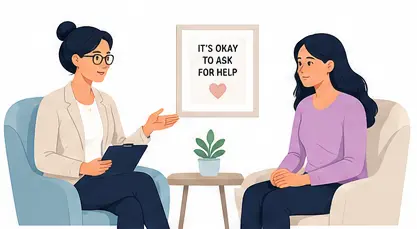
Habits are genuinely powerful, but they are not a substitute for treatment when what you’re carrying goes beyond what daily self-help can hold. It’s worth reaching out to a licensed therapist, counselor, or doctor if:
- Low mood, anxiety, or exhaustion has lasted more than two weeks and isn’t lifting
- You’re struggling to function at work, in relationships, or with basic daily tasks like eating or sleeping
- You’ve lost interest in things that used to matter to you, and it isn’t improving
- You’re relying on alcohol, food, or other substances to get through the day
- You feel persistently numb, hopeless, or disconnected from people around you
- You’ve had any thoughts of harming yourself
Conclusion:
A strong person is not one who never breaks. A strong person is not one who has all the knots of life untied. A strong person is one who falls, gets tired then gets up and gets to work. Not because the heart is light. Because now the courage has come inside. The courage to walk despite the difficulties. Courage is not found in the storm, but in the quiet days before the storm. You don’t have to become a new person. You just have to get out of the old trap.
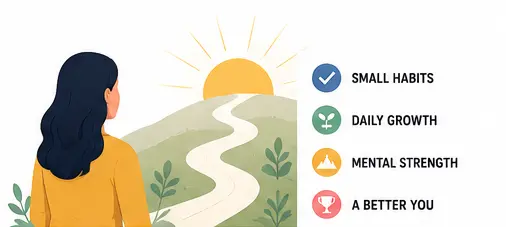
Reminder:
One habit. One day. That’s it. Start today. That one habit that struck your heart while reading. No one is watching, no one is praising… Even then, do that small thing. That’s enough. And believe me, most people don’t even do this. You will do it.
If You Are in Crisis
Savvy Psyche is an educational website, not a crisis service, and nothing here can help in an emergency. If you are in immediate danger or feel you may act on thoughts of harming yourself, please contact emergency services in your country right now (911 in the US, 999 in the UK, 112 in most of Europe).
You can also reach a trained crisis counsellor, free and at any time:
- United States: Call or text 988 — Suicide and Crisis Lifeline (988lifeline.org)
- United States: Text HOME to 741741 — Crisis Text Line
- United Kingdom & Ireland: Call Samaritans on 116 123 (free, 24/7), or visit samaritans.org
- International: Find your country’s helpline at findahelpline.org or iasp.info/crisis-centres-helplines
Reaching out is not a burden on anyone. It is exactly what these services exist for.
Disclaimer:
All information provided in this article relates to mental health studies or personal exposure. If you have a serious mental health issue, please seek help from a licensed therapist.
Sources & Further Reading
-
Coan, J. A., Schaefer, H. S., & Davidson, R. J. (2006). "Lending a Hand: Social Regulation of the Neural Response to Threat." Psychological Science. Summarized by ScienceDaily (University of Virginia release).
-
Reivich, K., Seligman, M. E. P. Comprehensive Soldier Fitness program overview, "Building Resilience," Harvard Business Review / PubMed summary.
-
Psychology Today "The Army's Flawed Resilience-Training Study: A Call for Retraction" (critical perspective on CSF's evidence base)
-
Cohn, M. A., Fredrickson, B. L., Brown, S. L., Mikels, J. A., & Conway, A. M. (2009). "Happiness Unpacked: Positive Emotions Increase Life Satisfaction by Building Resilience." Emotion, 9(3), 361–368. Full text via PMC.
-
988 Suicide & Crisis Lifeline (U.S.) 988lifeline.org
-
International Association for Suicide Prevention Crisis centre directory by country



3 Comments