
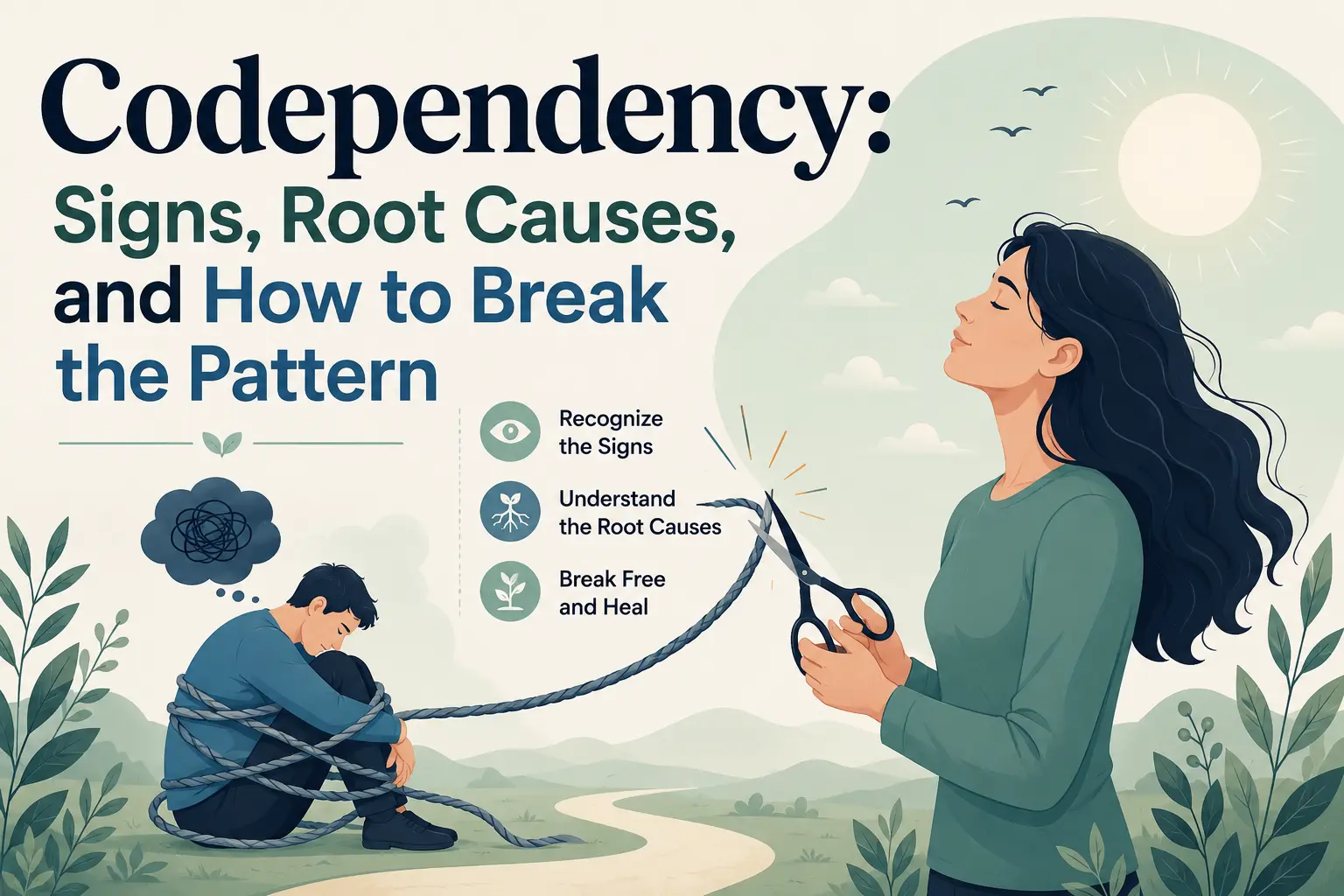
Codependency: Signs, Root Causes, and How to Break the Pattern
You love someone, and somehow their mood decides how your whole day goes, not your own. Even a brief, flat reply from them can shake you. You start holding back your own words, not from a lack of love, but because the fear of an argument has grown bigger than the affection itself. Life passes by with the sole goal of keeping the peace.
If you’ve ever wondered, “Does this happen to everyone?” here’s the honest answer: caring for someone deeply is fine. But when you forget yourself entirely and start orbiting only their moods and problems, that’s no longer love. It’s codependency. This isn’t a character flaw; it’s a learned pattern, usually rooted in childhood or past relationships. And as common as it is, it’s just as workable.
What Exactly Is Codependency?
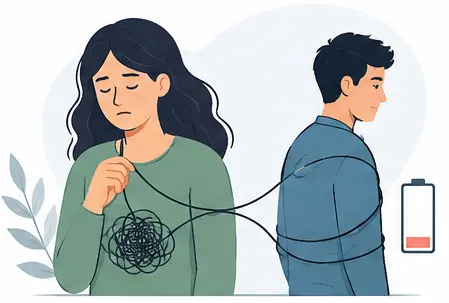
Codependency describes a relationship where your identity, self-worth, and peace of mind become entangled with another person, typically involving a “giver,” who manages, rescues, and fixes things, and a “taker,” who becomes accustomed to being looked after. It doesn’t always split this cleanly, but it often does.
Initially, this phenomenon emerged in households affected by alcoholism, where one person would be intoxicated while the other constantly corrected their every mistake. Later, it was observed that the same dynamic plays out even without alcohol. The only difference is that, in this context, a person’s own desires gradually fade away.
Caring, offering support, and making compromises all of this is normal. It happens in every relationship. The problem arises when giving becomes a habit, a necessity. When you are the only one doing all the giving. And when your sense of worth becomes tied to “how much I am doing.” Then, it ceases to be a choice; it becomes a compulsion.
The Two Roles: The Giver and the Taker
Codependency is rarely a solo pattern, it usually takes two roles, even if only one person recognizes what’s happening.
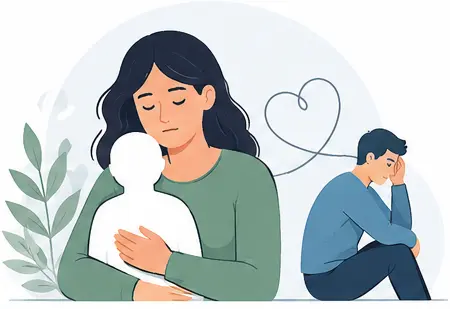
The “giver”
Their self-worth becomes tied to being needed. Managing everyone’s mood and smoothing over conflict feels like their job, even a point of quiet pride “I’m the one who handles everything.” Underneath, though, there’s often a growing hollowness: they’ve come to believe that being useful is the only safe way to be loved.
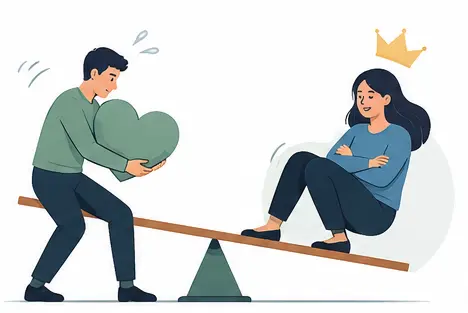
The “taker”
This person offloads the responsibility for their own moods, mistakes, and problems onto someone else often without fully realizing the extent of it. That’s partly because the giver never really gave them room to do otherwise.
The cycle reinforces itself from both sides: the more the giver rescues, the less the taker has to learn to manage things themselves; the more the taker depends on the giver, the more “important” and needed the giver feels. This isn’t a victim-versus-villain story. Which is exactly why breaking the cycle doesn’t require waiting for the other person to change it starts with recognizing and interrupting your own role in it.
Where Does Codependency Come From?
No one becomes codependent overnight. And often, it isn’t even about the current relationship. Its roots go way back.
Conditional childhood love: with parents who were physically present but emotionally unavailable, or whose love was conditional: “You’ll be loved if you’re good; you’ll be loved if you stay quiet.” Early on, I learned that my needs held no value; that the needs of others came first, and mine came last.
Childhood responsibility for a parent’s wellbeing: Kids in homes with substance abuse or chronic instability often become the ones managing a parent’s moods and covering for their mistakes learning that managing others’ emotions is the job, with no room left for their own.
The fear of being left alone: Some people constantly try to make themselves “indispensable.” Because deep down, there is a fear: “If I am no longer useful, they will leave.” But this is not your true nature; it is something you learned during difficult times. And what has been learned can change. Gradually, and with help.
None of this is a fixed trait it’s a learned adaptation to difficult circumstances, and what’s learned can be gradually unlearned with the right support.
These early patterns can also shape anxious attachment.
Signs of Codependency in a Relationship
Now, let’s discuss some patterns that should be paid attention to. All the signs don’t need to be present for this to be the case. However, if several of these indicators recur, the matter should be taken seriously.
- Changing yourself out of fear: Thinking one thing but saying another. You are afraid to speak the truth, suppressing what is in your heart, simply because you fear that telling the truth will drive them away.
- Aligning your mood with that of others: If they are angry, so are you. If they are fine, you are fine too. Your own feelings never even get a turn.
- Losing sight of oneself: Old passions, personal preferences, friends… everything was left behind. Now, everything revolves around the relationship. “What do you want?” Even to that question, you cannot give an answer without them.
- Carrying the Burden of Others: You live with the mindset that “it is my job to keep them happy.” What they do, the mistakes they make, how they feel. You worry about it all. You forget that this is their life, not yours.
- Justifying the Wrong: They do wrong, yet you offer explanations. They cause harm, yet you shoulder the loss yourself. All out of the fear that “if I don’t speak up, I’ll face embarrassment in front of everyone.”
- Feeling guilty after saying no: You try to set a boundary. The word “no” might even escape your lips. But your heart immediately begins to panic. Guilt drags you right back to where you started.
- You are constantly trying to read them: After every interaction, a replay keeps running in your mind. You keep scanning everything, their expressions, their tone. The worry is simply: “Are they upset?” And in all of that, your own thoughts get lost.
- Passing time alone is difficult: When you do get “some time to yourself,” it feels strange instead of enjoyable. Your heart grows restless. Because now, you simply cannot imagine yourself without this relationship.
Codependency Isn’t Limited to Romantic Partners
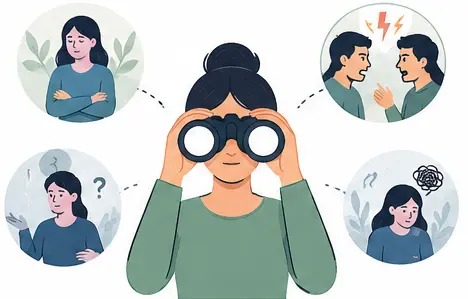
Most people limit the concept of codependency to just boyfriend-girlfriend relationships, but it is just as prevalent among friends, siblings, and in the relationships between parents and their adult children.
First example:

The friend who always listens to everyone else's sorrows, Yet never reveals her own pain. Because she fears: "If I speak up, will anyone actually show up for me?"
Second example:

The son or daughter who, even after growing up, keeps resolving the family's worries. You’re thirty years old, yet it feels like this is still your job; The thought of letting go makes your heart anxious.
How Codependency Affects Mental and Physical Health
This isn’t just a mental pattern it shows up physically. Constant focus on someone else’s emotional state keeps your body in a low-grade state of alert: tight muscles, poor sleep, and a strange exhaustion that sleep alone doesn’t fix. Underneath, self-confidence erodes, because your sense of worth has become dependent on someone else’s approval rather than your own actions. The specific tiredness people describe here feeling drained even after sleeping often comes from managing two emotional worlds simultaneously: your own, and someone else’s.
Codependency vs. Genuine Love and Care
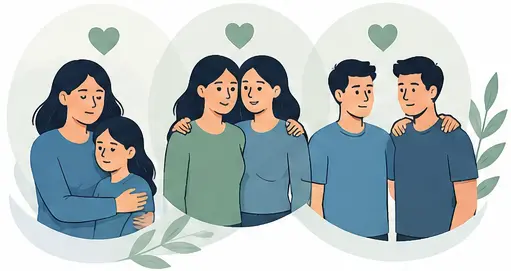
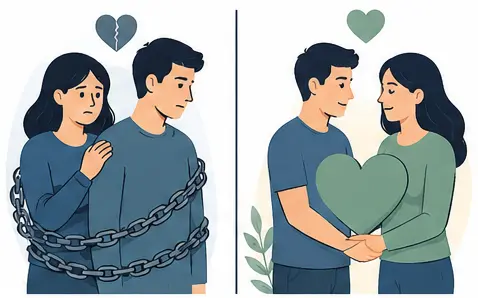
It is important to understand this distinction because nowadays the label “codependent” is applied to any deep love, even where there is genuine sincerity and devotion. True care means standing by them without losing yourself, preserving your own opinions, needs, and identity. It means being able to say “no,” even when it feels difficult. Their bad day will touch you, but it won’t consume you.
Codependency arises when helping becomes a compulsion; when saying “no” feels not just difficult, but dangerous; and when, gradually, the voice of your own needs falls silent. It is not a matter of how much you care; what matters is whether “you” are still alive within that care.
A Real Pattern: Sana’s Story
Composite case from clinical internship experience, details altered
Sana described her situation as “nothing major, just stress.” The fuller picture emerged gradually: she was managing the household budget, her husband’s moods, and maintaining appearances for the extended family all of it, for a full year, without a single day to herself.
When asked what she’d do with a completely free day, she went quiet. The problem wasn’t that she disliked everything it was that she’d stopped wanting things at all, except whatever kept everyone else content. She’d normalized it: “isn’t that just what love is?” But love that costs you your own identity isn’t depth it’s a red flag wearing love’s face.
The work wasn’t about changing her husband. It was quieter than that: recognizing her own exhaustion, rediscovering small things just for herself, and tolerating the guilt that came with doing so. Progress looked remarkably small a solitary weekly walk, unannounced, unapologized-for. For Sana, it was the first time she felt: I exist too. I’m not just a caretaker.
Related on Savvy Psyche
How to Rebuild Trust After Betrayal: What Actually Helps, One Small Step at a Time
11 Signs of an Emotionally Unavailable Partner (And What Actually Helps)
11 Signs of a One-Sided Friendship (And What to Do About It)
What the Research Actually Shows
A 2026 integrative systematic review in Clinical Psychology & Psychotherapy, following PRISMA guidelines across 30 studies, identified six distinct conceptual lenses on codependency sociocultural, relational, addiction/pathology-based, developmental, psychoanalytic, and cognitive-personality and consistently linked codependency to emotional distress, disrupted identity, and impaired relational functioning, regardless of which lens was used. The review’s central point: treatment isn’t just about breaking a habit it’s about addressing root causes and supporting someone toward a more whole sense of self.
Earlier research specifically tested whether codependency requires living with substance abuse. It found the answer is no codependency shows up independent of substance use. Codependent individuals living with a partner’s substance use disorder did show higher rates of depression, but the distress traced back to the partner’s substance use itself, not to codependency as a pattern on its own.
When It’s Trauma, Not Just a Habit
Some behaviors that look like codependency constantly checking whether someone else is upset, low self-confidence, conflict avoidance aren’t always codependency in the habit sense. They can be trauma responses, particularly following narcissistic abuse or prolonged mistreatment. In these cases, a person’s nervous system has learned that reading someone else constantly is a matter of safety, not just a relational habit.
This distinction matters practically: if the root is trauma, boundary-setting techniques alone usually aren’t enough trauma-informed therapy is needed to address the underlying wound. If you’re genuinely unsure whether what you’re dealing with is habit or trauma, that uncertainty itself is worth bringing to a therapist rather than trying to resolve through self-help alone.
How to gradually break the habit of codependency
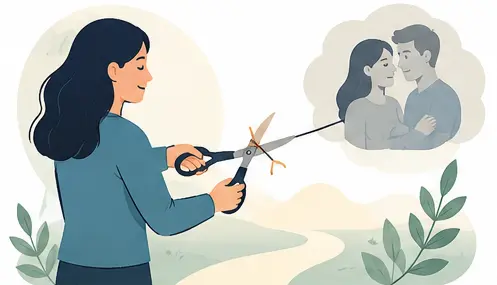
Check in with yourself first. Ask yourself, how am I doing? rather than Are they okay? before asking. This is the starting point for dealing with codependency, but often it seems obvious.
Find one thing that’s entirely yours. A pastime, a friend, or a habit that you do outside of the relationship. The answer to the question “Who am I? is found, not in books, but in doing things.
Practice boundaries on small things first. Say no to a minor plan or task before attempting it on something significant your instincts and your nervous system both need the practice.
Resist the urge to immediately smooth things over. Don’t follow up on an argument or a stressful situation with the question “Is everything okay?” It isn’t necessary to resolve everything right away. Allow some items to sit for a period of time.
Get an outside perspective. A friend, therapist, or sensible person. A person who is not part of the relationship. Often, when we’re in the situation, we don’t see the problem; another person does.
Common Mistakes People Make When Changing This Pattern
Trying to correct the other person. Do this, don’t do that, this doesn’t break the pattern. You cannot change anyone else. You can only change your own response. That is your only task.
Sudden, total withdrawal. someone saying, I won’t talk to you at all anymore is just another form of codependency. It is about setting boundaries, not building walls. Maintain a balance.
Expecting overnight change. Just because you’ve set a boundary, it doesn’t mean the other person will change immediately. It involves both parties and an established pattern. It will take time. Be patient.
Treating guilt as proof of wrongdoing. Guilt after your first “no” is expected. It signals discomfort with change, not that you’ve actually hurt someone..
Insisting on handling it entirely alone. If the pattern is habit-based, self-work can go a long way. If it’s rooted in real trauma, asking for professional help is wisdom, not failure.
When to Seek Professional Help
Consider talking to a therapist if:
- You understand the pattern intellectually but can’t seem to change your actual behavior
- Substance abuse, mistreatment, or manipulation is part of the picture
- The pattern feels deeply rooted rather than a simple habit
- The idea that “I matter too” feels genuinely foreign, not just difficult
A therapist familiar with relational patterns and trauma can help clarify what’s actually happening underneath the surface because the path to breaking a habit and the path to healing a wound aren’t the same journey.
The Bottom Line
Recognizing codependency is not a crime. It doesn’t mean you loved the wrong way. It simply shows how big your heart is. Now, just direct a little of that love toward yourself as well. The point wasn’t for you to love any less. The point was for you to reclaim your own identity, so that you remain within the relationship, rather than the relationship dissolving you into itself.
If You Are in Crisis
SavvyPsyche is an educational website, not a crisis service, and nothing here can help in an emergency. If you are in immediate danger or feel you may act on thoughts of harming yourself, please contact emergency services in your country right now (911 in the US, 999 in the UK, 112 in most of Europe).
You can also reach a trained crisis counsellor, free and at any time:
- United States: Call or text 988 — Suicide and Crisis Lifeline (988lifeline.org)
- United States: Text HOME to 741741 — Crisis Text Line
- United Kingdom & Ireland: Call Samaritans on 116 123 (free, 24/7), or visit samaritans.org
- International: Find your country’s helpline at findahelpline.org or iasp.info/crisis-centres-helplines
- If a partner or family member is frightening or controlling you: call the National Domestic Violence Hotline (US) on 1-800-799-7233 or visit thehotline.org
Reaching out is not a burden on anyone. It is exactly what these services exist for.
Disclaimer:
All the information provided in Savvy Psyche’s articles is based on personal experience, exposure, and the study of mental health; if you are facing a serious mental health issue, please consult a licensed therapist.
Sources & Further Reading
-
Molina, et al. (2026). "Co-Dependency Revisited: An Integrative Review of Conceptualisations and Mental Health Outcomes." Clinical Psychology & Psychotherapy. Full text
-
Prest, L. A., Benson, M. J., & Protinsky, H. O. (1998). "Family of Origin and Current Relationship Influences on Codependency." Related to: "Codependency: A Disorder Separate from Chemical Dependency." Journal of Clinical Psychology, 48 (1992), 129–136.Full Text

One Comment