
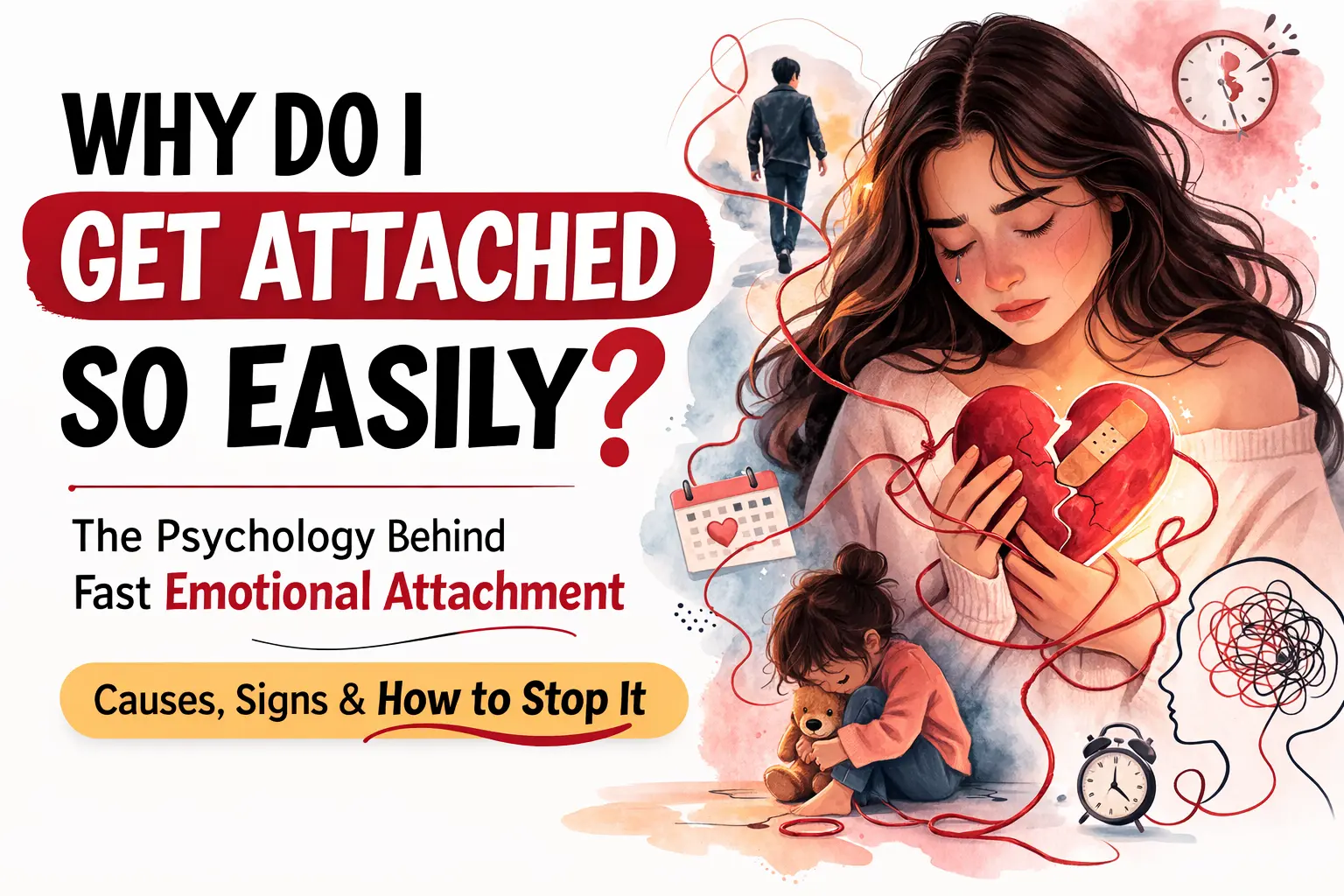
Why Do I Get Attached So Easily? (6 Reasons + How to Stop)
Many people ask themselves, Why do I get attached so easily?” after meeting someone only a few times. You meet some people only once or twice. Sometimes you don’t get to meet them for a month, but even in those one or two meetings, you develop a very good bond with them.
You keep waiting for their company, and then slowly their words start changing your behavior. If something good happens, your mood remains happy, but if they don’t talk to you, you also get stressed. You don’t even realize that you develop a very strong attachment in a very short time.
This isn’t a flaw. Forming attachment easily often reflects real warmth and openness. But when it becomes one-sided or ahead of what the relationship has actually earned, it can leave you hurt repeatedly, and for reasons that are actually possible to understand and work with.
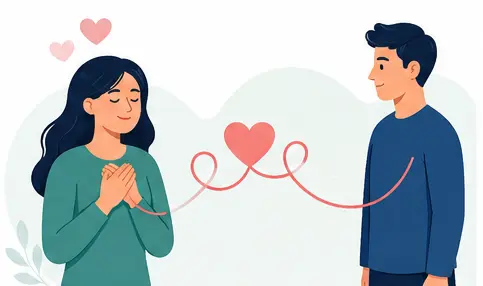
The short answer: You get attached easily because of how your attachment system learned to bond. The six most common reasons are childhood experience, fear of being alone, loneliness, idealizing a new partner too quickly, past heartbreak or unmet emotional needs, and emophilia — the tendency to fall in love fast and often. It is a learned pattern, not a character flaw, and it can be steadied.
Why do I get attached so easily?
Attachment is a very positive emotion. It indicates that you are a very kind and open-hearted person, open to everyone, and thinking kindly. However, if we look at attachment from another perspective, this attachment issue can also leave you heartbroken.
If you become attached to people even after meeting them, yearn to see them, and miss their absence, it doesn’t mean you’re too weak. It means you have a positive soul and personality. But sometimes this attachment causes you a lot of pain in your life.
Attachment issues can arise for several reasons:
The reason is never just “you’re too emotional.” It’s usually specific and workable.
Childhood experience

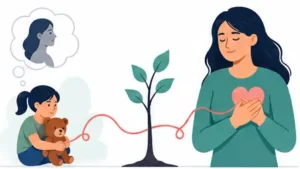
Childhood teaches us how to form relationships. If there was a void, or if someone left us, then as adults, we bond with people very quickly, because the heart seeks to fill that old emptiness
. Some people have attachment issues because of their childhood experiences. Either the child had neglected their parents’ love and care, or perhaps they experienced separation
. Forming quick attachments isn’t a conscious choice you make. It has become a habit, a survival mechanism. The desire for everything to move quickly in a new relationship isn’t wrong; it’s simply your nervous system doing what it is accustomed to.
Fear of being alone
Any serious past trauma in which a person has been left out of a relationship due to ignorance, rejection, or extreme abandonment. That person may also have attachment issues if they meet new people and then fear getting distanced from them.

Loneliness
Some people who have been living alone for a long time, when someone approaches them in their life, be it in any relationship, they get attached to that person very quickly. There is a fear of being alone. When the fear of loneliness becomes overwhelming, a person will latch onto anyone simply to have someone by their side and to feel valued. In doing so, they overlook whether the other person commands respect, whether their mindsets align, or whether the connection is even genuine.
Idealizing a partner too quickly
Some people, whenever they enter a new relationship in their life, fit their partner into their mind as a partner in just a few meetings. We fill the unknown with our own hopes and form a perfect image of it in our hearts. Then, we become attached to that very image, which is why everything feels so profound at the start. We connect not with the person, but with the dream we have created.And when reality comes to light, it brings deep pain, because that dream was not reality..

Past heartbreak or unmet emotional needs
Some people heal their past heartbreaks by getting into relationships with new people, although they don’t realize they develop attachment issues within themselves.If there was a lack of love, attention, or emotional support during childhood, or if the home environment created the impression that “love is conditional upon doing such and- such. Then a void remains within the heart. Consequently, when someone new offers even a little affection, the heart instantly latches onto them, because that old, deep-seated hunger awakens..
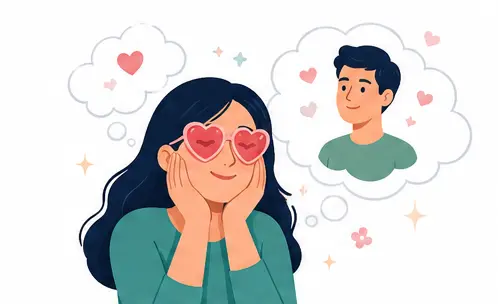
Emophilia: Falling in Love Fast, on Repeat
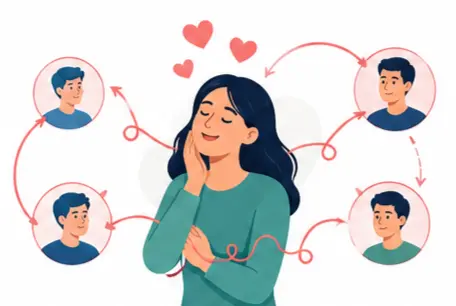 There’s a real, actively studied psychological construct for this exact pattern: emophilia the tendency to fall in love quickly, easily, and often.It’s distinct from anxious attachment, though the two frequently overlap. People high in emophilia often describe themselves as falling in love “all the time” but what they’re really drawn to is the emotional rush of connection itself, more than the specific person. Once the initial intensity fades and reality sets in, the relationship often struggles to hold up.
This intensity has a real neurological basis. Early fMRI research found that early-stage romantic attraction activates the brain’s dopamine-driven reward system a similar circuitry involved in other intensely pleasurable experiences۔ That’s part of why quick attachment can feel so powerfully compelling: it isn’t just emotional, it’s genuinely chemical.
Signs Your Attachment Has Become Unhealthy
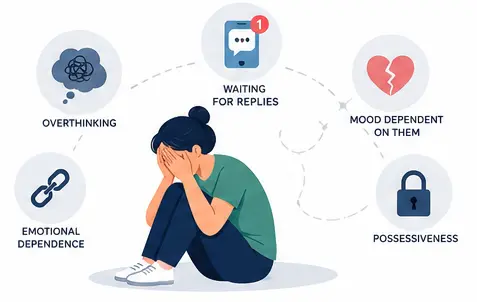
- You start imagining your future with them very quickly. It’s quite simple you tend to look too far ahead, too soon. You don’t give the relationship enough time to reveal whether or not it is actually viable.
- Your mood starts to depend on their behavior. If everything is good, you are happy, but if they ignore you, you become mentally stressed.
- You think about them more than you do yourself. Before you even realize it, you set yourself aside and begin to center all your attention on their wishes, their plans, and their needs.
- Even the smallest things make the heart feel anxious.” Why did they say that? What did they mean?” Every message feels like it carries the weight of ten kilograms. A delayed reply sets the mind racing. The uncertainty of a new relationship gnaws at you from within.
- You become very possessive about them. Right from the start, a possessive attitude kicks in. Even while conversation is still ongoing, the underlying feeling is, “They belong only to me.” If they laugh, talk, or spend time with someone else, it immediately feels hurtful.
- Even when warning signs appear, you choose to ignore them. You’ve become emotionally attached, after all, so the negative aspects don’t even register. Or, if they do, you find a way to justify them.
- Nothing is even official yet, and you’ve already dedicated your entire routine to them. You’re cancelling your own plans, adjusting your schedule doing it all on your own initiative. They don’t even have to ask, and you’re already there, ready and waiting. You’re putting their priorities ahead of your own.
If you often struggle to say no or feel like you’re constantly working to keep everyone happy, it may also be worth reading about the understanding the people pleasing personality the two patterns frequently show up together.
If these patterns sound familiar, you may be seeing signs of anxious attachment in a relationship.
A Real Pattern: Sophia’s Story
Sophia, age 27. When she sat with a therapist for the first time, she said:”When my relationships end, it feels like the world is collapsing.” It made no difference whether the relationship lasted a month, six weeks, or merely three dates. Even three dates felt like everything to her. And then, they too would end. “I know it shouldn’t be such a huge heartbreak,” she said. “But it is.” That was always the case with Sophia.
If someone showed even the slightest interest, she would become emotionally attached within two weeks. She would constantly think about that person, make time for them, and wonder, “Will we end up together?” The reply would be delayed, the planned meeting would get cancelled, or he would say, “I’m talking to other people, too.”Sophia would react instantly as if a cord had been yanked and then the anxiety would set in.
She would either send too many messages or none at all, regretting both choices.And she would search for her own fault in everything.In the end, the relationship would fall apart often precisely because of that very anxiety.She would cry so much that she would wonder to herself, “Why does this hurt so much?”
It dawned on her after a few months. She didn’t connect with the person; she connected with the feeling. The feeling that, finally, no one would leave her. That the love and attention she had lacked before would now be hers. “Every new person felt like a new chance,” she said. “That’s why I’d latch on immediately without even knowing if they were right for me. In reality, I was connecting to the idea, not the human being.”
Through therapy, she didn’t stop caring. She found the qualities that she wanted from others within herself: self-respect, patience, and the courage to remain alone. She was in a healthy relationship after 18 months. Not because of a ‘perfect’ person. Yet, since she wasn’t in a hurry, she was preoccupied with coming to understand first and then connecting. “Did you have any idea what the weirdest thing was? “In the beginning, this relationship didn’t move as fast as the ones in the past. So, I thought it might not amount to anything. All my life, I had mistaken intensity for depth.”
Related on Savvy Psyche
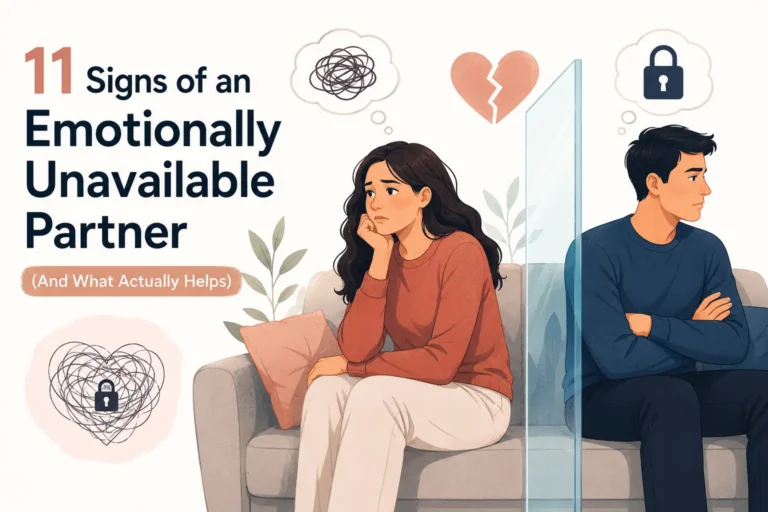
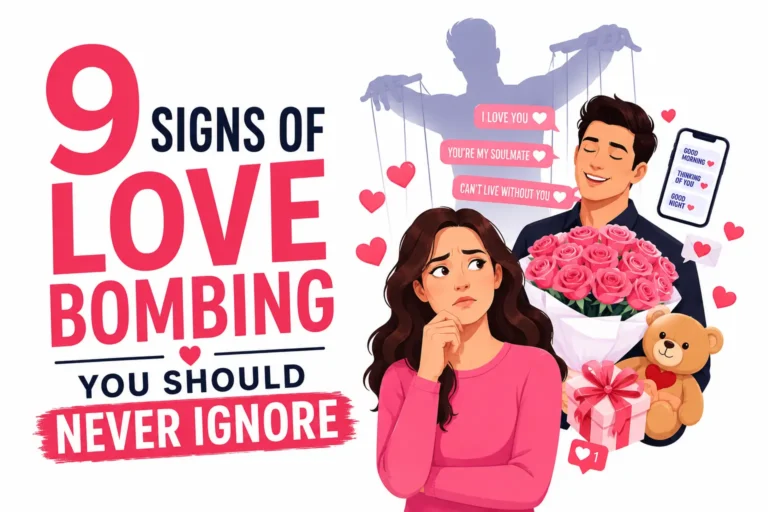
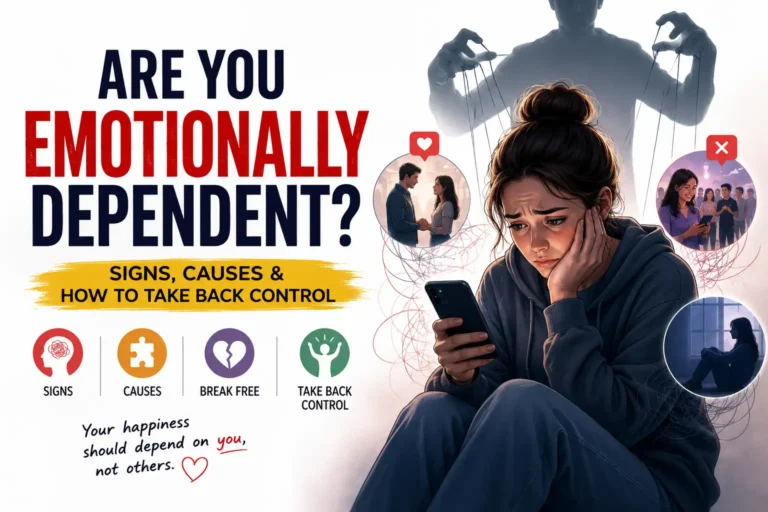
11 Signs of a One-Sided Friendship (And What to Do About It) 9 Signs of Love Bombing You Should Never Ignore 10 Warning Signs of Emotional Dependence & Powerful Ways to Take Back Control
Is Getting Attached a Good Thing or a Bad Thing?
It is natural to get attached to someone.It shows your care, love, and affection.But the problem arises when this attachment becomes too much, and you forget yourself in it, meaning you are only worried about that person, thinking about him all the time, making you mentally and physically tired.And when you start feeling this one-sided, then you get more heartbroken. When you show 100% care, love, and importance to that person, but that person does not give you that much in return, then you get sad, your heart breaks sometimes.
How Quick Attachment Affects Your Mental Health
When your attachment turns into possessiveness, you may exhibit negative qualities, such as jealousy, possessiveness, and suspicion. Furthermore, attachment issues can also have a profound impact on your mental health.
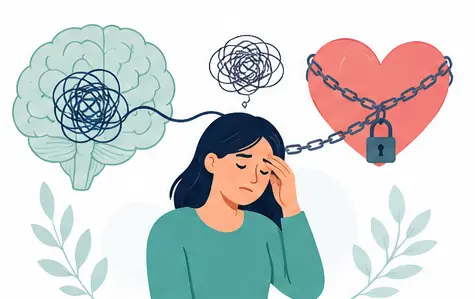
- If you don’t talk for a day, you start overthinking why they didn’t talk, what happened, has something bad happened to them?
- Always thinking that if he/she leaves me or if someone else comes to my place, such thoughts bring anxiety.
- Due to suspiciousness, you are not able to fully trust that person, due to which you have trust issues with every aspect.
- When your mind keeps thinking about that person all the time, you will not be able to focus on other things in your life, like your studies, work, and daily activities.
- You develop emotional instability, as you feel you might be betrayed.
Attachment vs. Love Understanding the Difference
Attachment | Love |
|
|
|
|
|
|
|
|
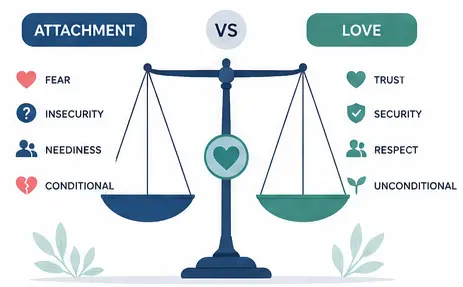 Attachment can become love but treating early attachment as though it’s already love, especially right after a past relationship ends, often leads to disappointment down the line.
How to Slow Down and Steady Your Attachment Style
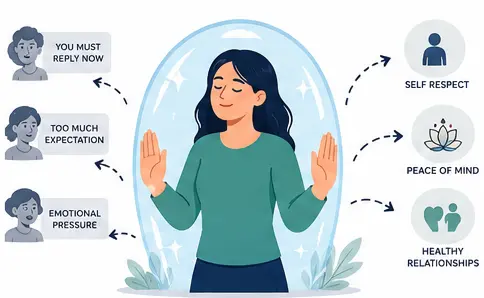
Liking someone and becoming attached is natural; no one can force this.But in all of this, you need to look at certain things to build a good and healthy relationship. You must have emotional stability within yourself to handle any situation.
Understand your own pattern
Reflect on past relationships. Look for recurring patterns in your mistakes. Understand how your childhood shaped you.Do you fear abandonment? Do you view yourself as inadequate? That is why you get attached so quickly. Take this seriously; it is not a trivial matter. Consider not just romantic relationships, but also friendships and family dynamics. Why do you crave an immediate connection?How were you cared for in childhood? Was the love unconditional, or was it conditional? Nothing will change until you understand your own story. This is the first step.
Strengthen your relationship with yourself first
Take your time, as that will enable you to get to know yourself again. Many times, the desire to rush into a relationship is because of an emptiness inside. By knowing your value, you know to be okay alone and to love yourself, then you do not require the validation of others. When you meet you won’t be scared of losing someone, because you won’t be relying on them to like you or not for your safety, peace of mind. All these things make you stronger from the inside: therapy, journaling, a hobby, being perfectly still and quiet in solitude. But when that inner strength sets in, the desperate need for a connection goes away.
Focus on your life:
One sign of an unhealthy attachment is losing sight of your own life. Friends, hobbies, and daily routines, everything gets left behind when someone new enters the picture. It doesn’t happen all at once; it happens gradually. And then, you realize your entire world revolves around just one relationship. Keep your life whole. Not to impress anyone else, but for yourself. The person you are outside of a relationship that is the real you. That is the self with whom a genuine relationship is built. Value that “you.” That version of yourself is more important than any new connection. So, focus on your life, such as your professional life, your career, and your mental peace.Set emotional boundaries
Work to set boundaries between yourself and others so that no one can hurt you mentally. To begin with, here are the emotional boundaries: Do not reveal deep, personal matters right away. Do not make major decisions for the sake of someone new. Do not place your mood in the hands of someone you do not yet trust; this is not being harsh, it is being sensible. Reciprocate the level of investment put into the relationship. Do not stake everything you have today on a “maybe” for tomorrow.
Let the relationship take real time
A strong relationship takes time. Quick decisions often backfire. Don’t be in constant communication right from the start. Not because you are playing hard to get, but because the time in between belongs to your own life, and it gives the other person a chance to reach out as well.
on’t neglect your friends and work. Do not make changes for an entire class because of this new person. Allow the relationship to develop in a way that is natural, like getting to know each other. Slow does not equal cold; it’s about giving both parties the opportunity to show you who they are, not who you think they are.
Get comfortable with not knowing
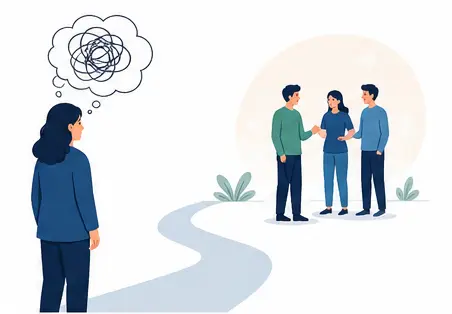
What do they want? Where is this heading? Are they just as interested? Such thoughts deeply trouble an anxious heart. That is why we rush to get closer hoping to find answers. But rushing to connect doesn’t provide the answer. It is merely deceptive, and it introduces a new worry: Did the other person want this too? Learn to master your heart. Learn to tolerate the “I don’t know.” Give the relationship time. Don’t jump to conclusions. This uncertainty isn’t bad; it’s normal. Everything is uncertain at the beginning.
Frequently Asked Questions
Is getting attached too easily a sign of anxious attachment?
Often, yes. Bonding very quickly, craving closeness, and then worrying about distance or rejection is the classic anxious-attachment pattern, usually rooted in inconsistent care early in life. It is not the only explanation, though — loneliness, unmet emotional needs, and emophilia can produce very similar behaviour.
Why do I fall for people so fast?
For many people this is emophilia: a tendency to fall in love quickly, widely, and often. Combined with an attachment system that treats new closeness as safety, feelings can arrive long before you really know the person — which is why the attachment often runs ahead of the actual relationship.
Is it normal to get attached quickly?
Yes — forming bonds is a basic human drive, and attaching quickly is common and not a flaw. It becomes a problem mainly when it is one-sided, runs far ahead of what the relationship has earned, or keeps leaving you anxious and hurt. The pattern, not the speed alone, is what matters.
How do I stop getting attached so easily?
Pace new relationships deliberately instead of letting intensity set the speed, keep a full life so one person does not become your everything, and learn to notice the anxiety spike without automatically obeying it. Understanding your own pattern is the first step — our free Attachment Style Test can help you see it clearly.
Reminder:
If you often wonder why Do I get attached so easily, learning emotional boundaries and self-awareness can help you build healthier relationships. Being attached isn’t wrong. But the negative signs of attachment can definitely harm your mental peace. Understand the difference between others’ attachment and love, and protect yourself from any heartbreak.
If You Are in Crisis
SavvyPsyche is an educational website, not a crisis service, and nothing here can help in an emergency. If you are in immediate danger or feel you may act on thoughts of harming yourself, please contact emergency services in your country right now (911 in the US, 999 in the UK, 112 in most of Europe).
You can also reach a trained crisis counsellor, free and at any time:
- United States: Call or text 988 — Suicide and Crisis Lifeline (988lifeline.org)
- United States: Text HOME to 741741 — Crisis Text Line
- United Kingdom & Ireland: Call Samaritans on 116 123 (free, 24/7), or visit samaritans.org
- International: Find your country’s helpline at findahelpline.org or iasp.info/crisis-centres-helplines
- If a partner or family member is frightening or controlling you: call the National Domestic Violence Hotline (US) on 1-800-799-7233 or visit thehotline.org
Reaching out is not a burden on anyone. It is exactly what these services exist for.
Disclaimer:
This article is for informational purposes only. This is not advice from a doctor or therapist. If you are experiencing significant emotional distress, please speak to a licensed psychologist.
Sources
-
Jones, D. N. (2024). "Emophilia: An Overlooked (But Not Forgotten) Construct in Relationships and Individual Differences." Personality and Individual Differences. Summarized in Psychology Today.
-
Fisher, H., Aron, A., & Brown, L. L. (2005). "Romantic Love: An fMRI Study of a Neural Mechanism for Mate Choice." Journal of Comparative Neurology. PubMed.
-
Ainsworth, M. D. S., Blehar, M. C., Waters, E., & Wall, S. (1978). Patterns of Attachment: A Psychological Study of the Strange Situation foundational research on how early bonding patterns shape adult attachment.Researchgate


7 Comments