
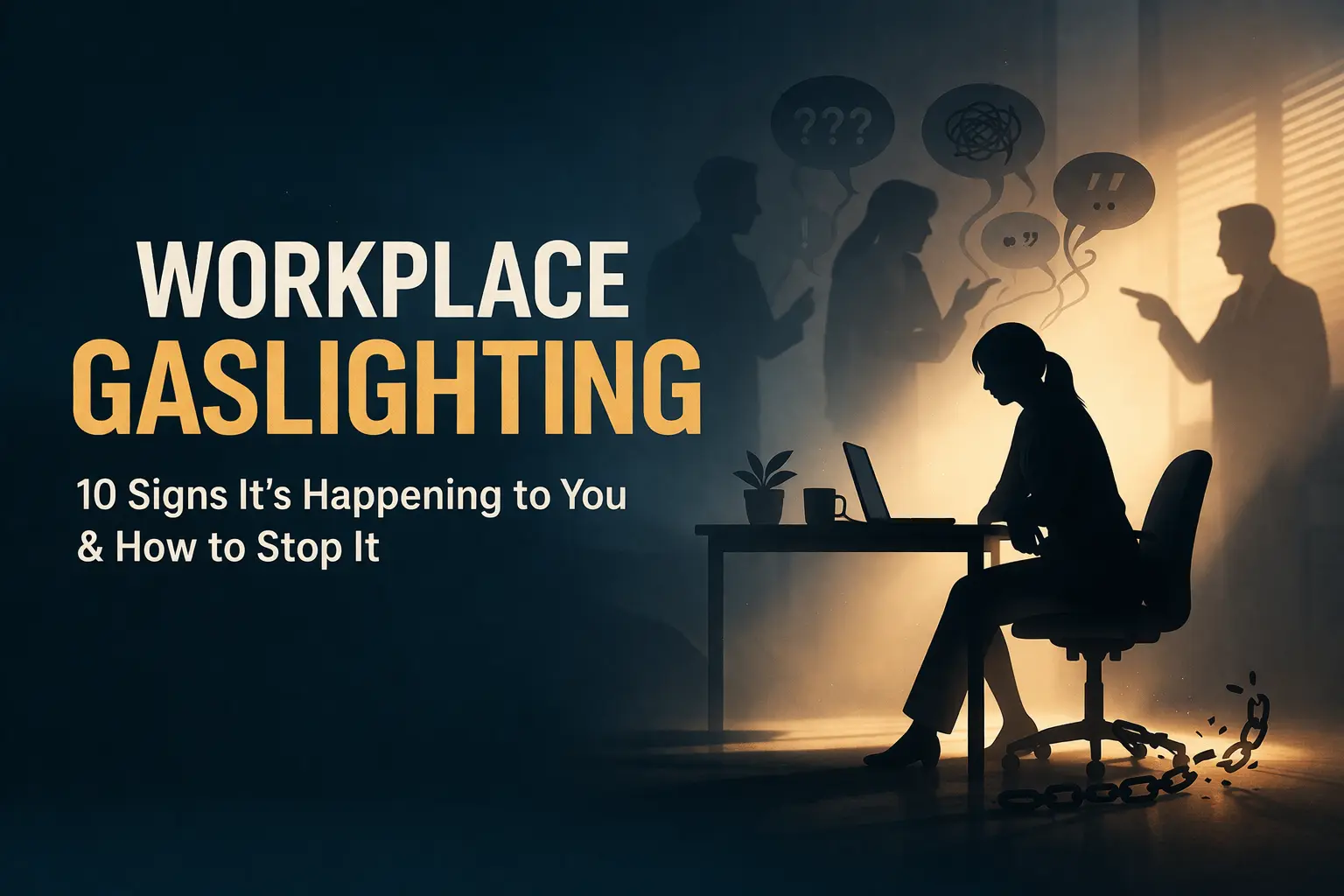
Workplace Gaslighting: 9 Signs It’s Happening to You & How to Stop It
You are just overreacting. This situation is not that bad; you are just being overly sensitive. You are looking for an excuse to do work.
If you hear comments like these from coworkers or a boss often enough, something else starts happening quietly in the background: you start to doubt your own identity. Am I really that sensitive? Do I have no talent? Maybe I am really sensitive. Maybe I do not have any talent. Those questions start showing up uninvited, and they don’t leave easily.
During my graduate studies, I took a job with zero prior work experience. And I did everything very slowly, so that I would not make any mistakes and get into trouble with my boss. At that time, my colleagues used to take advantage of this and manipulate me because I doubted my abilities. I couldn’t complete work before deadlines. I wasn’t playing the right role on my teamwork project. After that, I used to get stressed even while going to the office, thinking that I would make a mistake today or I would make another blunder.
Eventually, people make you feel like you don’t remember anything, that you’re careless and irresponsible.
I later realized none of that was actually true. It took me a long time to understand what had actually been happening to me: workplace gaslighting. If any of this sounds familiar, this article walks through exactly what’s happening, the real signs to watch for, and most importantly, how to protect yourself.
What is Gaslighting?
Gaslighting is psychological manipulation, in which people confuse you about your own perception and abilities. Everyone has their own take on gaslighting, but a precise definition is essential to recognize it correctly. A psychological ploy. It is a tactic used to make you doubt yourself and your own judgment. It isn’t one single, major incident that you can point to and say, “This was it.” It creeps in gradually, through a series of small moments.
What is workplace Gaslighting?
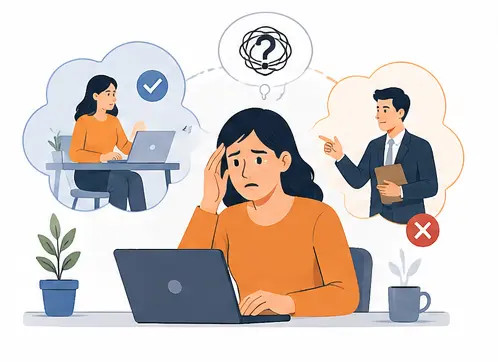 When someone manipulates you in your workplace, controls your memory, and confuses you in their own perception, it is called workplace gaslighting. If someone at the office acts in a way that makes you start wondering… “Did I actually say that? Did that even happen?” If they twist your memories and make you doubt yourself… That is called gaslighting.
This word originated from a 1938 play, which was later adapted into a film in 1944. A husband would dim the lights and then tell his wife, “No, the light is exactly the same.” That is precisely how the name came about. He would say, the light is the same; you’re imagining things. This made the wife suspect she was going mad. And nowadays, the exact same thing happens in offices. Take note: A bad boss creates problems. A gaslighting boss convinces you that you are the problem. That is the most dangerous difference.
9 Warning Signs You’re Being Gaslit at Work
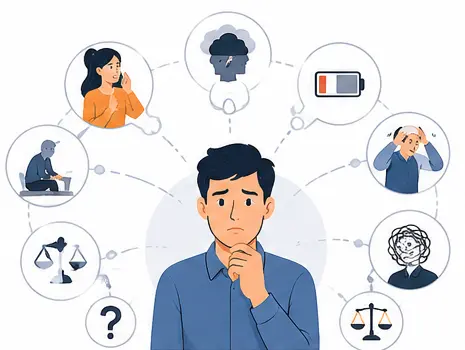
You apologize even when nothing was your fault
Gaslighting conditions your brain toward a reflex: Danger arises → Say sorry immediately → Save yourself. And with every apology, the idea becomes deeply ingrained in your brain that yes, the problem really is with me.You are made to feel that you are very irresponsible.
They will level baseless accusations against you. They deliberately assign tasks that are bound to result in errors. And no matter how much you toil day and night it will still seem “not enough.” Because their goal isn’t to build you up; their goal is to destroy you.You’re made to feel “too sensitive”
They act in such a way that their own fault becomes invisible. And gradually, you fall silent yourself, thinking, “If I speak up, it will only lead to an argument.” Above all, they strike at your tender heart. Why? Because once you stop caring, you give up.Your confidence suddenly decreases.
True humility keeps the heart light. Baseless suspicion clouds the mind. All this happens gradually; you don’t even notice it. And listen, you were fine just as you were before coming here. Trust that version of yourself.You get flustered and can’t find words but only around certain people
When you are afraid, the words just won’t come out; your mind goes blank. It isn’t your fault; it is simply your brain’s reaction. And this only happens with the people you fear; you are perfectly normal around everyone else. Yet, those very same people say, ” You’re confused.You feel physically worn down foggy, exhausted, low
Constant fear leaves your body exhausted. You can’t sleep; your heart feels heavy. And this isn’t your fault. It is your body sounding the alarm.You feel very lonely in the workplace
First, they distance you from people gradually. They turn someone against you or prevent you from meeting others. Then, you fall silent yourself, because you become afraid to speak. And so, you end up alone both on the outside and on the inside.You feel like you need to prove yourself in every argument time.
You might win the argument every time, yet they will still say, No, provide this piece of evidence as well. They set a new condition every time. That is why you get exhausted. Because you know they will be suspicious of you before you even speak, you explain things ten times over out of fear, just to convince them. They have gradually brought things to a point where people simply do not heed what you say. Even if you speak the truth, no one believes you. This is done deliberately.You sense you’re being targeted, but can’t quite prove it
You know something is wrong; you just can’t find the words. You can’t say it out loud, but your heart knows. They do it in such a way that you simply cannot prove it. It’s nothing major, just small, seemingly insignificant things. That is why they don’t get caught. If you are confused, it means a game has been played on you. You are not weak; you are feeling just fine.
What Gaslighting Sounds Like in Real Conversation

Co-worker: There’s a meeting with our boss today. Have you finished all your work?
You: There was a meeting today, didn’t you tell me?
Co-worker: I already told you about this meeting.
You: No, I don’t know, but you didn’t tell me anything like that.
Co-worker: You do not remember anything. You weren’t focused on your last meeting either.
This kind of daily thing confuses you and makes your memory forget; others take advantage of this and control you.
My First Job Almost Convinced Me I Was Incompetent Here’s What Was Actually Happening:
 I applied for a job while still pursuing my graduation. It was my first time working when I was still very new. I had no job experience, so my colleagues took full advantage of this and manipulated me. I used to do my task on time. My seniors used to scold me every time and say that you are not doing the work properly your focus was not on our project.
They manipulated me to such an extent that I would get confused about my matters, and I would forget what points I had to make in meetings. No one told me anything before the deadlines. On that day, I had to scold my superiors, saying, “You forgot.” Then I blamed myself for being so irresponsible and for being so careless. Slowly, I realized that it was not my fault. But these people forced me to doubt my abilities and wanted to control me.
Moral of the story:
Whenever you feel like you’re being targeted at your workplace for your own strengths, be alert that they’re putting you in an identity crisis. So, make sure you free yourself from their trap before you become their target.
Related on Savvy Psyche
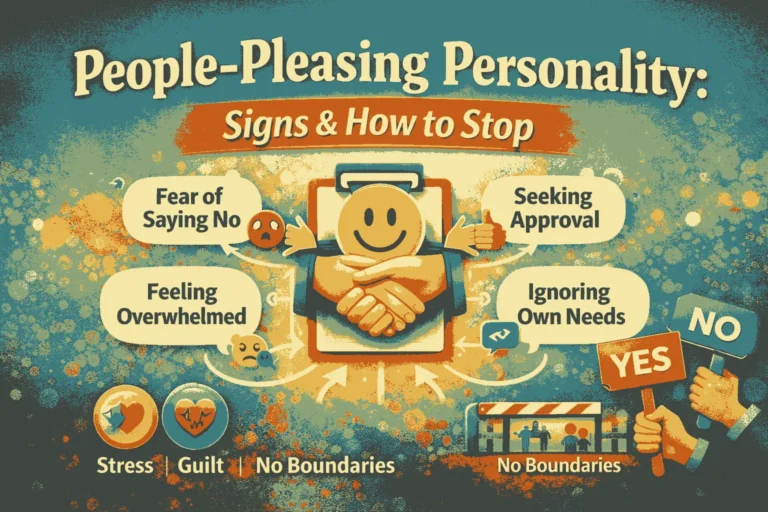
People Pleasing at Work: Why It Backfires and How to Finally Stop Workplace Bullying: Signs, Causes & How to Fight Back Anger Issues at Work: Causes and Solutions
Why Do People Gaslight Others at Work? 8 Psychological Reasons

A need to control and dominate others. Gaslighters feel power by manipulating and controlling other people.
Underlying insecurity. They feel insecure about themselves and hence target other people by manipulating them.
3. Fear of Losing Their Position or Power at Work: They are afraid that someone has taken away their position where they have power, status, and position from them, and that they control them by manipulating their perceptions.
Past trauma or learned behavior. Some people gaslight because manipulation is the relational pattern they learned in their own past, sometimes from being on the receiving end of it themselves.
Difficulty handling criticism. Those people themselves cannot handle negative comments, so before getting criticized, they manipulate the person in front of them and confuse them with their own perceptions.
Avoid responsibilities: Such people themselves shirk their work and put the blame on someone else.
Fear of being revealed: These people have some weaknesses that they always want to hide from others, hence they always control themselves by manipulating the atmosphere.
Misuse of positional power. If these people are in a high position, like a boss or manager, then they misuse their power because they know that your position is at a lower level than theirs.
Understanding these motives doesn’t excuse the behavior it just helps you recognize the pattern faster next time, instead of assuming the problem is you.
What studies have found on Workplace Gaslighting?
Workplace gaslighting research is still a relatively young field, but a few solid studies back up what this article describes.
2 Clear Signs of Workplace Gaslighting:
According to 2023 research published in Frontiers in Psychology, there are two weapons used to break you down in the office: one is turning your problem into a joke, and the other is deliberately upsetting you. Both of these tactics drain you emotionally, making work feel like a burden.
Workplace Gaslighting in the Organizational Context: The mediation model of Episodic Envy
This test was conducted based on Affective Events Theory, involving 480 people in Pakistan across three stages. First, they were asked if they were being subjected to gaslighting. Two weeks later, they were asked if they experienced feelings of envy. Finally, they were asked whether they shirked their work or mentally disengaged from it.
The answer was clear: when a boss or colleague messes with your head, it breeds envy within you, and that envy drives you away from your work. That is the crucial intervening factor.
How does workplace Gaslighting affect mental health?

When your workplace environment is one where you are being gaslighted all the time, your mental peace gets disturbed. You feel mentally stressed and mentally tired all the time. Once in a while, you start feeling as if you have become emotionally numb. You feel sad and depressed most of the time. You have self-doubt about your own decisions, which can lead to an identity crisis. If something is mentally disturbing you, you should stop overthinking about that thing. Until you get yourself mentally corrected, other things will dominate you.
Effects on life due to workplace Gaslighting:
Workplace gaslighting affects not only your work but the rest of your life as well.
Physical health: Workplace gaslighting can cause you to lose sleep. You experience insomnia. Disrupted sleep cycles can also affect your physical health.
Reduce growth: When gaslighters prove you wrong in a conversation, you take that perspective seriously in your mind, due to which you do not take any step in your professional or career, and you are afraid that you might be proven wrong again.
Self-doubt: Gaslighting makes you lose confidence in yourself, and I think this can have the biggest impact on your life when you have self-doubt.
Avoid socializing: You experience anxiety around people and conversations in group meetings, fearing that someone might judge you or prove you wrong again. This causes you to pull away and avoid socializing.
Identity crisis: You doubt your own thoughts and perspectives, what am I doing wrong, you feel like you are too sensitive, you always make mistakes, such thoughts cause you to lose your identity.
Trust issues: Gaslighting causes you to develop trust issues, and you will not trust anybody in any situation.
Workplace gaslighting is effective because it involves your work as well as your personal life, changing the way you view things, perceive, and react to them. As long as you keep these perceptions positive, they can’t negatively impact your life.
7 Ways to Protect Yourself From Workplace Gaslighting (Starting Today):

Be careful who you share your insecurities with.
The first and most important thing to remember is never to share your weaknesses with anyone in the workplace. Yes, people control you by turning your own weaknesses against you.Document everything, with dates.
Create a personal diary where you can write down details of everything. Meetings, presentations, if someone shares something with you, in that case, they can blame you in the next minute, before that, all that information should be written down with the time and date to prove it.Set clear boundaries.
Keep your boundaries within your workplace, so that no one can make personal jokes or insult you at work.Stick to your own scope of work.
Never give your work to someone else, nor do anyone else’s work yourself. If the other person’s work is wrong, they can blame you.Say no to work that isn’t yours.
If someone asks you for extra work that is not your responsibility, tell them right away and say no. There’s no need to do any unnecessary work.Build a trusted witness
A colleague you trust, who can corroborate what actually happened in a meeting or conversation, is one of the most practical protections available.Respond with facts, not emotion, in the moment.
There’s no need to react immediately; stay calm. Instead of reacting emotionally, focus on the facts and respond accordingly.
When HR Is Part of the Problem
Sometimes, in workplace situations with colleagues, it is HR who gaslights the employee. In that situation, first of all, you should keep all the documents with you along with all the details, including when you did what your HR told you, for which you have no one to blame. If your HR does not give you justice and shows controlling behavior all the time, then you can file a case as per the labor law. Even after that, if you don’t see any improvement, then you should try talking to the boss and the CEO of every high position.

Seek help through therapy:
To handle and overcome situations like workplace bullying, you need a good licensed therapist for sure. Your mind needs to be mentally relaxed so that you feel very positive and mentally peaceful.
Conclusion:
Next time someone tells you that you have forgotten this or that you are very sensitive and you have made a mistake, and try to control your memory power, at that very moment, carefully check all your details, where and what you have said and done wrong, have you really made a mistake, or are you being blamed?
Second, do not doubt on yourself. This makes it easier for the other person to manipulate you. Thousands of people deal with workplace gaslighting every day, and you, too, have to deal with workplace gaslighting. So, don’t lose heart and focus on reality-based things instead of emotionally draining ones.

Reminder:
If you find the workplace Gaslighting article by Savvypsyche to be a positive change in your life, then share it with your friends and family circle who can relate to it.
If You Are in Crisis
Savvy Psyche is an educational website, not a crisis service, and nothing here can help in an emergency. If you are in immediate danger or feel you may act on thoughts of harming yourself, please contact emergency services in your country right now (911 in the US, 999 in the UK, 112 in most of Europe).
You can also reach a trained crisis counsellor, free and at any time:
- United States: Call or text 988 — Suicide and Crisis Lifeline (988lifeline.org)
- United States: Text HOME to 741741 — Crisis Text Line
- United Kingdom & Ireland: Call Samaritans on 116 123 (free, 24/7), or visit samaritans.org
- International: Find your country’s helpline at findahelpline.org or iasp.info/crisis-centres-helplines
Reaching out is not a burden on anyone. It is exactly what these services exist for.
Disclaimer:
All information provided in this SavvyPsych article is based on personal experience or studies of mental health awareness. If you have any serious mental health issues, please seek help from a good licensed therapist.
Sources & Further Reading
-
Kukreja, P., & Pandey, J. (2023). "Workplace Gaslighting: Conceptualization, Development, and Validation of a Scale." Frontiers in Psychology. Full text via PMC.
-
Three-wave study of 480 service-sector employees in Pakistan on gaslighting, episodic envy, and work withdrawal, grounded in Affective Events Theory. Summary via ResearchGate.
-
U.S. Equal Employment Opportunity Commission How to file a workplace complaint (for U.S. readers; consult your local labor authority if elsewhere)
-
Medical News Today "What Is Gaslighting? Examples and How to Respond"





5 Comments