
Emotional Numbness: Why Am I Emotionally Numb? Causes, Signs & How to Overcome
Sometimes we are in that state of life where nothing offends us or affects us, and nothing excites us. Even if we feel the urge to cry, we cannot cry or express our emotions openly. We neither feel anyone’s pain nor can we understand our own feelings.
I remember the day when I was counted among the toppers of my class. But I did not feel any happiness or excitement about my position. I was often surprised that the person with average marks is so satisfied, and even after getting the position, I did not feel any feelings; I felt a kind of emptiness.
“Am I heartless or stone-hearted?”
That question what’s happened to make me feel so insensitive, so emotionally numb is exactly what this article is here to answer: what emotional numbness actually is, where it comes from, and how to gently find your way back to feeling.
What Is Emotional Numbness?
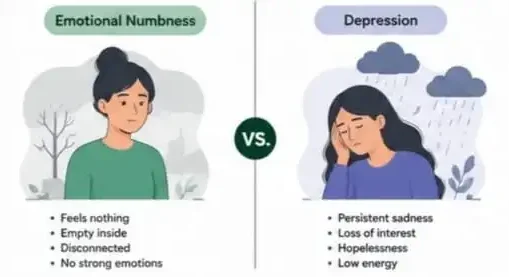
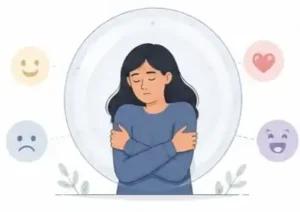 Emotional numbness is a condition where a person feels nothing. Nothing makes them happy or sad. A person with emotional numbness avoids socializing. It is not an illness in itself; it accompanies issues like depression or PTSD. People say, “I’ve become a robot,” or “I’m just getting by.”
The hardest moment is when you are with yourself, yet your heart remains silent. Life doesn’t feel like my own; it feels as though I and my life are two separate things. The most difficult thing is that nobody knows outside the family. To everyone else, it appears all is well.
Where does this emotional numbness come from?
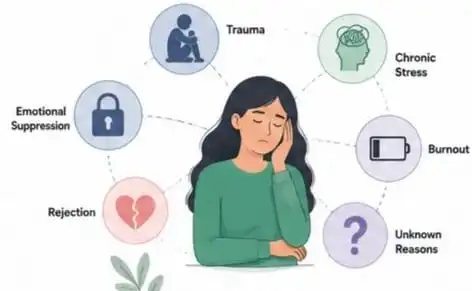
Emotionally numb people get into this state due to many reasons and experiences. If an old trauma remains unhealed, a person shuts down. They can neither speak what is in their heart nor shed tears. Facing rejection makes one feel worthless. Constant stress, too, numbs one’s feelings. And sometimes, the cause remains unknown. The pain is most intense when the eyes weep, but no one even asks why. When the heart screams, but no one hears a sound. Just an emptiness.
The days go by, and you don’t appear. The first silent grief is when the heart doesn’t cry when someone dies. You’ve been prescribed a medication for depression or anxiety, and one day, you are feeling nothing in your heart, as if it has been paralyzed. This may be a side effect of the new drug. So, please speak to a doctor. Don’t be afraid. Often, simply adjusting the medication dosage sets everything right.
Emotional Numbness vs. Depression
We are quick to say, “I am depressed,” simply because our heart isn’t feeling anything. Yes, sometimes this happens due to depression, but that isn’t always the case. There could be other reasons, too. Depression isn’t just about crying. Sometimes, it feels like the heart has gone dead. Everything feels bland; everything feels empty. Yet, people don’t think of depression then, because they tell themselves, I’m not sad.
The strangest thing is this: you might be completely broken, yet the world remains unaware. Life goes on, work gets done, relationships continue, and there is even a smile on your face. But deep down, the feeling is dead. Not appearing sad doesn’t mean everything is fine. It is simply that pain speaks in a whisper. And that is precisely why it is the hardest to understand.
What Psychology Says About Emotional Numbness
According to Psychology, when a person feels emotionally numb, they unconsciously protect themselves through a defense mechanism in their mind. That is, when they realize that something is hurting them or causing them pain, they unconsciously begin to suppress their emotions.
Example:

if a person has hurt you, you tell yourself in your mind that you don't care, but you know that you have felt bad, but at that time, you should not feel your pain, make 'I don't care' your defense mechanism.
Defense mechanism:
Basically, whenever humans feel threatened or troubled, they use a defense mechanism as a protection or shield. When they feel that something has hurt them, they will block or avoid it before it even comes to their side. Sometimes, in a defense mechanism, humans try to reduce anxiety by reframing it and fitting it into their imagination.
A Personal Story: Convocation Day
All my friends were busy taking snaps and pictures, and there was an environment of happiness everywhere. This was the day I was to be rewarded for my four years of hard work. Today was our convocation ceremony. Everyone was congratulating me. I was putting on a fake smile, but it was there for everyone. But where was that happiness of mine? I was feeling nothing.
Everyone was happy, but I was trying to be happy. The only thought that was going on in my mind was that the degree which I have earned by working hard day and night, the sacrifice of my parents which did not make them lose their jobs, but if I am not able to get a good job with this degree, if my career does not go well and I am not successful like everyone else, then what?
This thought was just not allowing me to feel anything, neither was I feeling the happiness of my graduation, nor was I feeling the happiness of anyone else. Some of your thoughts may not be felt by anyone, but they make you emotionally numb inside. Everyone used to say that you had become very strong. But only I knew how hopeless and weak I was feeling inside. Your silence and quiet talk show your strength to people, but what you are feeling from inside, only you can know at that time.
Related on Savvy Psyche
Mental Tiredness: Why You Always Feel Mentally Tired (And How to Finally Stop It)Fear of Failure: Causes, Signs & 12 Proven Ways to Overcome It
What study found on Emotional numbness?
Exploring the roles of emotional numbing, depression, and dissociation in PTSD
Some experts believe that emotional numbness following a traumatic event is the most significant indicator of PTSD. Others argue that this numbness serves as a link between depression and a sense of detachment from oneself.
This study involved 161 women who had recently been subjected to an assault. They were monitored over a period of 12 weeks. It was found that the initial numbness, sadness, and sense of detachment were all associated with PTSD. However, when other factors were excluded, and numbness was examined in isolation, it alone proved to be a predictor of the potential development of PTSD.
Numb from the news? Understanding why and what to do may help
When things become overwhelming, the brain reacts in one of three ways: fight, flight, or freeze. Constant exposure to news about the coronavirus leaves us feeling anxious at times, while at other times, we become completely numb. And this numbness doesn’t simply vanish after the initial shock passes; physical numbness is one thing, but emotional numbness a numbing of the heart is quite another. When the heart goes numb, life loses its zest.
Sometimes the feeling is subtle, while at other times, one feels completely detached from oneself; there are moments of such profound exhaustion that one simply lacks the will to do anything. This is the “freeze” response associated with PTSD and depression. This state of numbness is nothing new; it may have existed previously, but has intensified due to current circumstances. Its symptoms vary, sometimes a lingering inner anxiety, a sense of emptiness during the day, or sleeplessness at night. Some people cannot bear to watch the news because it reopens old wounds.
Undoing Emotional Numbing May Be Key to Trauma Recovery
PTSD affects not only the patient but also those around them. Trauma can be passed down from parents to children.When parents “lose their composure” in anger, that very moment leaves a wound on the child. Here, “it” refers to patience and self-control. Parents who have not healed from their own trauma may alternate between showering affection and suddenly withdrawing.
Yelling at the child in anger or displaying helplessness confuses the child. Without someone to explain the situation, the child’s mental health can suffer. This does not happen only at home; it occurs among friends, between spouses, and at the workplace.In many places, people have even begun to view this as normal.
Signs You Might Be Emotionally Numb
- Always feels emptiness inside
- Feeling lonely
- Detachment from people or your loved ones
- Nothing excited you nor saddened you
- You don’t like to interact with people
- When things hurt you, you feel nothing
- You don’t feel good, but can’t express it
- Struggle to express your emotions
- Getting irritated easily
- When someone says, “How are you?” You said I am fine, but how to express your true feelings inside you don’t know
The Real Causes of Emotional Numbness
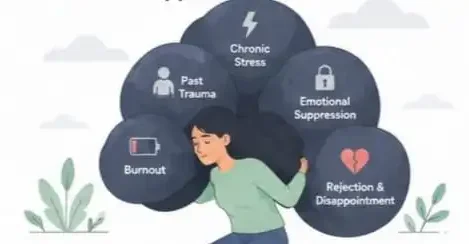
Chronic stress: If you have experienced a lot of stressful situations for a long time, you become adaptive and that you become emotionally numb and don’t feel anything. No matter what the situation is, you feel nothing. We keep running until we collapse. Too many responsibilities; too little rest. And then, one day, a voice from within says, “Enough.” At that moment, feelings don’t seem dead; they simply cease to exist. It isn’t numbness; it is emptiness. Another name for exhaustion.
Repeated rejection: When someone has to face constant rejection, if there is no acceptance in his life, then he has become emotionally numb due to the constant experience of rejection, and no one can bring him pure feelings in the relationship.
Mental fatigue: When a person is under pressure of mental fatigue for a long time, it becomes very difficult for them to feel any emotions. If you also feel mental tiredness all the time without any specific reason, you must read this article.
Being overloaded: Managing too many responsibilities and household chores like family, relationships, studies, and career all at once can make a person feel overburdened and thus numb.
Suppressing emotions long-term: Keeping your emotions and feelings suppressed in your heart makes you mentally tired. If a person hides their emotions for a long time, then once they reach the point, they don’t feel any emotions; they have become emotionally numb.
A medication side effect: If numbness began around the time you started or adjusted an antidepressant or anti-anxiety medication, that’s worth raising with your prescribing doctor directly emotional blunting is a known side effect of some medications, and adjusting the dose often resolves it. This isn’t something to be afraid to bring up.
How does emotional numbness affect your life?
Zero motivation: When you are emotionally numb, your heart does not want anything. Your confidence in achieving your life goals, career, and achievements has gone. You have zero motivation to do something in your life.
Missed opportunities: Emotional numbness can make the opportunities you encounter seem meaningless and wasteful. This can lead to you not being able to take advantage of any opportunity.
Misunderstandings in relationships: Your care and love for your family are genuine, but you don’t know how to show them, and then misunderstandings arise and create distance.
Isolation: You start spending more time alone because of this emotional numbness, and you start to feel very different from others.
Feels hopeless: When nothing gives you happiness or excitement, and you don’t feel your pain, then this thing is very strange.
Decision-making problems: When a person is emotionally numb, they face a lot of problems in making any decision in life, be it a small decision or a big decision.
Start overthinking: You should start worrying about small things. This habit makes you mentally tired.
Difficulty in finding your life purpose: You find to difficult to know what the purpose of your life is. Your life is simply running on autopilot; whatever happens, you just go with the flow in this life.
How to Gently Come Back to Feeling
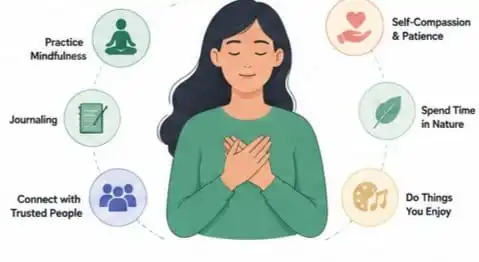
Understand your emotions without forcing them.
You should fully understand your emotions. If at some moment you are not feeling anything, then it is not a matter; do not think so much about it. If you are not feeling anything at that moment, then it is okay, leave it. But if you keep thinking about it constantly, then the rest of your jolly, funny, or any other kind of moments may make you feel emotionless.
Write it down.
Sometimes, we can’t easily express what we’re feeling. If you can’t figure out how to express an emotion, write to them. This will lighten your heart and keep your emotions from becoming suppressed.
Reconnect with your body.
In our state of numbness, we often forget our bodies. But if we consciously tune into our physical selves, It reconnects us with life. Exercise for 15–30 minutes daily; it is excellent for the mind. Splashing cold water on your face. Walking slowly and feeling every step. Focusing on the aroma and taste of your food. These are not cures, merely small invitations to return to your body. And these small things are deeply significant.
Start socializing more:
When you are emotionally numb, meeting people feels like the hardest thing to do. Everything seems artificial; every moment, exhausting. Yet, go, spend a little time with your own people. The warmth you cannot consciously feel is still seeping in somewhere deep within you. You’ve joined group meetings, friend circles, and family gatherings. This has made you feel good and boosted your confidence.
Reduce exposure to people who drain you.
Sometimes the comments of negative people also make us emotionally numb and make us hypocritical in our own eyes.
Stop hiding what you do feel.
Whatever you’re feeling, share it with a trusted person. Holding back your emotions can leave you mentally sad and emotionally numb.
Mistakes People Make With Emotional Numbness
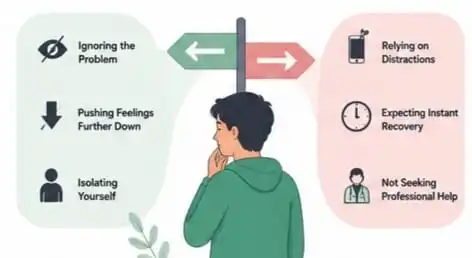
Assuming it’ll pass on its own.
If your heart has gone numb from a sudden shock, then sleep, rest, or talk it out it will make a difference. But a numbness that lingers for weeks or months? That does not simply go away on its own. The more we sit back thinking, “Time will just pass,” the longer it stays.Chasing something big to “feel again.”
When everything inside begins to feel flat, some people rush toward extremes out of frustration, extreme movies, heated arguments, substance use, anything, just to feel something. That’s a natural response, but it doesn’t help. Healing is not about dropping everything all at once; that is too much. The key is to help yourself feel safe slowly. Being gentle is not a sign of weakness; it is the actual plan.Withdrawing completely.
When the heart goes numb, the very first thought is: Withdraw from people. Because when you feel no connection, talking or meeting others feels exhausting. Yet, the problem is that solitude only raises the very wall that caused your numbness in the first place. Healing begins not when you force things, but simply by maintaining a gentle presence, a message, a cup of tea, or quiet companionship, even if it feels hollow.
Mistaking numbness for healing.
This is the most common mistake. Numbness appears like composure on the outside, and on the inside, it feels as though we have become strong. So, we mistake it for healing. But the truth is: if you feel neither pain nor joy, that is not healing. It simply means you have stopped feeling. And that is a signal, one that should not be ignored.
When to Seek professional help:
If you’ve been experiencing this problem for a while and haven’t seen any changes, and the pain is becoming more severe and painful, you need professional help. Please consult a professional psychologist.
Conclusion
Becoming emotionally numb, not feeling any emotion, is a very painful experience. But it does not mean that your whole life depends on it. Sometimes a person feels a lot due to the constraints and tensions of life. This is natural, so do not think of it as anything less. When you feel that you are not able to come out of this problem, then take a strong step or choose some professional help.

Disclaimer:
This article is for informational purposes only. This is not advice from a doctor or therapist. If you are experiencing significant emotional distress, please speak to a licensed psychologist.
The mental health explanations provided in this article are based solely on personal experience and advice. If you feel a significant improvement, you can share it with your friends who are also experiencing mental health issues. However, if you have a serious mental health issue, please seek out a professional.
Sources & Further Reading
Feeny, N. C., Zoellner, L. A., Fitzgibbons, L. A., & Foa, E. B. (2000). "Exploring the Roles of Emotional Numbing, Depression, and Dissociation in PTSD." Journal of Traumatic Stress. PubMed
Psychology Today (2024). "Undoing Emotional Numbing May Be Key to Trauma Recovery"
Psychology Today"Numb from the News? Understanding Why and What to Do May Help"

3 Comments