
Negative Personality Traits: A Complete Guide to Identify and Handle Them
What do we hide from our lives daily? When it comes to someone’s personality, we feel that they either have a positive personality or a negative one, but we generally feel this only in negative personality traits when someone is very rude, distorting, or very jealous of us. No human being will show you their dark, negative personality. But who knows the reality behind a person’s face?
So what’s the reality behind the face someone shows you? This guide breaks down what negative personality traits actually are, where they come from, how to recognize them, and what to do about them in others and in yourself.
What Is a Negative Personality Trait, Exactly?
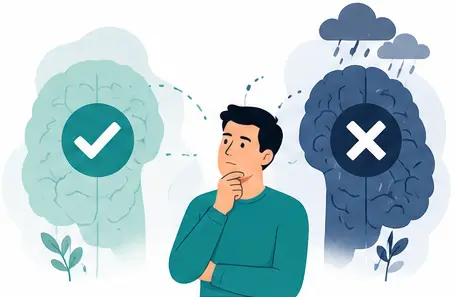
A persistent pattern of thinking, feeling, and acting that creates conflict in relationships, work, and inner peace. Note the word: persistent. A single instance of anger is not a habit. A habit is something repeated everywhere and with everyone, and something for which people, over time, begin to mentally brace themselves.
Personality vs. Character: Understand the Difference
Personality Traits (Temperament)
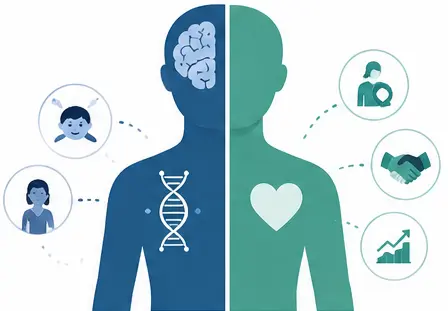
Part of one’s temperament; formed at birth or during early life. Examples: Impatience, restlessness, shyness. They are deeply ingrained, so changing them takes time.
Character Traits
Shaped through choices and values over time. Examples: honesty, deceitfulness, harshness. Because character is built through decisions, it tends to respond more readily to conscious effort.
Where Do Negative Personality Traits Actually Come From?
No one becomes controlling or suspicious on purpose. These traits don’t develop overnight. There is always a story behind it, a reason.
Genetics and temperament
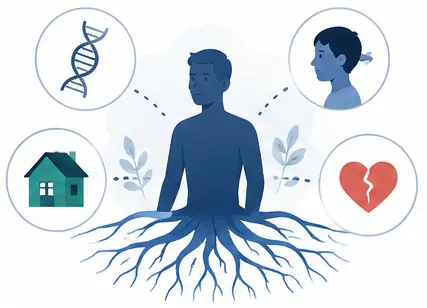
Some things are truly part of our hardwiring. According to the “Big Five” model, individuals with high levels of neuroticism tend to get rattled or irritated easily and become emotional over even minor matters. They do not do this intentionally. It is simply that their nervous system is somewhat more sensitive.Environment and upbringing
Children raised in homes filled with constant tension or criticism often become defensive, seek to control everything, or develop a habit of trying to please everyone. This is not a character flaw. It is a coping mechanism. And the “stubbornness” observed in adulthood is, in reality, that very same childhood defense.
Unhealed wounds
Low self-worth, past rejection, suppressed anger. If left unaddressed, they harden and become “my nature.” The child who was always told, “Be like so-and-so,” Grows up to turn even the smallest victory into a matter of personal honor. This is not stubbornness. It is an old pain that is still speaking.
The Hidden Side of Negative Personality Traits
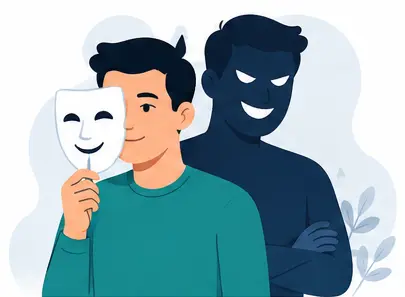
People who have negative personality traits never reveal this openly. Their dark mentality is always hidden from view, so they always behave nicely and politely. It is very easy for these kinds of people to hurt someone.
Even if they intentionally harm someone, their show-off becomes innocent, as if they didn’t even know they had hurt someone. Manipulation and double-meaning are very easy for them. The average person falls for their words and suffers losses.
Signs of a Negative Personality Trait
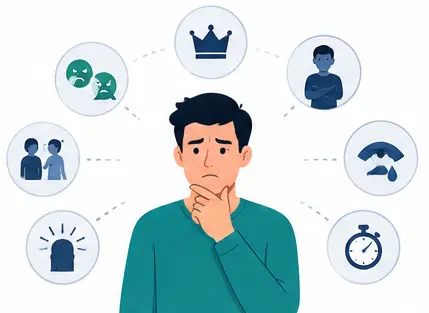
Constant apprehension: Everything is going well. Yet, the heart insists, “Something or the other is bound to go wrong.” It is a habit that denies you peace, even during good times.
Arrogance: The mindset of “I know best.” And this isn’t expressed in words, but in tone. When you stop listening to others altogether.
Need for control: No, not like that, do it my way. When this phrase comes up repeatedly, a sense of restlessness arises whenever others act according to their own will.
Lack of empathy: When the person before you is falling apart. And it makes no difference to you. Or, even if it does, you simply say “Okay” and end the conversation.
Jealousy: Feeling a heaviness in your heart when you see someone else progress. Even when offering congratulations, the words don’t come from the heart. Deep down, you just feel, “I’ve been left behind.” This isn’t a sign of being a bad person. It is simply the noise of your own insecurity.
Getting Stuck: The world says, “This is wrong,” and deep down, the heart knows it too. Yet, the only words that escape the lips are, “No, I am fine just the way I am.” This is not strength. It is fear, the fear of admitting one is wrong.
Externalizing blame: If something goes wrong, immediately shift the blame outward. People, time, circumstances, anyone at all. Just keep yourself out of the narrative. Because accepting responsibility feels like the hardest thing to do.
The hidden agenda behind sweet words: On the surface, it appears to be concern and goodwill, “I’m saying this for your own good.” But look closely, and the thread always leads back to the speaker. Control disguised as help. Self-interest disguised as love.
Constant criticism: The habit of finding fault with everything. Seeking out errors even where there is no need. Finding it difficult to praise, yet easy to criticize.
Low tolerance for delay: Long lines cause agitation. A slow pace triggers irritation. Divergent thinking sparks anger. One wants the world to move at one’s own speed. And exactly according to one’s own will. Because the prospect of pausing stirs a deep, internal fear.
Related on Savvy Psyche
Dark Triad Personality: Warning Signs & How to Protect Yourself Before It’s Too Late
Understanding the People Pleasing Personality: Traits, Causes, and Solutions
Cognitive Dissonance: What It Is, Why It Controls You, and How to Break Free
What do Studies Say About Negative Personality Traits?
Dispositional negativity: An integrative psychological and neurobiological perspective
Here are some key takeaways from the study:
- Why do negative people suffer more? Because they overreact even to minor issues.
- The most dangerous aspect is a persistent negative feeling that lingers constantly without any specific cause; this is what leads to psychopathology.
- What does science say? Research on monkeys, rats, and humans has revealed that specific brain regions, such as the extended amygdala, play a role in this.
The Role of Negative Personality Traits in Psychological Adaptation
We often assume that negative personality traits are solely detrimental, but this study challenges that notion. Research reveals that certain “negative” traits can, in specific situations, actually make people more successful and more satisfied with their lives.
To check this out, a research study was conducted on 401 people aged from 18 to 78, investigating the relationship between life satisfaction and a group of difficult traits — narcissism, authoritarianism, procrastination, loneliness, and perfectionism.
The most curious result was that some people were found to be narcissistic and authoritarian, and the traits were predictive of high life satisfaction. That is, some traits may have negative consequences under some circumstances, but not other circumstances.
The impact of negative personality traits on your life:
People with negative personality traits have a very toxic or deep impact on your life. Externally, they may show some kindness traits, but internally, their jealous or negative side can be very harmful to you. Therefore, you must distance yourself from these people so that peace does not end in your life.
How to Handle a Negative Trait in Yourself

Name it specifically: Labels like I am difficult are too vague; they cannot be acted upon. I interrupt people when I feel ignored.” This is an actionable issue.
Ask for honest feedback: Ask someone close to you for feedback, not for reassurance, but to truly understand how your traits come across to others.
Catch it in the moment, not after: Analyzing it only afterwards is not enough. Observe the two-second pause that precedes the behavior. That is the moment for intervention.
Replace, don’t just suppress: Merely suppressing a behavior causes it to resurface. For instance, plan ahead for moments of impatience: instead of shouting, take a deep breath, pause briefly, or say a specific phrase.
Give it time: You won’t become a different person overnight. And that’s okay. Habits formed over the years require 2–3 months to change. One small win each day- that is what leads to major change.
How to Handle Negative Traits in Others
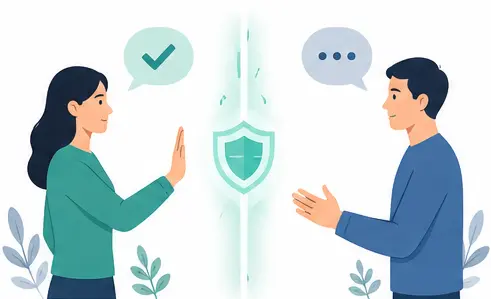
Set boundaries instead of trying to fix them.
You cannot reason someone out of arrogance or envy. What lies within your control is this: deciding which behaviors around you are acceptable and which are not.Give specific feedback, once.
Address the behavior, not the person. Because the moment an accusation is made, a wall goes up. Example: When plans are cancelled at the last minute, I feel like I’m not important. This is more impactful than saying, you are irresponsible. And if they still don’t understand? Take a breath. Don’t argue.Protect yourself without trying to change them.
In all relationships, you can’t change the other person. The healthy answer is to change the distance! Decide how close someone can get, rather than fighting a battle to “reform” them.
When to Consider Professional Support
Some characteristics are connected to previous trauma and anxiety conditions or entrenched psychological styles. They are not self-correcting. In this instance, it’s better to get professional therapist assistance.
- Damage to relationships: when the trait affects important connections.
- Relapse: the re-appearance of a learned behavior after it has been practiced for a time, even in the face of the individual’s best attempts to avoid it.
- Underlying issues: if the trait is associated with anxiety, lack of self-esteem, or unhealed past experiences.
- Lack of clarity: where the difference between a habit and a mental health issue is not clear.
- Unclear boundaries: when the difference between a normal habit and a mental health issue is not clear.
A therapist does not come to judge you; they help you understand where the habit originated and provide you with tools that go deeper than mere intention.
Reminder:
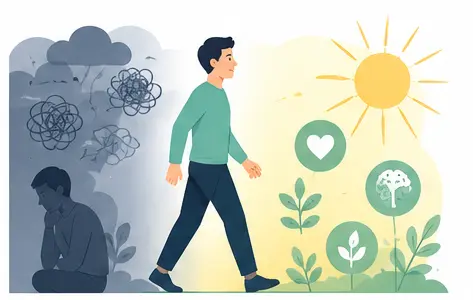
Every human being has a different personality trait. There will be many such people in your life who are not like you, but this does not mean that you will consider yourself different and isolate yourself or start judging yourself. You must understand your personality. If you are seeing negative aspects somewhere, then shift them into positive ones. Similarly, if people around you are creating negativity, then create a good or polite distance between them and yourself.
Disclaimer:
The information in this article is intended for educational purposes only and may be a compilation of publicly available psychological research. Does not replace professional medical or psychological advice. In the case of a serious mental health problem, please see a licensed therapist.
Sources & Further Reading
-
"Big Five Personality Model." APA Dictionary of Psychology. dictionary.apa.org/big-five-personality-model
-
"Neuroticism." Psychology Today. psychologytoday.com/us/basics/neuroticism
-
Shackman, A. J., Tromp, D. P. M., Stockbridge, M. D., Kaplan, C. M., Tillman, R. M., & Fox, A. S. (2016). "Dispositional Negativity: An Integrative Psychological and Neurobiological Perspective." Psychological Bulletin, via PubMed. pubmed.ncbi.nlm.nih.gov/27732016
-
"Character Vs. Personality: What Is the Difference?" Psych Central. psychcentral.com/health/character-vs-personality
-
"Orientations to Happiness Between the Dark Triad Traits and Subjective Well-Being." National Library of Medicine / PMC. ncbi.nlm.nih.gov/pmc/articles/PMC7287636

3 Comments