
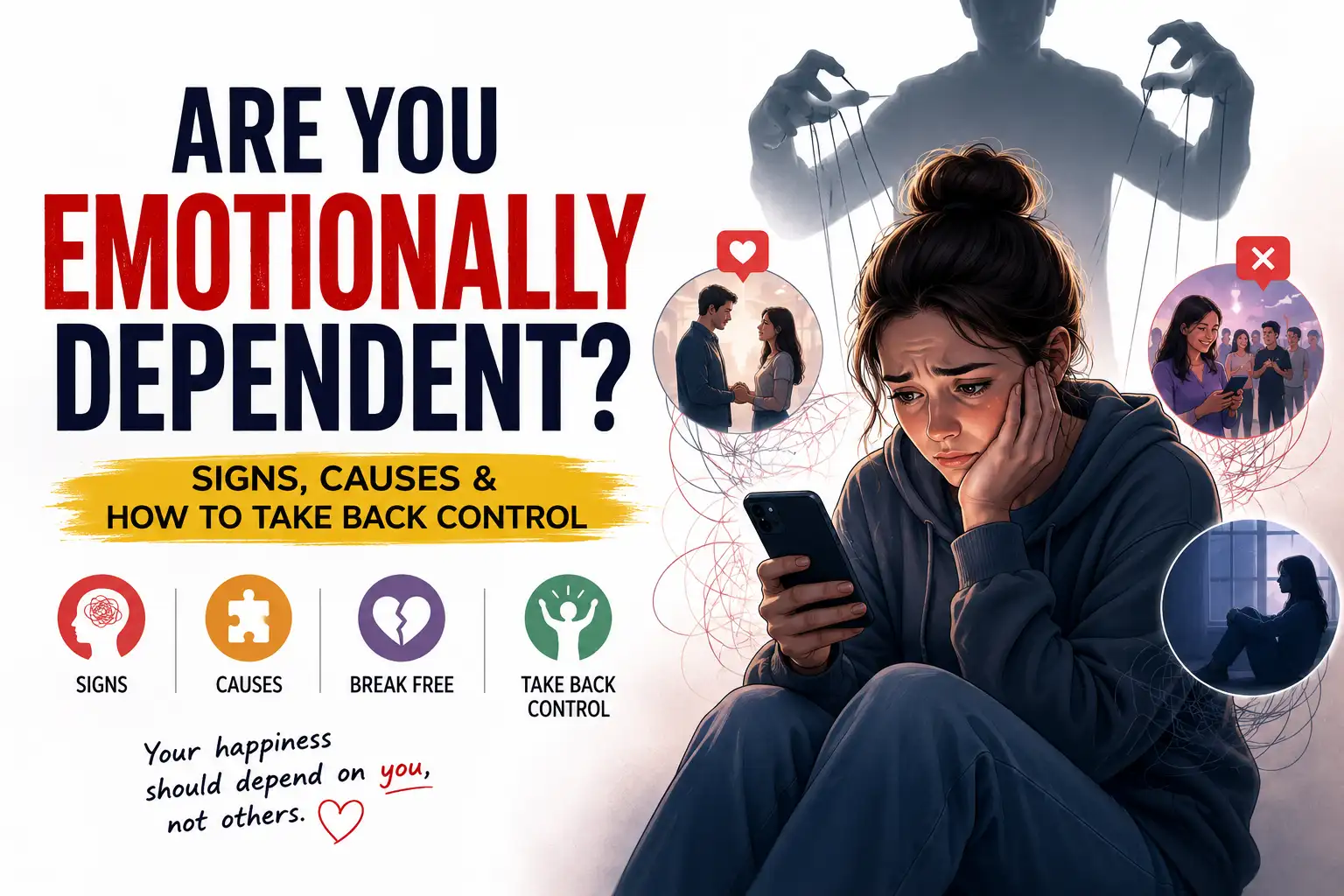
10 Warning Signs of Emotional Dependence & Powerful Ways to Take Back Control
Everything was going well until today. Someone didn’t respond to your message, and you lost some of your spirit. You may be in emotional dependence if other people’s behaviour is affecting your emotional state. Here’s the reality and how to alter that.
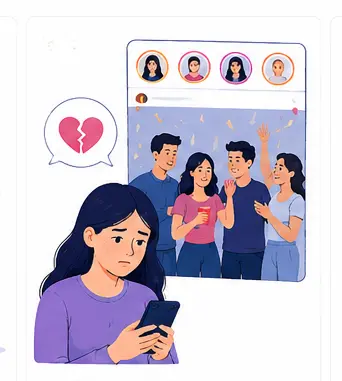
You had a perfect day. Then at night, you open Instagram. Your friend posted a story she’s partying with everyone. She tagged all her friends. But not you. Your mood totally tanks. Your entire day’s happiness suddenly disappears, and then your night’s sleep starts feeling bleak. As long as everything is handled politely, you remain happy, but someone’s bad behaviour spoils your mood. Your emotions begin to depend on the behaviour of others. Have you ever thought about why your happiness and sadness always depend on others?
A real experience Emotional dependence in friendship
I was a sensitive kid. Little things made me cry. I got attached to people fast. I had a friend since I was a kid. We were together from school to University. We shared everything with each other. After we finished university, she moved to another city for work. It was tough for me because she was my close friend. I understood her situation, and we said goodbye with kind words.
We still talked online every day. We did video calls. Shared our daily lives. One day, she didn’t message me at all. I felt sad and worried. At night, she said she was on a work trip. I found it weird. She always told me small things. I didn’t think too much about it. After a few days, she almost stopped messaging me. On her birthday, I waited all day to wish her. At night, I called. She didn’t answer. She didn’t reply to my message.
That night I saw her post online. She was partying with friends. She wrote a thank-you message for them. It made me want to cry. She was happy with her friends, but didn’t even reply to me. After this, if she sent me just one message, I forgot everything. I became so happy. That day, she replied late with just a few words, but I was happy for the rest of the day.
Then I realised something. If I got her message, I was happy. If I didn’t, I was sad. My mood depended on her. My life didn’t matter to me without her reply. The problem is when the other person doesn’t feel the way about you. That day, I promised myself I would not let my life and my emotions depend on whether someone talks to me or not.
Moral of the story:

Never let people's words ruin your happy times. You should enjoy your moments. They are yours. You should not let others spoil them. Keep smiling. Do not worry about what others say. Your happiness is important.
Related on Savvy Psyche
What is Emotional dependence? 
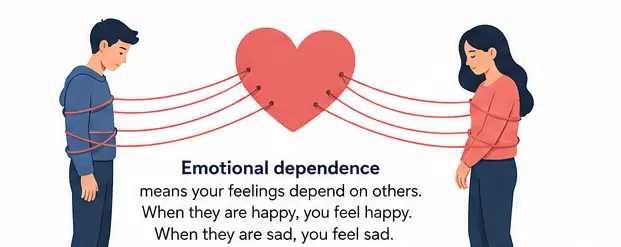
You start to rely on their moods for your emotions. You don’t feel your true emotions as much unless someone else appreciates them. You don’t feel your true emotions as much unless someone else appreciates them.
In fact, a 2024 study suggests that if you were emotionally dependent in childhood or had an anxious attachment style, it may persist in your adult relationships. If you don’t know this, it could be a long-term issue in your life.
An Example of Emotional dependence:
You have uploaded a story on Instagram, it doesn’t matter to you whether 200 people are watching your story or not, you just wait for a specific person to see your story, if he sees it then you become happy and if he doesn’t see it, then your whole mood gets spoiled.
Signs of Emotionally dependence on others:
Emotional need is not an issue that is obvious. Lives in patterns you’ve normalized; responses you’ve always taken, behaviours you always do, “who you are. Here are some of its signs to help you identify it. 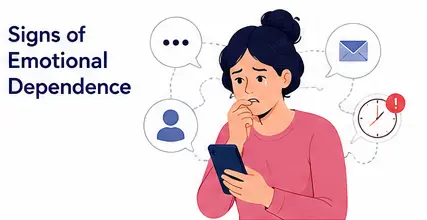
Emotional signs:
- If others are not in a good mood, your mood also becomes like theirs.
- You get panicked if they don’t reply to you immediately or send you messages.
- When someone leaves you, like a breakup or long distance, that thing becomes unbearable for you; you feel like you cannot live without them.
- If you are sad, you want someone to care for you again and again.
- You may not feel happy about your achievements until you tell others about them.
- You feel that the solution to all your tensions will be solved by talking to them.
- Other people’s bad behaviour, ignorance, and rudeness all hurt you, but one word of apology from them makes you forget everything.
- You start imagining your future with any stranger after just a few meetings.
Behavioural signs:
- You are ready to cancel your entire day’s plans just because someone else’s plans are going to be fulfilled.
- You keep checking your mobile again and again to check the notifications.
- You protect their feelings more than your own. You’ll take the hit yourself, but you can’t stand the thought of them being upset because of you.
- If you like someone, you worry about them all the time, as you might lose them, and you stalk them all the time.
- You find it difficult to say no to others about anything. Even when you’re uncomfortable, you still don’t speak up.
- You are always busy making others happy and never think about your own happiness.
- You are always the first to apologise, even though you haven’t made any mistakes.
Relationship signs:
- You cannot make any decision on your own; you should rely on others, and their opinions are important in every matter.
- They don’t give you time in their busy schedule, which irritates you and makes you angry.
- You don’t like to be alone for long periods of time. You need the presence of others at all times.
- Your care, respect, loyalty, and love remain one-sided
- If others don’t agree with your opinions, you change theirs. Similarly, you change others’ opinions with your likes and dislikes.
Self-image signs:
- You feel good about yourself one way and another way depending on your interactions with others on the day.
- You adjust your personality, preferences, or opinions to fit those you want to go along with
- You do not believe in your instincts even for minor decisions
- You feel an innate inferiority to those who are approved of your work.
Important: If you see a number of these signs, this doesn't necessarily mean that you have something seriously wrong with you. Emotional dependence is a learned pattern which is in turn almost always linked to specific experiences and learned patterns can be unlearned. Understanding that it is required as the initial action.
Why Emotional Dependence Develops:
Emotional dependence doesn’t form randomly. Emerges in response to certain environments and experiences – typically early. If you know what exactly caused the root cause, its management is much easier.
1. Childhood unresolved past traumas:
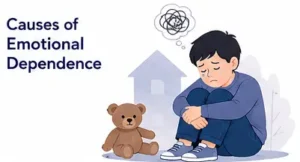
- When a child does not get love from his family in childhood. Parents do not give time to the child. No one talks to them. No one hugs them and looks at them as their own love. So, when they lose that love, they start seeking it from others. They crave constant attention, wanting everyone to check on them and take care of them 24/7.
- In some homes, such behaviour as fighting, screaming, and beatings is considered quite normal. While children may be frightened by such situations, if there’s a person in their lives who makes them feel safe, they quickly become attached. This attachment often persists, and the bond deepens.
- When in childhood no one gives any importance to his words, and he is silenced every time, then even after growing up, he gives consent to other people’s decisions, thinking that they may also do the same thing.
- If since childhood you have had to handle many responsibilities like taking care of your parents, looking after your younger siblings, doing household work, and a job, etc. Then you become an elder and take care of others. You always want someone to take care of you and love you as you do for others.
2. Fear of losing:
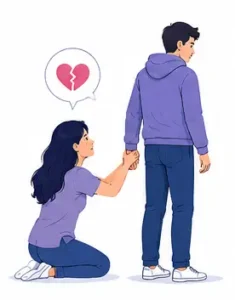
- For people who depend emotionally on others, the fear of losing their loved ones is the biggest. Because they depend so much, they fear that if someone leaves them, they will have no value when they are alone. Therefore, they force themselves into every kind of relationship in which they are not happy. But they are satisfied that someone is there for them.
- Some people get addicted to other people. Every person has some habit or another, without which they cannot live. Even in emotional dependency, addiction to people doesn’t force you to distance yourself from others. You want someone around you at all times.
- You get trapped in others’ likes and dislikes. Their happiness becomes your job. Your own feelings? Not important anymore. You bend over backwards just to make sure everyone is happy with you.
3. When you have no goals in your life:
- When you have no purpose in life, no plans for your future, then the existence of another person begins to matter so much to you that it becomes difficult to live without them. You become so accustomed to that person that it becomes impossible for them to handle you alone without any plans or things of their own.
- When you don’t have any hustle and bustle in your life, you feel very lonely. Because of this, if a random person comes into your life, you start imagining your future with them in just a few meetings.
4. When you want to hear more praise about yourself:
- People who have been listening to their own praise since childhood enjoy being praised and heard even after they have grown up. They always want someone to see and praise them.
- Those people whose families and friends have never praised their children, have never loved them. When you are emotionally dependent on someone, you tell them everything. You really want this person to like you. Say nice things about you. You want to be around this person all the time. You stop making your decisions and do what they want instead. Just so they notice you, and emotional dependence on someone makes you do these things.
5. Lack of self-esteem or low confidence:
- You don’t trust yourself to make decisions. Your own choices never feel “good enough”. So, you run to others for advice on everything even for the smallest things.
- When you can’t make even the smallest decisions yourself, and you’re not confident in your choices. Like, should I wear this dress? Will I like this colour? You become dependent on others for everything you need.
- When you don’t value yourself and always feel inferior to others, you need others for everything, and their opinions seem more important.
How Emotional Dependence Affects Your Life and Mental Health?
Emotional dependence can take its toll gradually. Most people aren’t aware of the whole story until they look back at their lives and realize how much they had to do with other people’s emotions and how much they had to do to get their approval.
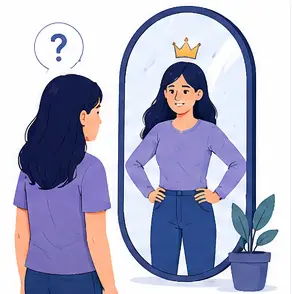
You lose your own identity: You forget your identity and do and hear what other people see and hear. Your choice, style, and everything becomes according to that person, and you often think that you were not like this a few years ago.
You forgot to say no: Whenever someone calls you, you go without a second thought. If someone asks for financial help, you accept them as your own. Similarly, you say yes to everyone and forget to say no. Learn How to Say No without feeling Guilty.
Being restless all the time: Always think that no one should get angry with you. Pay attention to messages from your partner. Ignore your physical health. Sleep deprivation makes you restless.
People start to consider you a burden: When you are constantly attached to someone and cling to him all the time, he starts considering you a burden and wants to move away from you.
Affects your future and career: When you are in anxious attachment, your studies and career are negatively affected, and your future goals cannot be stable.
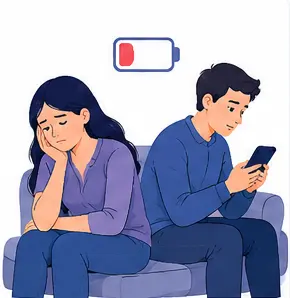
Getting used to tolerating toxic relationships: You are afraid of being alone. You are involved in every kind of toxic relationship. You find it very difficult to be away from them. Therefore, you have to tolerate their beatings, abuses, and all kinds of insults.
Your happiness begins to depend on the behaviour of others: If your partner doesn’t reply to your messages or talk to you rudely, this behaviour can ruin your mood for the rest of the day. Consider it as if the remote control to your happiness is passed to others when you feel emotionally dependent on them.
10 Ways to Build Emotional Independence
Emotional independence is not being cold, uninvolved, and uncaring with others, but rather it is about becoming independent with emotions. It’s learning to have a level of emotional content that becomes so secure that those around you come and go without having a controlling influence on you.

Learn to make your own decisions:
Emotional dependence doesn’t end instantly. But if you make some changes within yourself, you can get out of this problem. The first step is to make your own decisions. You don’t need to ask anyone which colour or dress will suit you. Do whatever feels good and comfortable to you, whatever makes you happy and easy.Spend your alone time:
Make your alone time your friend. Talk to yourself, write down your problems, and ask yourself what you’re good at when you’re alone. Alternatively, do your favourite things in your alone time, like cooking, writing, reading, swimming, or whatever brings you joy.Create your own unique identity:
Create your own unique identity in the outside world. Make your profession something you are skilled at and passionate about. When you become a successful personality, people will respect you even more.Set your boundaries:
If you don’t like something, don’t accept what others say. Taking a stand or saying no is not a weakness. Set personal boundaries between yourself and others·Consult a professional for help:
Never share personal matters with anyone, considering them your therapist. If you want your matters kept private and get the right professional help, you should seek the help of a good and licensed therapist.Positive thinking:
Whenever you encounter a negative thought or statement, practice handling it positively. In this situation, you can apply the CBT technique. This will help you change your negative thought patterns to positive ones by focusing on factsFor example:
Thought: What if I fail my project tomorrow?
CBT technique + positive thought
CBT (Cognitive Behavioural Therapy) is a technique that helps you transform negative thoughts into facts and positive ones, leading to positive improvements in your behaviour and the ability to act on your feelings. Fact: My project hasn't even started yet, so I can't fail. Positive thought: I'm nervous, but I'm sure I can present my project well.
Accept who you are
Never consider yourself alone. Sometimes you may get scared and stop, but never lose courage. Accept your mistakes and challenge yourself that you can do it all alone; you don’t need anyone’s dependency.Don’t think about it, what will people say?
People will always have something to say. You should not think about what people will say. You should make your life decisions and give importance to your own opinions. Listening to the opinions of people is sometimes okay, but you do not have to act on the opinions of other people every time.Don’t force yourself into toxic relationships.
Do not lock yourself in a relationship because you are afraid of being alone. What is really important to you is your health and peace. Your mental health and peace are what matter most to you.Don’t feel the need to apologise to anyone
You really do not need other people’s forgiveness at all. If those people who wronged you for such a time do not even apologise, you can still move on.
Conclusion:
Don’t think that your entire life spent dependent on others will be ruined. Your new life began when you took a stand for yourself, became independent, and stopped depending on others. Free yourself from this guilt and live a fiery life without any toxicity. Now your life goes on without any other opinion, in which you can do whatever you want as per your wish and be happy.
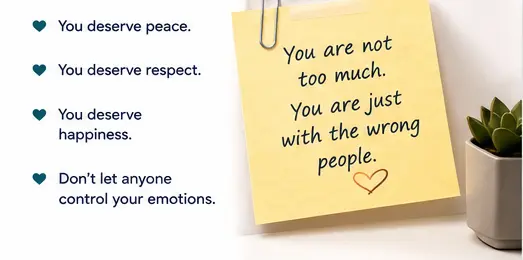
Reminder:
Always remember that no one person’s preferences, opinions, or advice will bring you peace of mind. Your mental peace is paramount. If anyone in your family or friend circle is relating to this Emotional dependence article and is also going through this issue, then you can share this article with them too, so that they can also get help from it.
Disclaimer:
All the information provided in this Savvy Psyche articles is based on mental health studies and personal experience. If you have any serious mental health issues, please seek help from licensed therapists.
Sources & Further Reading
Bowlby, J. (1969). Attachment and Loss: Vol. 1. Attachment. Basic Books. APA overview of attachment theor
Johnson, S. (2004). The Practice of Emotionally Focused Couple Therapy. Brunner-Routledge. EFT overview — Psychology Today
American Psychological Association (2022). Social anxiety and relationship patterns
Parker, G., et al. (2015). Childhood emotional neglect and adult relationships. Journal of Affective Disorders, 180. Emotional neglect overview — Psychology Today

2 Comments